
Best Uses of Korean Air Miles: Value per Mile
 Huiwon Kim (Check Kim)2026-11-218 min read
Every photo in this post was taken on site by Check Kim.
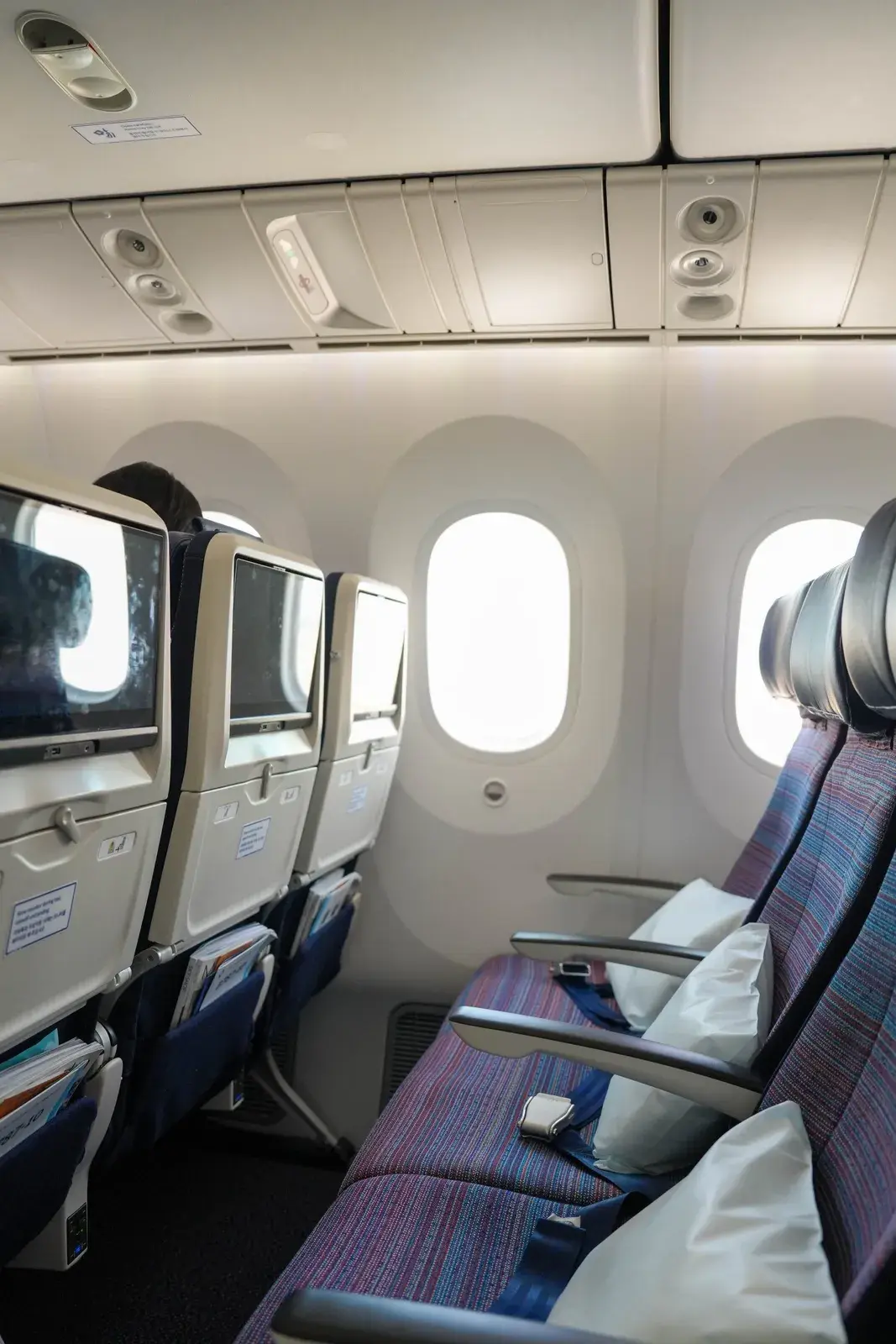
- Baseline value
- About 1 to 1.5 cents per mile (work it out from cash fare and taxes)
- Europe/US Prestige
- 62,500 miles one way, 125,000 round trip (off-peak)
- Japan economy
- 15,000 miles one way off-peak · 22,500 peak
- Booking window
- Award seats open about a year before departure
Contents · 9
Korean Air miles go furthest on long-haul Prestige class. How to work out value per mile and award costs to Japan, Southeast Asia, Europe and the US.
Korean Air SKYPASS miles usually deliver the most value on long-haul Prestige (business) class to Europe or North America. Work out value per mile as (cash fare minus award taxes and surcharges) divided by the miles used, and treat about 1 to 1.5 cents per mile as the baseline. Economy to Japan or Southeast Asia is easy to book, but the value drops when cash fares are low.
Spending miles is harder than earning them. Earning has fairly clear rules: use your card, fly, transfer partner points.
Spending is where the questions start. Japan? A family trip to Southeast Asia? Or save up for business class to Europe or the US?
There's no single right answer. It depends on the cash fare, taxes and fuel surcharges, the cabin, award availability and your dates. This guide covers how to judge value per mile and where Korean Air miles work best.
What is a Korean Air mile worth?
A Korean Air mile has no fixed cash value. Its worth depends entirely on how you use it. Still, it helps to have a benchmark. Here's the one this guide uses.
Value per mile | Verdict |
|---|---|
Under 0.7 cents | Weak redemption |
About 1–1.5 cents | Realistic baseline |
Over 1.5 cents | Good redemption |
Over 2 cents | Strong redemption |
Over 3.5 cents | Excellent, but check how hard the seats are to get |
The basic formula is simple.
Value per mile = (cash fare − award taxes and surcharges) ÷ miles used
For a more realistic number, account for the miles you give up. Award tickets usually don't earn miles, while a paid ticket might, depending on the fare, booking class and your status.
Value per mile = (cash fare − award taxes and surcharges − value of miles a paid ticket would have earned) ÷ miles used
Say a round-trip Prestige ticket to Europe costs $3,500 in cash and the award version comes with $350 in taxes and surcharges. Assume the paid ticket would have earned about 15,000 miles, and value those at 1.1 cents each, or $165.
Item | Amount (example) |
|---|---|
Cash fare | $3,500 |
Award taxes and surcharges | $350 |
Value of miles a paid ticket would earn | $165 |
Actual savings | $2,985 |
Miles used | 125,000 |
Value per mile | About 2.4 cents |
This gives you a more conservative number. As a beginner, you don't need to go that far. Subtracting taxes and surcharges is enough at first; add the forgone miles when you want a sharper comparison.
Japan: easy to book, not always great value
Japan is the most obvious use for Korean Air miles. Tokyo, Osaka, Fukuoka and Nagoya are all short flights from Seoul and easy to fit into a schedule.
On Korean Air's award chart, Korea to Japan/China/Northeast Asia costs 15,000 miles one way in economy off-peak and 22,500 in peak season. Prestige costs 22,500 off-peak and 32,500 peak.
Route | Economy off-peak | Economy peak | Prestige off-peak |
|---|---|---|---|
Seoul–Tokyo | 15,000 | 22,500 | 22,500 |
Seoul–Osaka | 15,000 | 22,500 | 22,500 |
Seoul–Fukuoka | 15,000 | 22,500 | 22,500 |
Award tickets to Japan are convenient, especially around holidays, school breaks and cherry blossom season, when cash fares climb.
On ordinary dates, though, low-cost carriers and sale fares are everywhere. If the cash fare is low, spending 15,000 miles may not be worth it. Plug that day's fare into the formula and see whether you clear about 1 cent per mile.
Southeast Asia: more options, including premium
Southeast Asia is a solid use of Korean Air miles. Bangkok, Da Nang, Bali, Singapore and Guam are popular, and the longer flights make the cabin matter more than on Japan routes.
On the chart, Korea to Southeast Asia/Guam costs 20,000 miles one way in economy off-peak and 30,000 in peak season. Prestige is 35,000 off-peak and 52,500 peak.
Premium economy is worth a look too. As of November 2026, Korean Air flies its premium cabin only on the Singapore route, at 30,000 miles one way off-peak and 45,000 peak.
Korea–Southeast Asia/Guam | Off-peak | Peak |
|---|---|---|
Economy | 20,000 | 30,000 |
Premium (Singapore route) | 30,000 | 45,000 |
Prestige | 35,000 | 52,500 |
First | 45,000 | 67,500 |
Europe: long flights make business shine
Europe is where people agonize most. Routes to Paris, Amsterdam, Rome, London and Frankfurt are long and expensive in cash.
That's why miles can feel especially valuable here. Korea to Europe/Middle East/North America/Oceania costs 35,000 miles one way in economy off-peak and 52,500 peak. Prestige is 62,500 off-peak and 92,500 peak.
Korea–Europe | One way off-peak | Round trip off-peak |
|---|---|---|
Economy | 35,000 | 70,000 |
Prestige | 62,500 | 125,000 |
First | 80,000 | 160,000 |
The best value to Europe is usually in Prestige. 70,000 miles round trip in economy isn't bad, but economy sales to Europe pop up regularly.
Prestige cash fares are much higher, so the same miles often go further. If a round-trip economy fare is around $850 and business runs $2,800 to $4,300, Prestige on miles can deliver far more value per mile.
You still have to factor in taxes and surcharges. But a long-haul flat bed is one of the redemptions where it really feels like you used your miles well.
The US: great value to New York and LA, if you can get seats
The US is another high-value region. Routes to New York, Los Angeles, San Francisco, Seattle and Atlanta are long, and Prestige cash fares are steep. On Korean Air's chart, North America is in the same zone as Europe.
Korea–US | One way off-peak | Round trip off-peak |
|---|---|---|
Economy | 35,000 | 70,000 |
Prestige | 62,500 | 125,000 |
First | 80,000 | 160,000 |
Prestige is especially good value to the US. On flights this long, a lie-flat seat makes a big difference, and cash fares are high.
The catch is availability. Award seats on popular routes go fast, and Prestige to New York or LA on your preferred date can be hard to find.
Economy vs business: long-haul usually favors business
Long-haul business class usually gives the most value. Economy fares often dip, especially sales to Japan, Southeast Asia and Europe, and then it can make more sense to pay cash.

Business fares tend to stay high. On the same route, business on miles can easily deliver two or three times the value per mile.
Option | Pros | Cons |
|---|---|---|
Short-haul economy | Easy to use and schedule | Lower value per mile |
Southeast Asia premium | A middle-ground cabin | Very few routes (Singapore) |
Long-haul economy | Useful in peak season | Compare against off-peak sales |
Long-haul business | High value and comfort | Seats are hard to get |
First | Top value and experience | Seats are very hard to get |
Not everyone should aim for business. For a family of four, economy awards that cut the overall trip cost may make more sense. For one or two people on a long-haul trip, Prestige is often the more satisfying choice.
First class: availability is the real problem
First class is the dream redemption. It's so expensive in cash that the value per mile can be enormous.
The reality is that seats rarely open up. First class awards are on the chart: 80,000 miles one way or 160,000 round trip off-peak to Europe or the US.
Having the miles isn't the hard part. First class award seats often aren't available even when you search early, so many people waitlist and wait until closer to departure. There's no official rule for when seats are released, so it works best when your dates are flexible.
Connections: if Korean Air is full, try SkyTeam
If there are no nonstop Korean Air award seats, look at SkyTeam awards. In Europe, Air France via Paris and KLM via Amsterdam are good alternatives. In the US, Delta can connect you onward domestically.
SkyTeam awards follow a different chart. They're priced round trip, so a one-way costs the same, and from Korea or Japan to Oceania, North America, Central America, Europe or the Middle East it's 80,000 miles in economy and 140,000 in business.
SkyTeam awards from Korea/Japan | Economy round trip | Business round trip |
|---|---|---|
Oceania/North America/Central America/Europe/Middle East | 80,000 | 140,000 |
South America | 100,000 | 180,000 |
Africa | 100,000 | 170,000 |
SkyTeam awards can cost more than Korean Air nonstops. Korean Air Prestige to Europe is 125,000 miles round trip off-peak, while SkyTeam business is 140,000.
Still, if there are seats, it's a solid option. Paris and Amsterdam connect easily to the rest of Europe. For Rome, Barcelona, Prague or Budapest, where Korean Air nonstop award seats are scarce or don't exist, a SkyTeam connection may be the more realistic route.
Peak season: start looking a year out
With award tickets, availability is everything. In peak season, it's common to have enough miles but no seats.
Korean Air award seats open for search and booking about a year before departure. For family trips, school holidays, major holidays, summer and year-end travel, start checking as soon as seats open. Morning Calm Premium and Million Miler members pay off-peak rates even in peak season, which makes peak redemptions even better value for them.
First class is the exception. Economy and Prestige sometimes open early, but first class often isn't visible even a year out. Think of first as a waitlist and last-minute game rather than a race on opening day.
For the full chart by region, see the Korean Air SKYPASS award chart.
FAQ
What is a Korean Air mile worth?
Is it a waste to use Korean Air miles to Japan?
Should I use Korean Air miles for business instead of economy?
Is Korean Air first class award space easy to get?

Written by
Huiwon Kim (Check Kim)Founder, TripFlowy · Travel Creator
Travel creator on the road since 2007. Known as Check Kim (책킴) in Korea, boarded 64 flights in 2025 alone. 20+ trips to Japan, with personally tested spots across 50+ cities in 20+ countries in Asia, Europe and the Americas. Writes about theme parks, airport transit, observation decks, and day-trip routes from major cities.
Comments