Osaka 3-Day Itinerary for First-Time Visitors — Umeda, Dotonbori, USJ (2026)
A 3-day Osaka itinerary that lands at morning, departs evening on day 3, and still fits Universal Studios Japan. Day-by-day route order, where to save time, and where the most common over-planning mistakes happen — written from the route I've actually walked.
Osaka in 3 Days — Yes, USJ Fits
The most common question I get from travelers planning a 3-day Osaka trip is can I include Universal Studios Japan? Short answer: yes, if you arrive on a morning flight and depart on an evening flight on day 3, USJ plus the city's headline stops all fit comfortably.
This guide is built around the route I've actually walked, focused on order and pacing rather than ticket detail (those live in dedicated guides linked further down). Use this for the big-picture sequencing, then dive into the specific guides for booking and timing.
The 3-Day Itinerary at a Glance
Assumes morning arrival, evening departure on day 3.
- Day 1 — Airport → hotel check-in → Umeda Sky Building → Dotonbori & Shinsaibashi → Don Quijote
- Day 2 — Universal Studios Japan (early arrival) → Harukas 300
- Day 3 — Osaka Castle → Tsutenkaku → airport
Osaka's subway alone is enough to handle the entire trip, and USJ doesn't need a stay-late pattern (no headline night fireworks), so you can leave by late afternoon and still slot in one more city stop. If you can stretch to 4 days, the natural addition is shopping time around Umeda or Shinsaibashi.
Day 1 — Umeda Sky Building to Dotonbori
A morning arrival usually puts you at your hotel around 1–2 PM. With airport fatigue still hanging on, day 1 is best as a tight Umeda → Dotonbori loop, not a sprawling route.
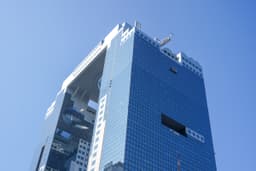
Umeda Sky Building — The Easy Daytime Deck
Of all the observation decks in Osaka, Umeda Sky Building is the easiest one to slot in casually. It's free with the Osaka Amazing Pass or the Kansai Joypass, so most people running a pass include it when they're in the Umeda area.
The rooftop has no glass, so the view feels more open than indoor decks. Harukas 300 is much taller, but the indoor glass causes some reflection in photos. Umeda lets you stand up top with the wind and look down on the city without that friction.
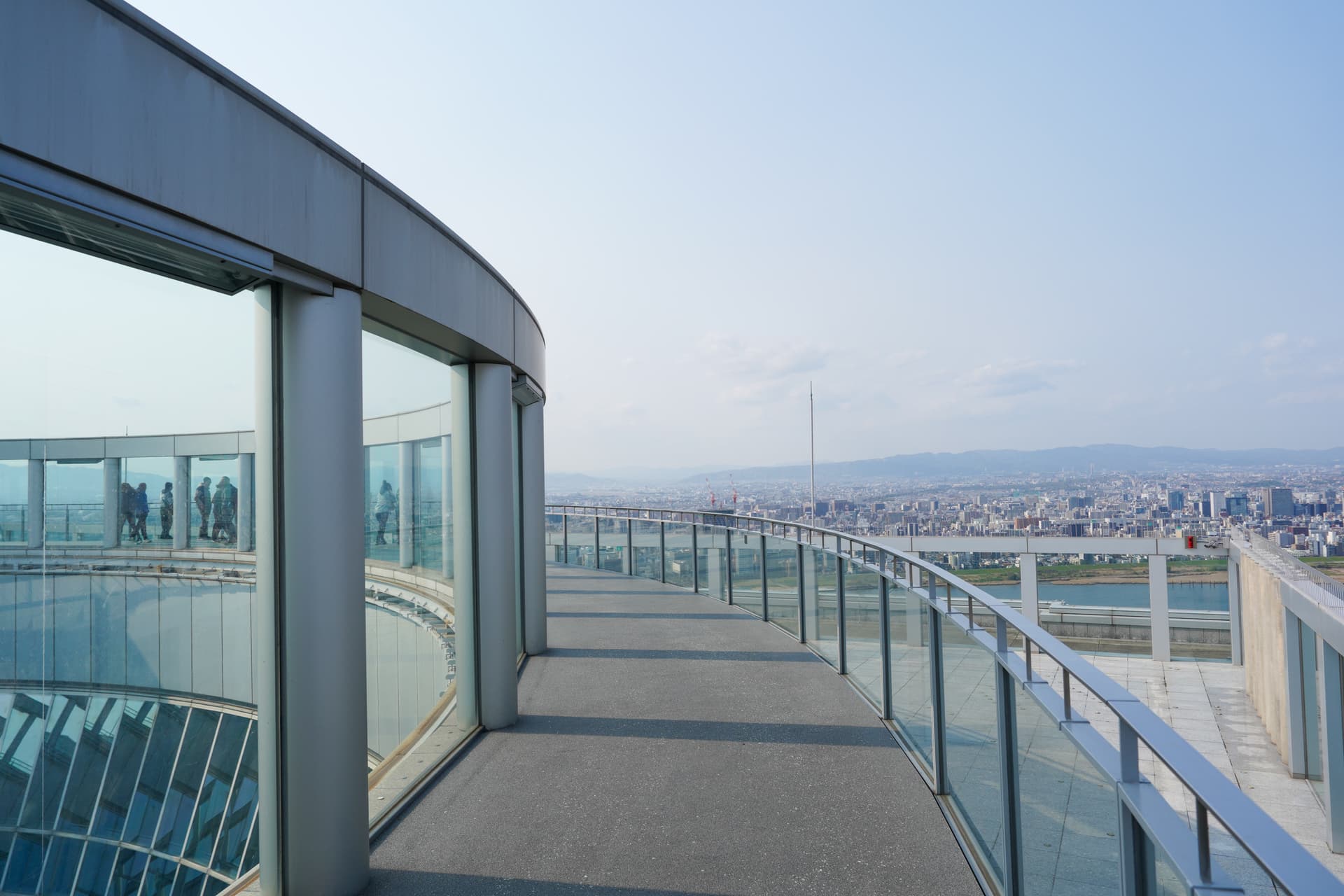
You can see the rivers cutting through the city, and the bridges in the distance read almost like a smaller Han River from up there. I've been lucky with weather every time I've visited — clear skies and clean sightlines on this trip too.
Even setting the deck aside, Umeda has a slightly newer-city feel compared to the rest of Osaka. Department stores and brand flagships are clustered here, the HEP Five Ferris wheel is a few minutes away, and there's a café up top if you want to rest before moving on. The location pairs naturally with other stops, which is what makes it the right fit for a tight itinerary.
I've been to all the major decks in Osaka, and if I had to pick just one for a casual visit, Umeda Sky Building wins. On a 3-day trip where time is tight, that location advantage is the real edge.
Dotonbori, Shinsaibashi, Don Quijote — Closing Day 1
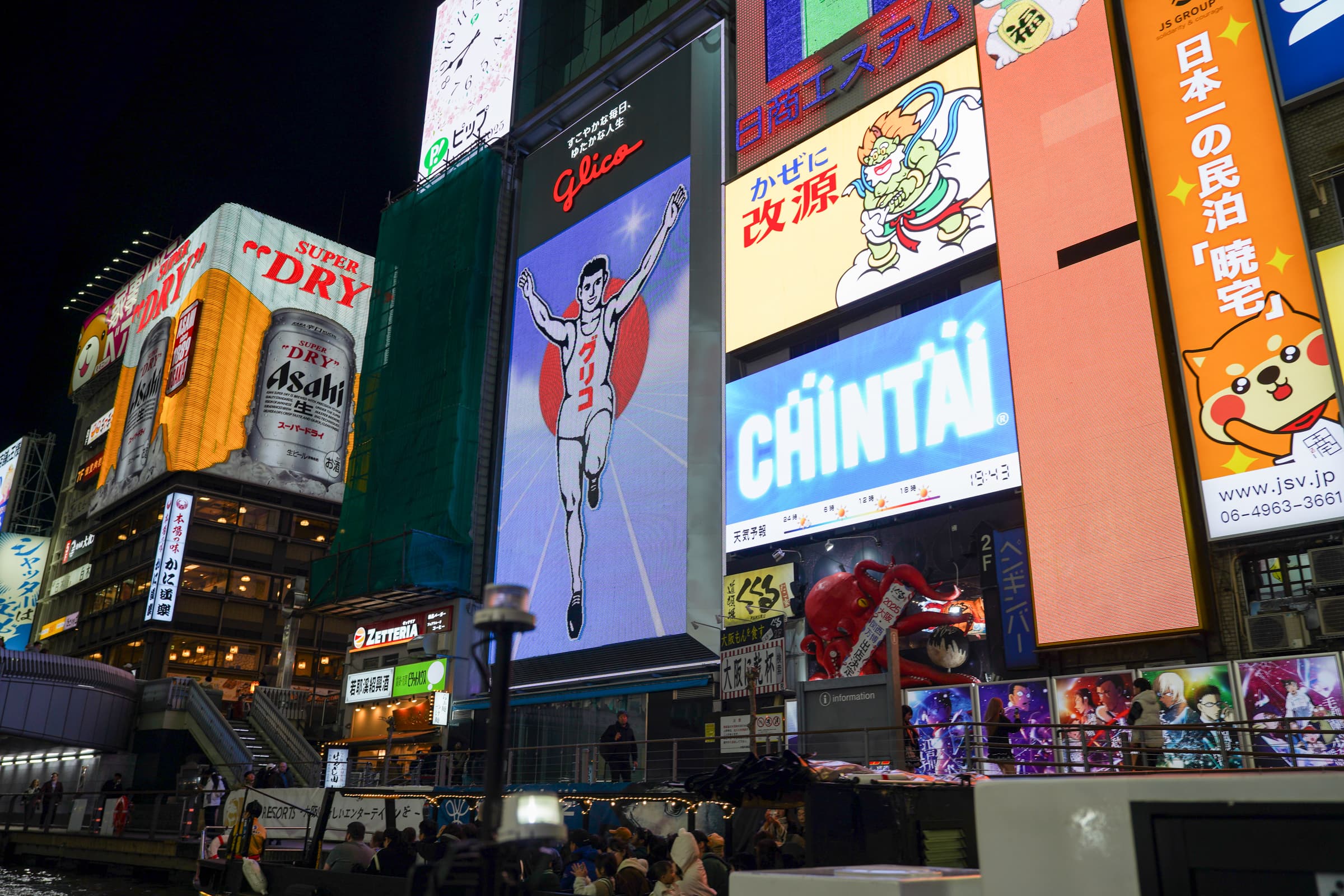
Evening shifts to Dotonbori and Shinsaibashi to close out day 1. This is the most concentrated tourist strip in the city — think of Seoul's Myeongdong but louder. The Glico-man photo spot, a riverside walk, and the Shinsaibashi shopping arcade are the standard sequence.
If shopping budget is left, Don Quijote next to Shinsaibashi handles Japanese snacks, drugstore items, and souvenirs in one stop. The Dotonbori flagship is open 24 hours, so it's fine to drop in late.
Wonder Cruise — 20 Minutes on the Dotonbori River
If your hotel is near Dotonbori or Namba, a short night cruise on the river is easy to slot in without much setup. There are two main operators — River Cruise and Wonder Cruise — and Wonder Cruise is the easier one to plan around because you can book online ahead of time.
The route runs about 20 minutes round-trip along the Dotonbori River. The popularity comes from the photo opportunity in front of the Glico man. Many travelers ride it as part of a Kansai Joypass or Osaka Amazing Pass — the pass discount makes it cheaper than the standard fare, so most pass holders include it.
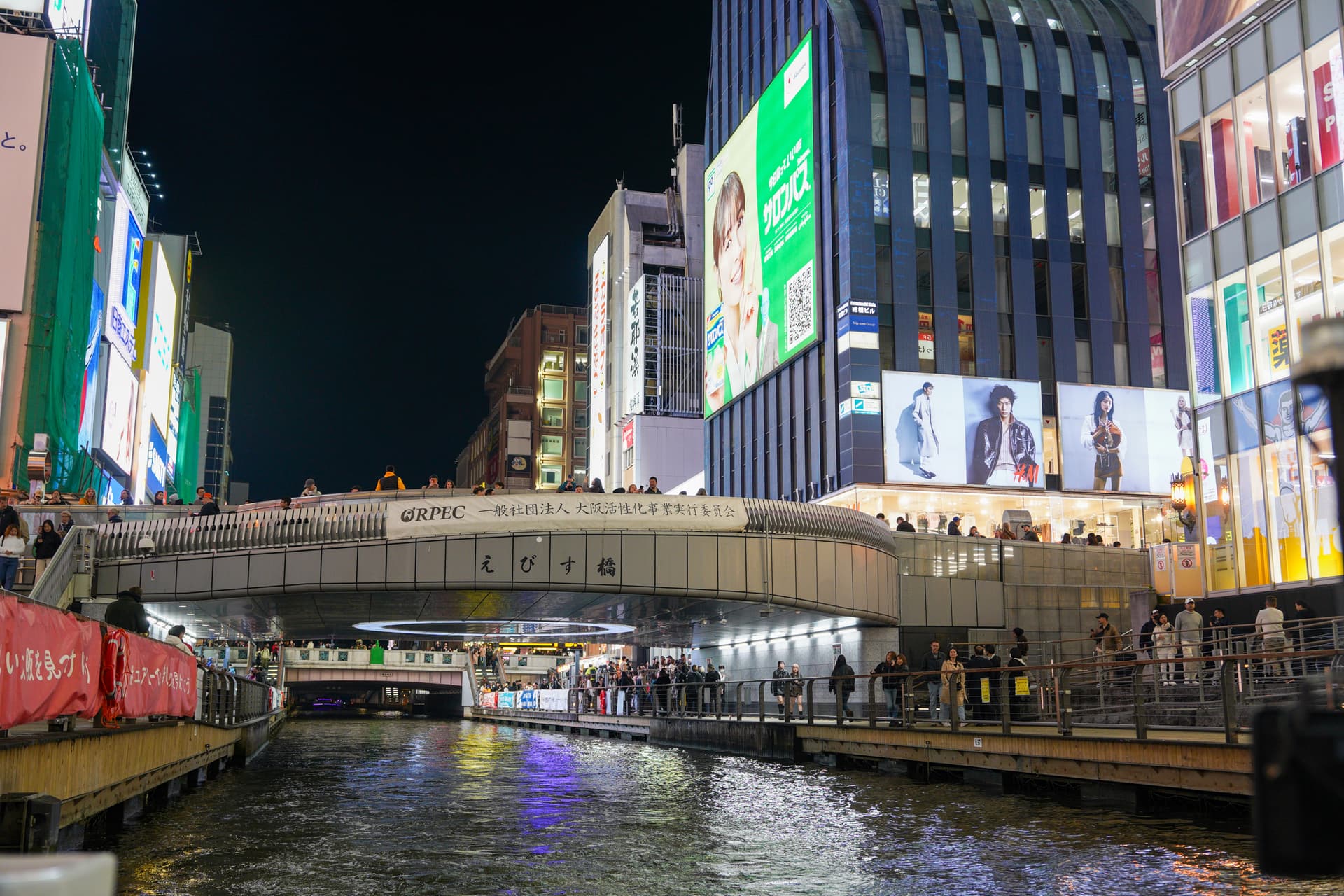
Pre-booking is convenient, but you can also queue on the spot, so missing the booking window isn't fatal. I went without a reservation last time and didn't wait long. That said, during the Dotonbori golden hour the line can stretch — if your day 1 evening is tight, booking ahead gets you on faster and saves you from standing in line during peak photo time.
Day 2 — Universal Studios Japan + Harukas 300
For day 2, early arrival plus leaving by late afternoon beats committing to a full open-to-close day. Unlike most major theme parks, USJ doesn't anchor on a nighttime fireworks finale, so leaving early doesn't cost you much, and you free up the evening for one more city stop.
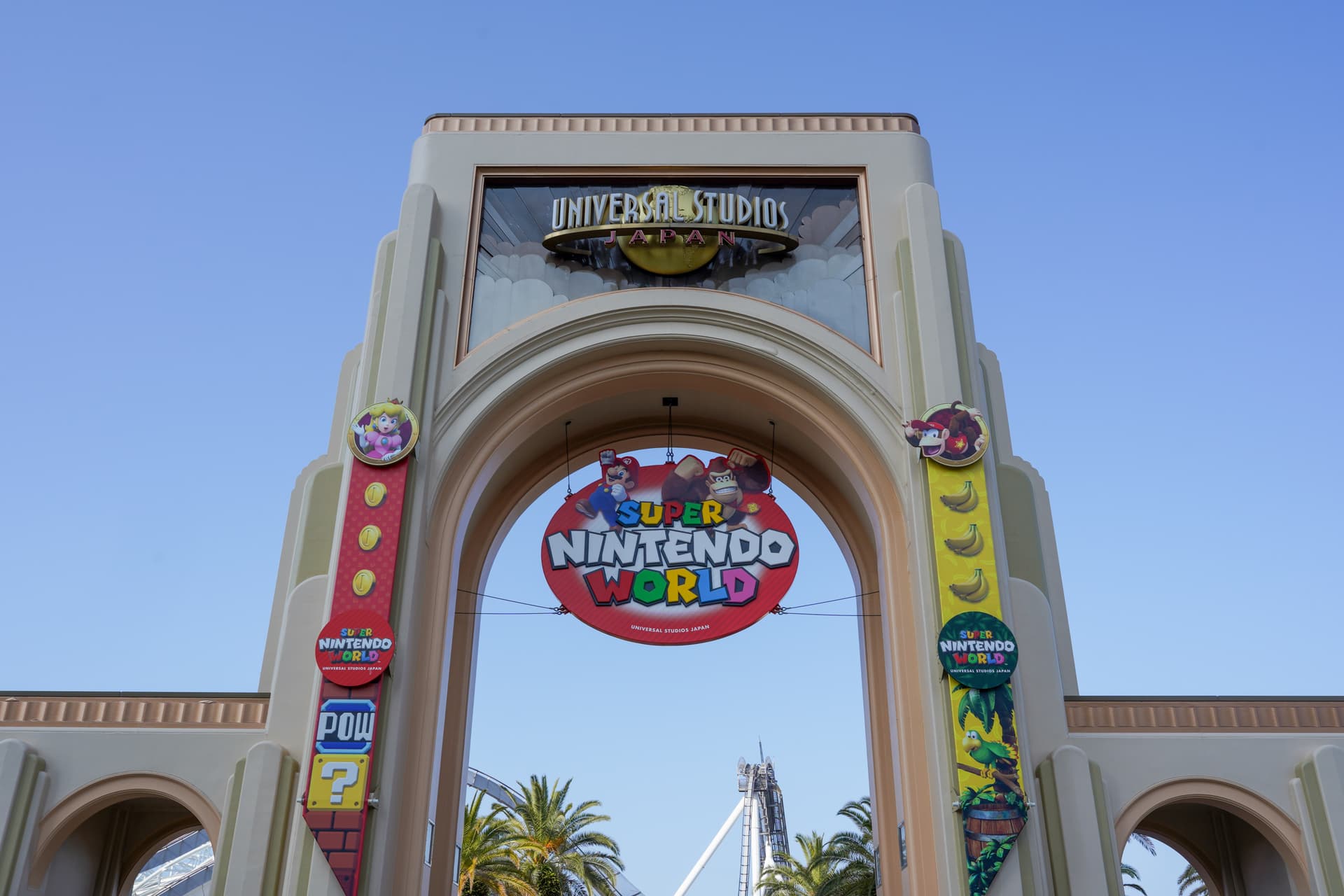
USJ — Super Nintendo World and Donkey Kong Country
Lately, Donkey Kong Country, which opened December 2024, has been pulling huge crowds. Even people who don't normally enjoy theme parks come here for the atmosphere — USJ's worldbuilding is what makes it different.
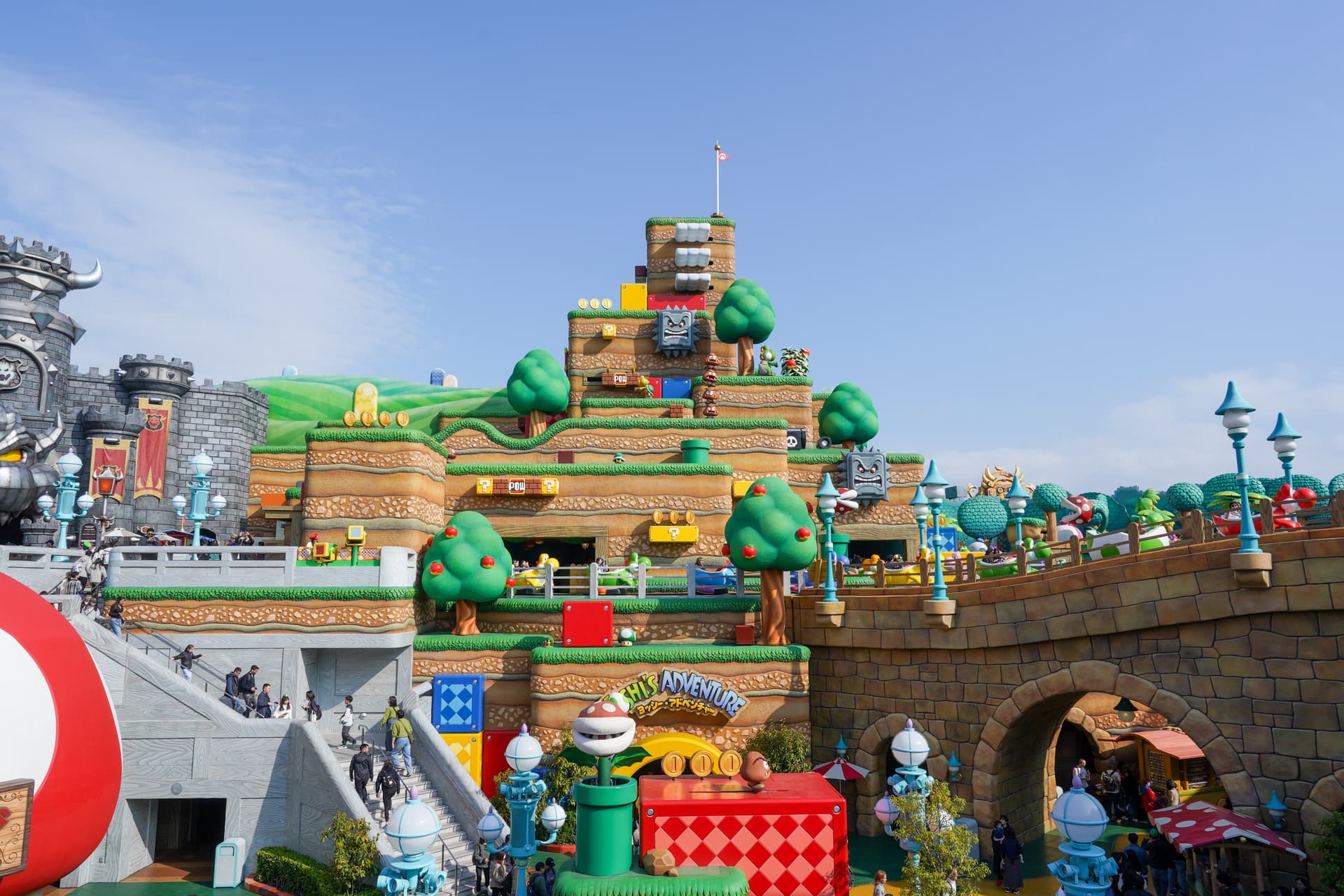
Inside, the park is split into themed areas around different films and franchises, and the mood shifts so much between areas it almost feels like multiple parks. Shows run on a rolling schedule throughout the day, so you can usually catch characters or performances just by walking through.
For Super Nintendo World, pre-booking either a Confirmed-Entry add-on or an Express Pass that includes the Nintendo rides is the cleanest path. If you skip those, you can still get in via free timed-entry tickets from the official app once you enter the park, or by being in the open-run wave at gate opening.
For the full ticket logic — Studio Pass vs Express Pass tiers, Donkey Kong + Mario Kart bundles selling out first, the official-app timed-entry flow — see the USJ Express Pass guide. Arrive 1 hour before posted opening; book the Donkey Kong + Mario Kart bundles the same week you book your hotel since those configurations sell out fastest.
Harukas 300 — Night-View Close
Leaving USJ by late afternoon lets you slot in Harukas 300 for night views from south Osaka. Compared to Umeda Sky Building, Harukas is much taller but indoor-glass — so the cleanest split is Umeda for daytime, Harukas for night. Picking just one is fine if your day's already full.
Day 3 — Osaka Castle, Tsutenkaku, Airport
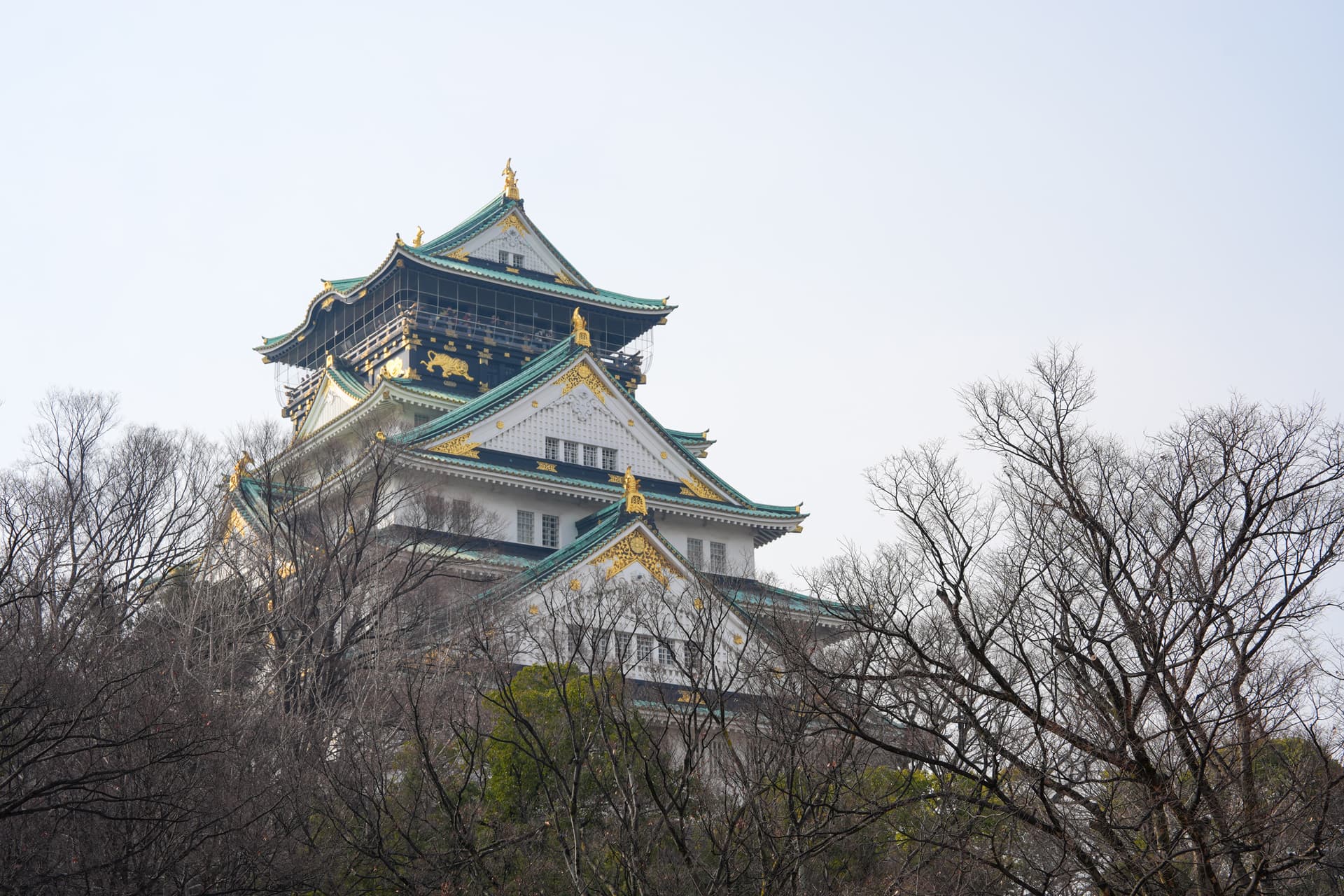
Check out in the morning and store luggage in a coin locker — the locker banks at Osaka, Namba, and Tennoji stations all work. You don't want to drag bags through Osaka Castle (the keep + park grounds, morning) or Tsutenkaku and the Shinsekai streets (afternoon).
Both Osaka Castle and Tsutenkaku admission are covered by tier-eligible Osaka Amazing Pass entries, so day 3 is when most pass holders recover the value of the pass.
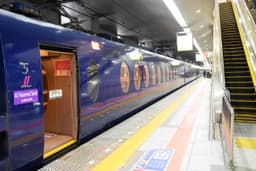
For the airport leg to KIX, the Nankai Rapi:t express from Namba is the fastest with the least luggage friction. Booking, ticketing, and platform detail are in the Rapi:t KIX → Namba guide. Plan to be at the airport 3 hours before departure, which means wrapping the city by 3–4 PM if your flight is in the early evening.
Common Mistakes on a 3-Day Osaka Plan
- Putting USJ on day 1 — flight fatigue plus an open-run morning kills day 2. Day 2 is the safer slot.
- All three observation decks — Umeda + Harukas + Tsutenkaku is too many decks; the route stops feeling like sightseeing. Pick one or two.
- Underestimating the airport leg — Rapi:t is 40 min, Haruka is 75 min, plus check-in and bag drop. 3 hours before departure is the safe target, so the city day needs to wrap by 3–4 PM at the latest.
- Skipping Wonder Cruise pre-booking — walk-up works, but during Dotonbori golden hour the line lengthens. Pre-booking gets you on faster if your evening is tight.
3 days is short, but it covers the headline stops including USJ if you sequence carefully. The city is dense enough that grouping by neighborhood — rather than chasing a list across the map — works better than over-planning. The TripFlowy planner takes a city, duration, and style and fills in a route from spots Check Kim has personally walked, useful as a sanity check against this draft. Booking and ticket detail this overview deliberately skips lives in the dedicated guides — USJ Express Pass guide, Umeda Sky Building night-view guide, and Rapi:t KIX → Namba guide.
FAQ
Can I really include USJ on a 3-day Osaka trip?
Is the Osaka Amazing Pass worth buying?
Which observation deck should I pick?
What's the best way to get from the airport to the city?
Do I have to pre-book the Wonder Cruise?
What should I add if I have 4 days instead of 3?

Written by
Huiwon Kim (Check Kim)
Founder, TripFlowy · Travel Creator
Travel creator covering Asia since 2007. Known as Check Kim (책킴) in Korea, boarded 64 flights in 2025 alone. 20+ trips to Japan, with personally tested spots across 50+ cities in 15+ Asian countries. Writes about theme parks, airport transit, observation decks, and day-trip routes from major cities.
Plan a trip to this destination
Start Planning