
Rapi:t Kansai Airport to Namba — Ticket Booking Guide (Klook QR, Seats, Timetable)
Kansai Airport to Namba in 35 minutes on the Nankai Rapi:t limited express. Klook QR booking, when to lock in your seat, KIX vs. Nankai Namba platforms, and luggage tips — written from multiple round trips by Check Kim.
Rapi:t — KIX to Namba in 35 Minutes
If your Osaka stay is around the Namba area, the Nankai Rapi:t limited express is pretty much the default move, and I've ended up taking it more than five times now across different Osaka trips. Honestly the routine is the same every time — prepay on Klook the day before, walk through Terminal 1 once you land, tap the QR at the Nankai gate, sit down, and you're at Namba 35 minutes later. No counter to visit, no paper ticket to exchange, no transfers in the middle.
I usually treat the airport leg as a sunk-cost decision — whatever I save by squeezing into the regular commuter train, I lose double in stress and aisle-blocked luggage on the return morning when half the outbound flights are leaving at the same time. So this guide is basically the version I wish someone had handed me before my very first Osaka trip.
Quick Facts
- Route: Kansai International (KIX) ↔ Nankai Namba — Nankai Limited Express, direct
- Travel time: about 35 minutes
- Price: ≈$8 (¥1,300) one-way, reserved seat (Klook discount applied)
- Departures: every 30 minutes, all reserved seating
- Booking: Klook QR — gates accept the QR directly, no paper exchange
- Heads up: Same-day on-site booking is unreliable — buy at least one day ahead
- Rule of thumb: Namba accommodation → Rapi:t. Umeda / Kyoto → Haruka.
Rapi:t vs. the Other Options
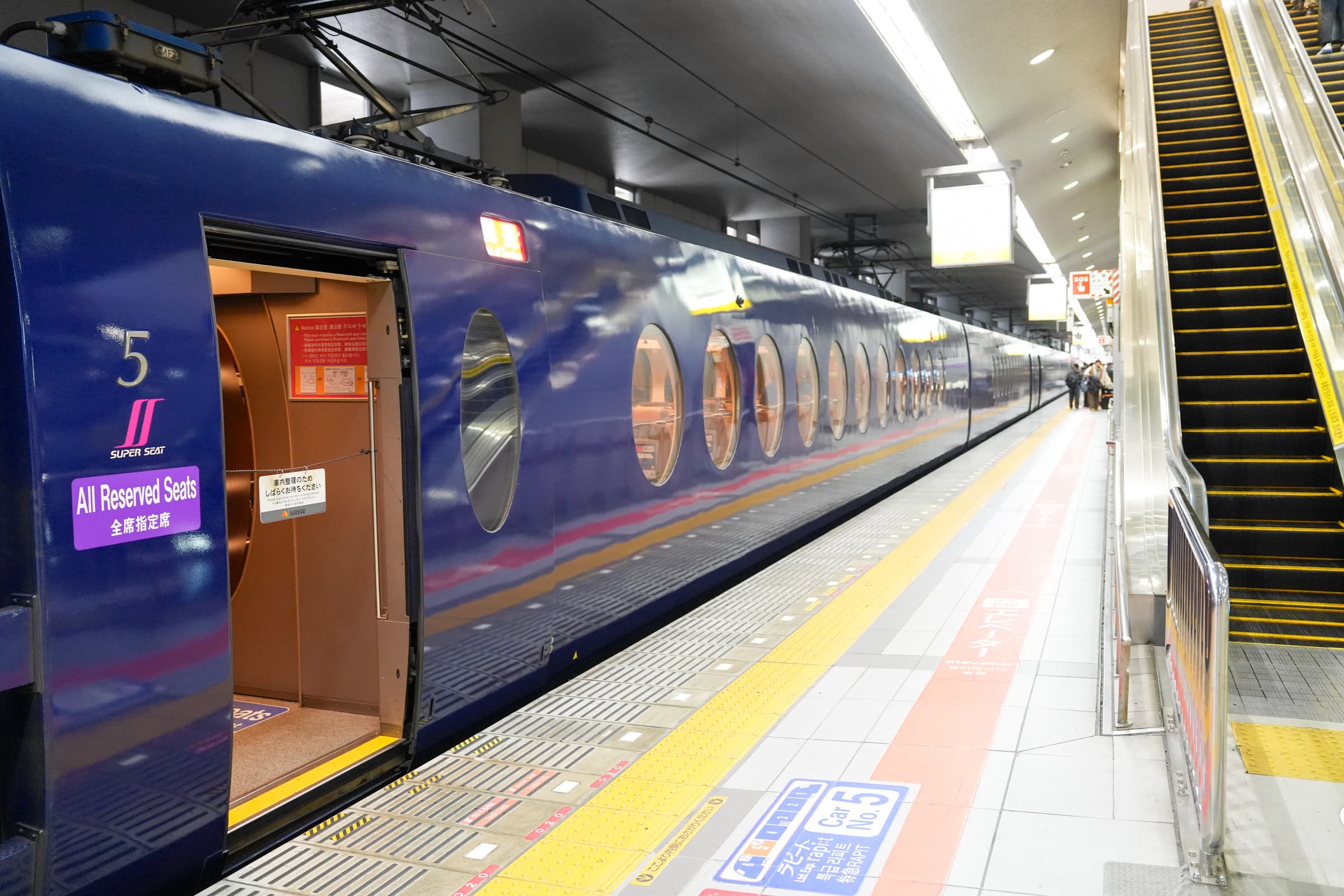
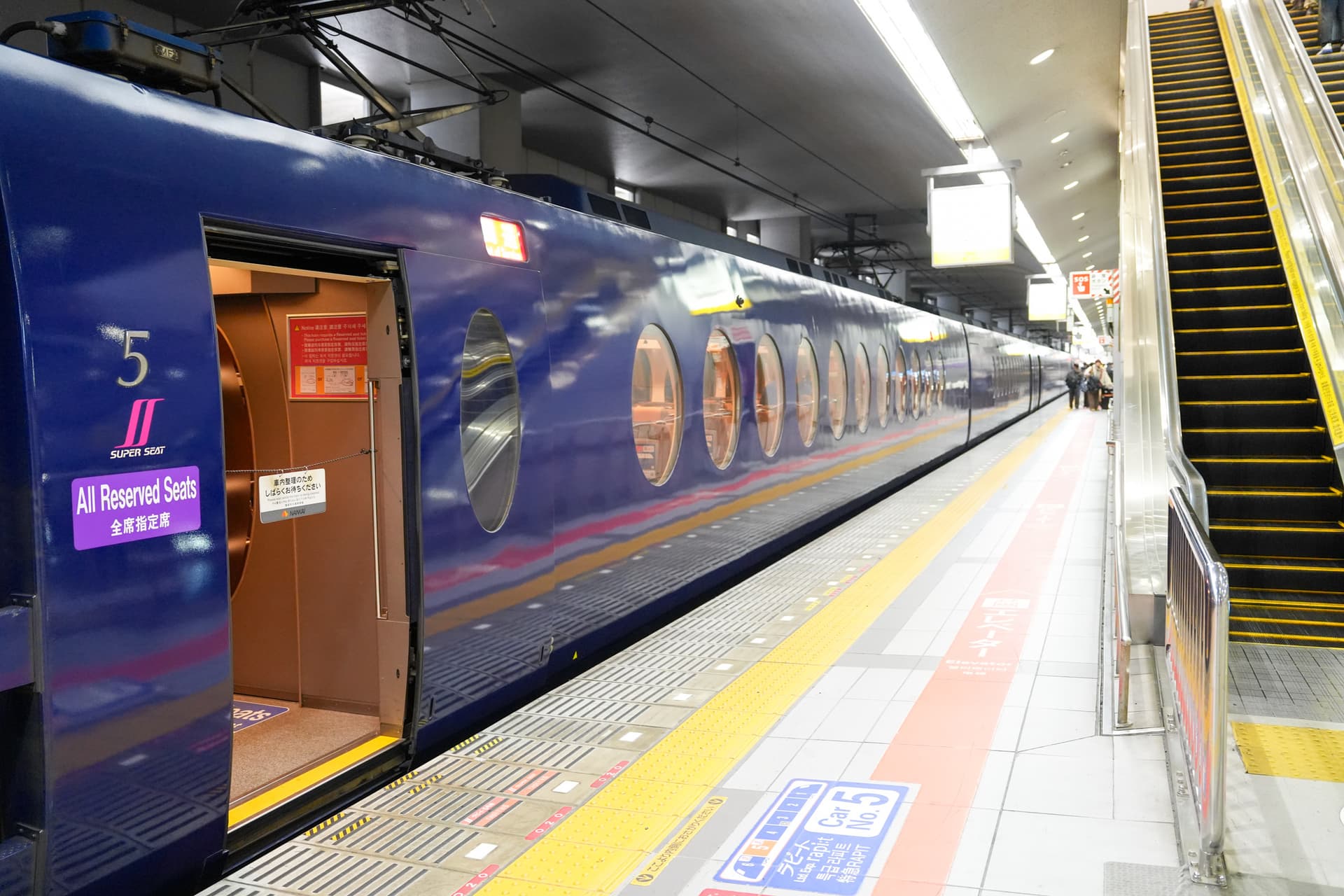
KIX-to-Namba basically splits into two trains, and once you understand the difference the choice gets easy. The first is the Nankai airport rapid (orange livery), which is regular-fare commuter rolling stock — cheap, but unreserved, and on top of that it tends to be packed enough that there's nowhere clean to park a suitcase, especially on weekends or when a wave of flights lands together. The second is Rapi:t (deep-navy livery, limited express), which is what this guide is about.
The price gap is smaller than people expect. Rapi:t lands at around ¥1,300 one-way (≈$8) with the Klook discount, only a few hundred yen above the rapid. For that small bump you get a guaranteed reserved seat, a proper luggage rack between cars, and 35 minutes door-to-door instead of standing in the aisle balancing a suitcase on your knees. The first time I rode the cheaper rapid I told myself I was being smart, and by the time we hit Namba I'd already decided I'd never do that again with a carry-on.
So the rule I use is simple, and it's basically the same rule anyone running a normal Osaka itinerary should use:
- Namba accommodation → Rapi:t
- Umeda / Kyoto / Shin-Osaka → Haruka
If your hotel is in Kyoto or Umeda instead, switch over to the Haruka Express guide — different train company, different platform inside KIX, different ticket on Klook.
Booking — How I Always Do It
Rapi:t is a "book it ahead" train, not a "walk up at the station" train. Same-day on-site purchase technically works, but the Klook discount only applies to advance bookings, and same-day seat inventory tightens up surprisingly quickly during the morning departure waves. I always lock the ticket in at least a day before I fly out, and on busy weekend windows I'll do it two or three days ahead just to be safe.
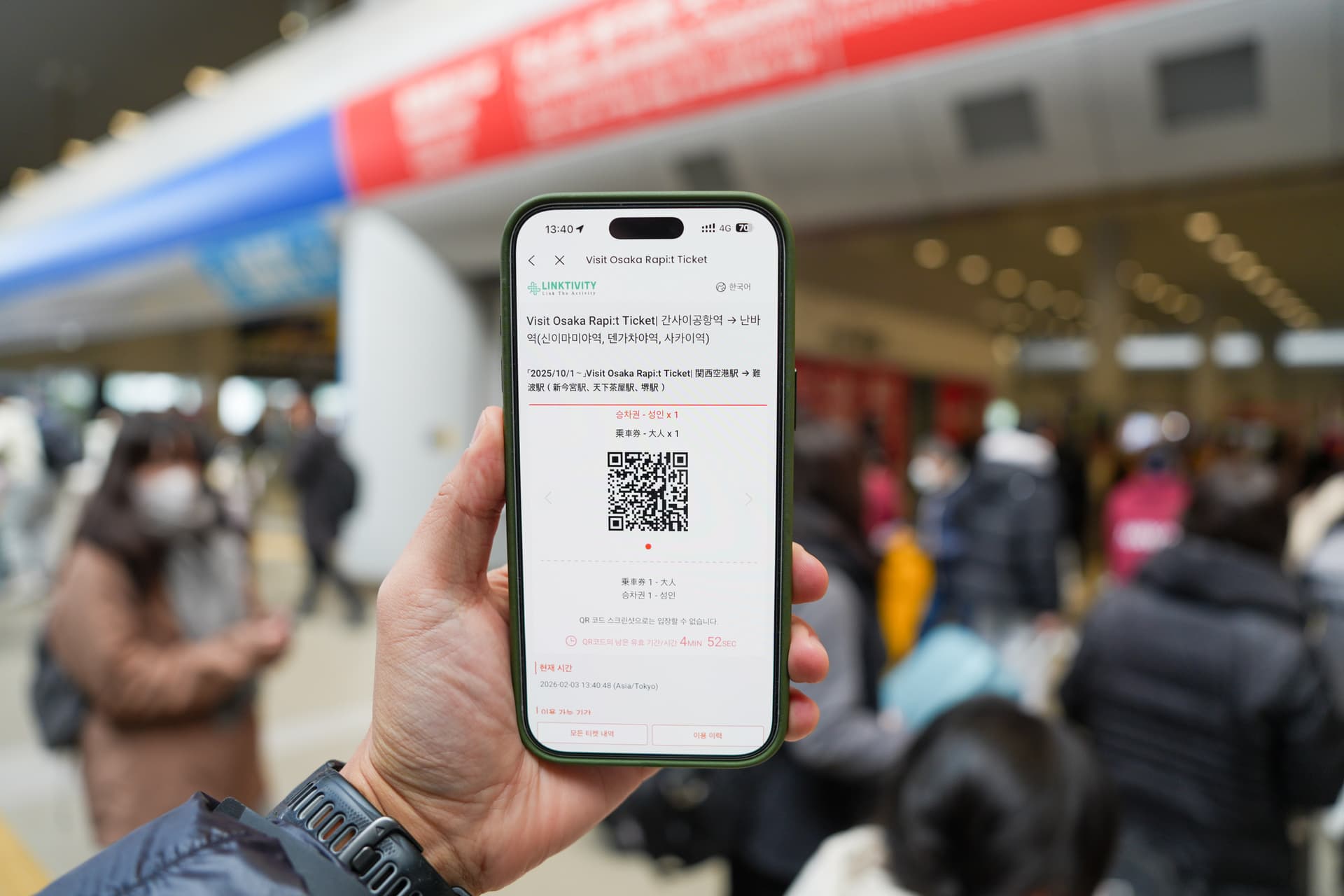
For reference, the price I've been seeing recently is around ¥1,300 (≈$8) one-way for KIX → Namba with the Klook discount, and there's no proper round-trip product on Klook — you just book two separate one-way tickets, one for the arrival day and one for the departure day. It looks redundant but it actually gives you flexibility, because you don't have to commit to a return date until you know your real flight time.
The booking flow itself is shorter than people expect. You buy on Klook and you get a voucher right away. Inside the voucher there's a "Seat Reservation" link, and that's where you actually pick the date, time, and specific seat. Once you finish that step the voucher updates with a QR code, and that QR is the only thing you need at the gate. No counter visit, no paper exchange, no kiosk to fight with, which honestly makes Rapi:t one of the cleaner ticket experiences in Japan right now.
Book Rapi:t Tickets on KlookA timing trick I always use: for the arrival leg (KIX → Namba), I deliberately do *not* lock in a specific train before I fly. Flights run late, immigration and baggage eat real minutes, and pinning yourself to a 12:30 departure when you're still standing in the customs line is just self-inflicted stress. So I buy the Klook ticket beforehand but I pick the actual seat and time on the spot, once I've cleared customs and grabbed my suitcase. For the return leg (Namba → KIX), I do the exact opposite — I pre-pick the seat several days in advance, because the early-morning outbound departures fill up shockingly fast and there's nothing worse than realizing on departure day that everything's booked.
At Kansai Airport — Where to Catch It
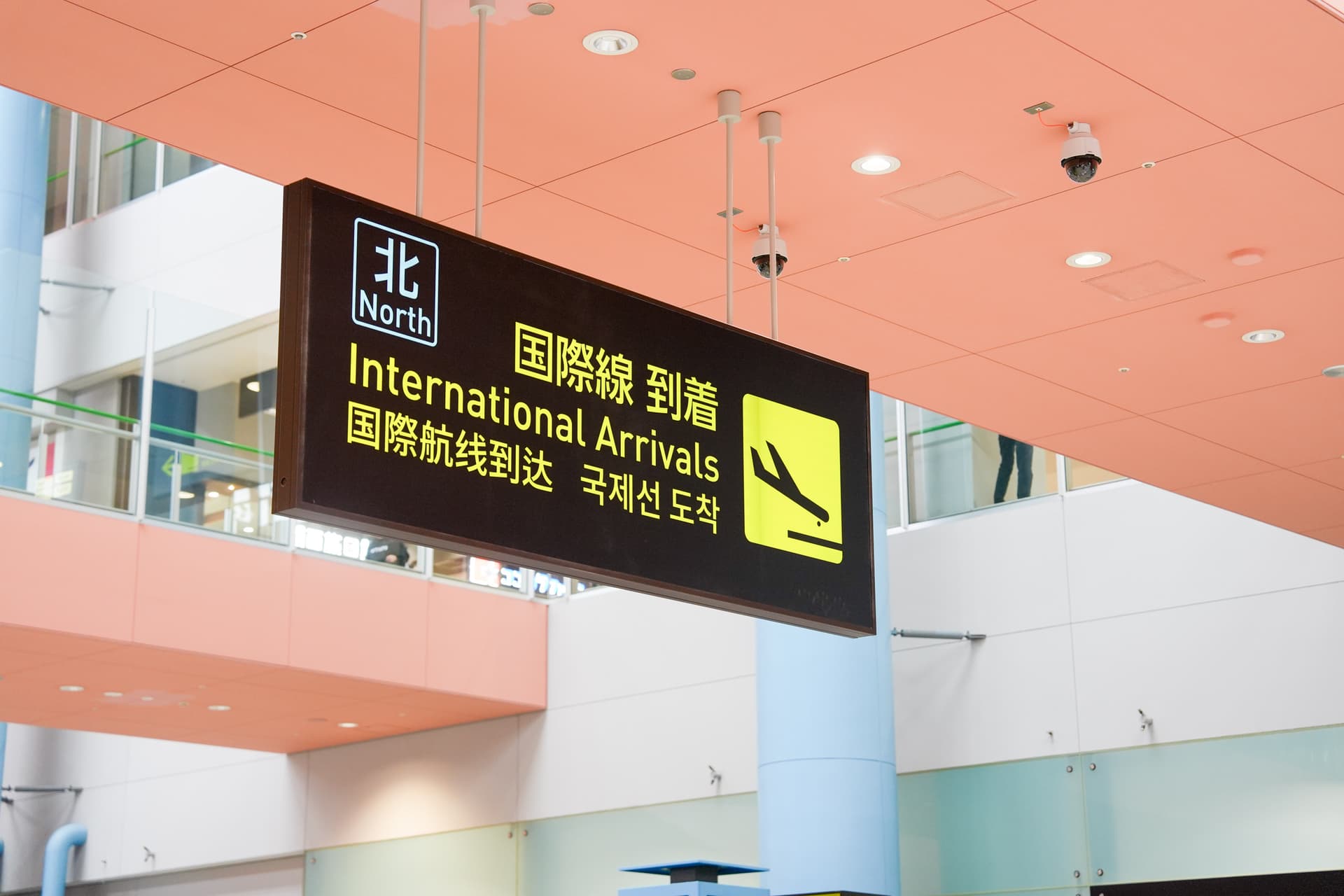
The thing that throws people off the first time is the terminal split, so it's worth getting straight before you arrive:
- Terminal 1 → walk straight to the rail platforms inside the same building
- Terminal 2 → take the free shuttle bus over to Terminal 1, then walk to the platforms
I've come into T2 a couple of times when I was flying with low-cost carriers, and honestly the shuttle is faster than it looks on a map — no real friction, you just queue up, ride a few minutes, and you're at T1.
Once you're at the rail concourse, JR and Nankai split off to opposite sides. Rapi:t is on the Nankai side, so look for the Nankai signage and the bank of QR-reader gates — that's your entrance. The same QR that's in your Klook voucher works directly at those gates; you tap and walk through, no kiosk visit, no paper to print.
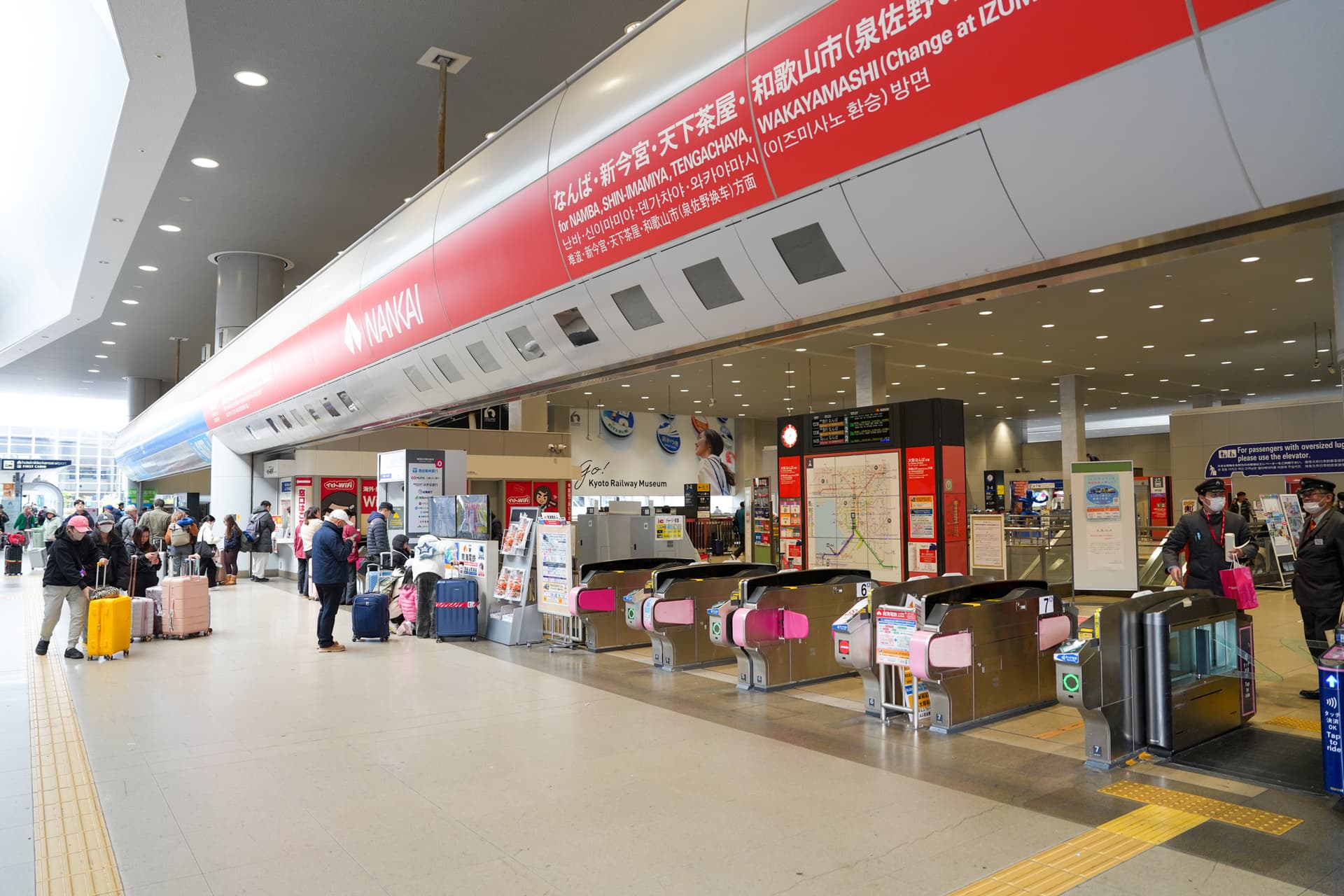
One thing I always tell first-timers — keep that QR open and ready, because you'll need it again when you tap out at Namba too. The exit gate scans the same code, so don't close the voucher page after entry. I've watched a few travelers fumble for the voucher at the exit gate while the line stacks up behind them, and it's avoidable if you just leave the page loaded on the ride.
The orange-livery train you'll see sitting on the next platform over is the Nankai airport rapid, the commuter one I mentioned earlier — regular fare, unreserved, packs out fast. Rapi:t is the deep-navy one with the round porthole windows, kind of a retro-future spaceship aesthetic. There's basically no way to mix them up once Rapi:t actually pulls in.
Onboard — Seats, Luggage, and the 35 Minutes
Because every seat on Rapi:t is reserved, the cabin stays calm even on the busiest weekend afternoons, and that alone makes it a totally different category of ride compared to fighting for standing room on the rapid with a 23kg suitcase wedged against your shins.
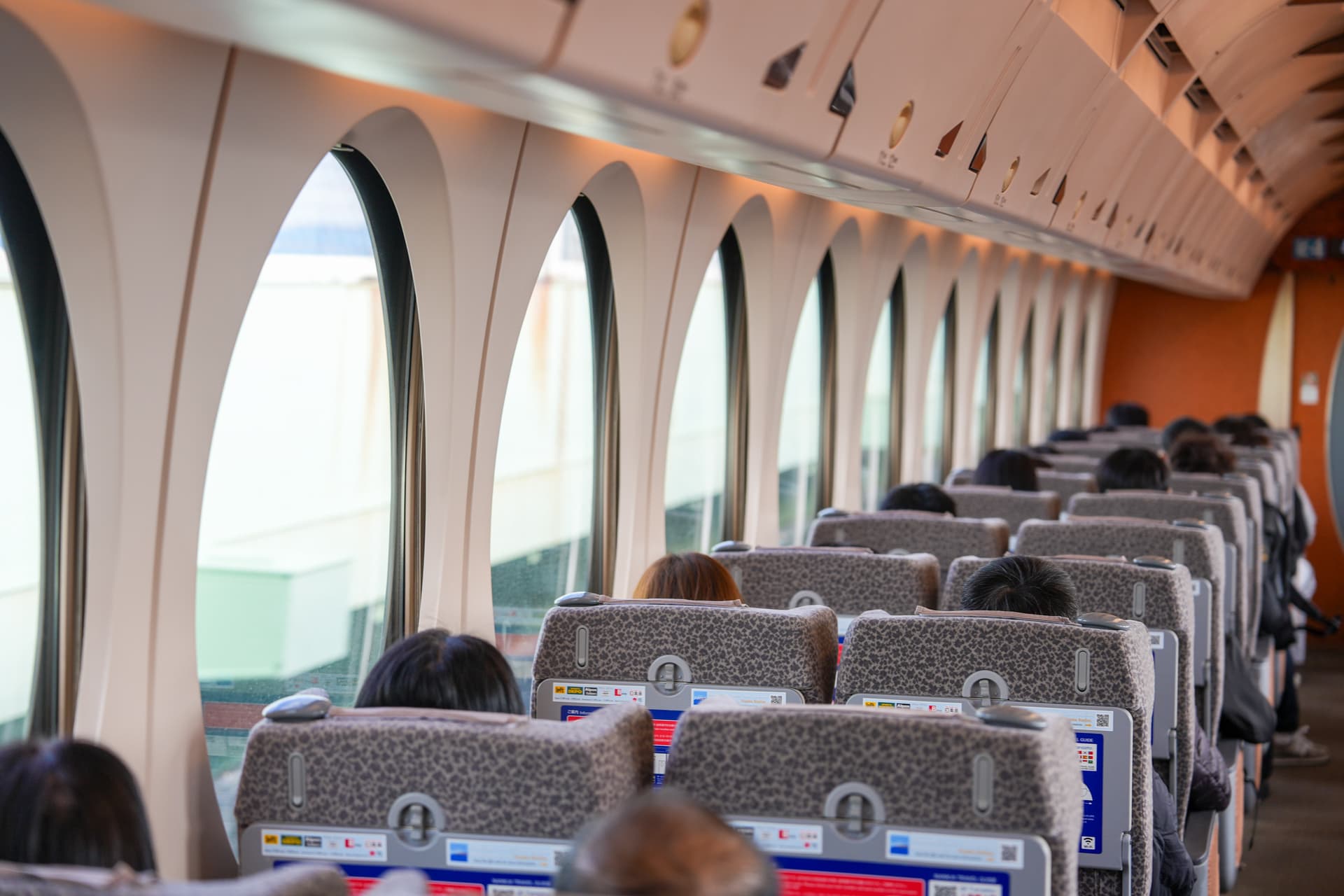
A few seat-level things worth knowing:
- Wide seat pitch — a backpack between your feet doesn't crowd your knees
- No outlets or USB ports at the seat — charge your phone before boarding if you'll need it for navigation later
- Overhead bin — fits a backpack, but not a full carry-on
- Luggage rack between cars — this is where everyone's suitcases go
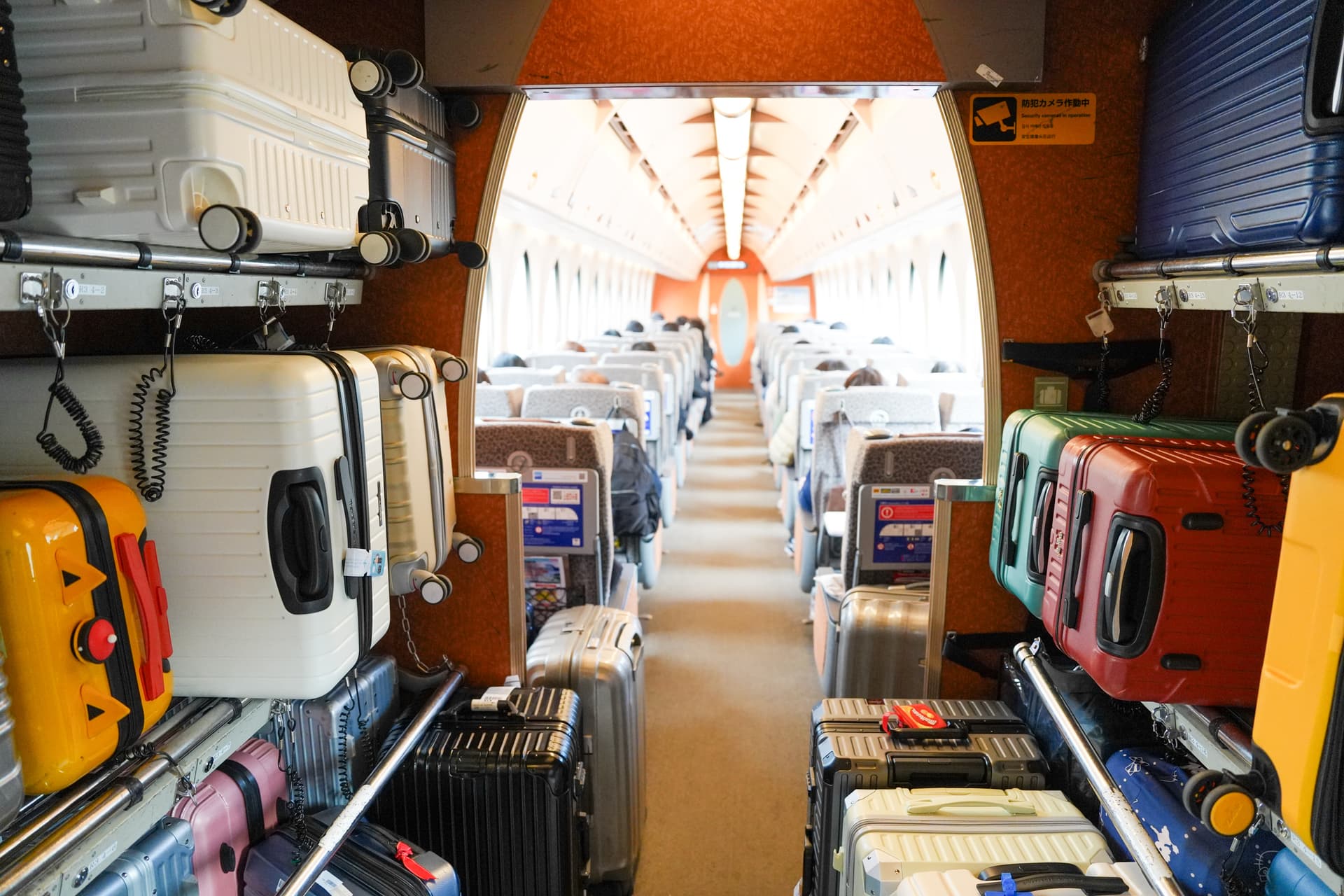
The KIX → Namba direction is usually fine for luggage — racks aren't full, and you can walk on at a normal pace and still find a slot. The direction to actually watch is Namba → KIX in the morning, when the early outbound flights cluster and the train fills up car by car. The rack space goes first, and once it's gone you're parking your suitcase in the aisle. So my routine is to line up at the platform door a few minutes early, board fast, drop the suitcase before I sit. I've watched late-boarding passengers end up wedging their cases in the aisle, and while Japan is safe enough that it's not really a security worry, it's still not a great look for the people trying to walk past.
Bathrooms are tucked between cars 3 and 5, but realistically you won't need them — the whole ride is only 35 minutes.
Arriving at Nankai Namba (Read This)
Namba isn't one station, it's a cluster of stations stacked into the same neighborhood, and if you don't pay attention to *which* Namba you're heading to, you can lose 10–15 minutes wandering through underground passages with a suitcase. Rapi:t terminates at Nankai Namba, which sits a touch south of the regular Namba subway station and connects to the rest of the Namba area through an underground concourse.
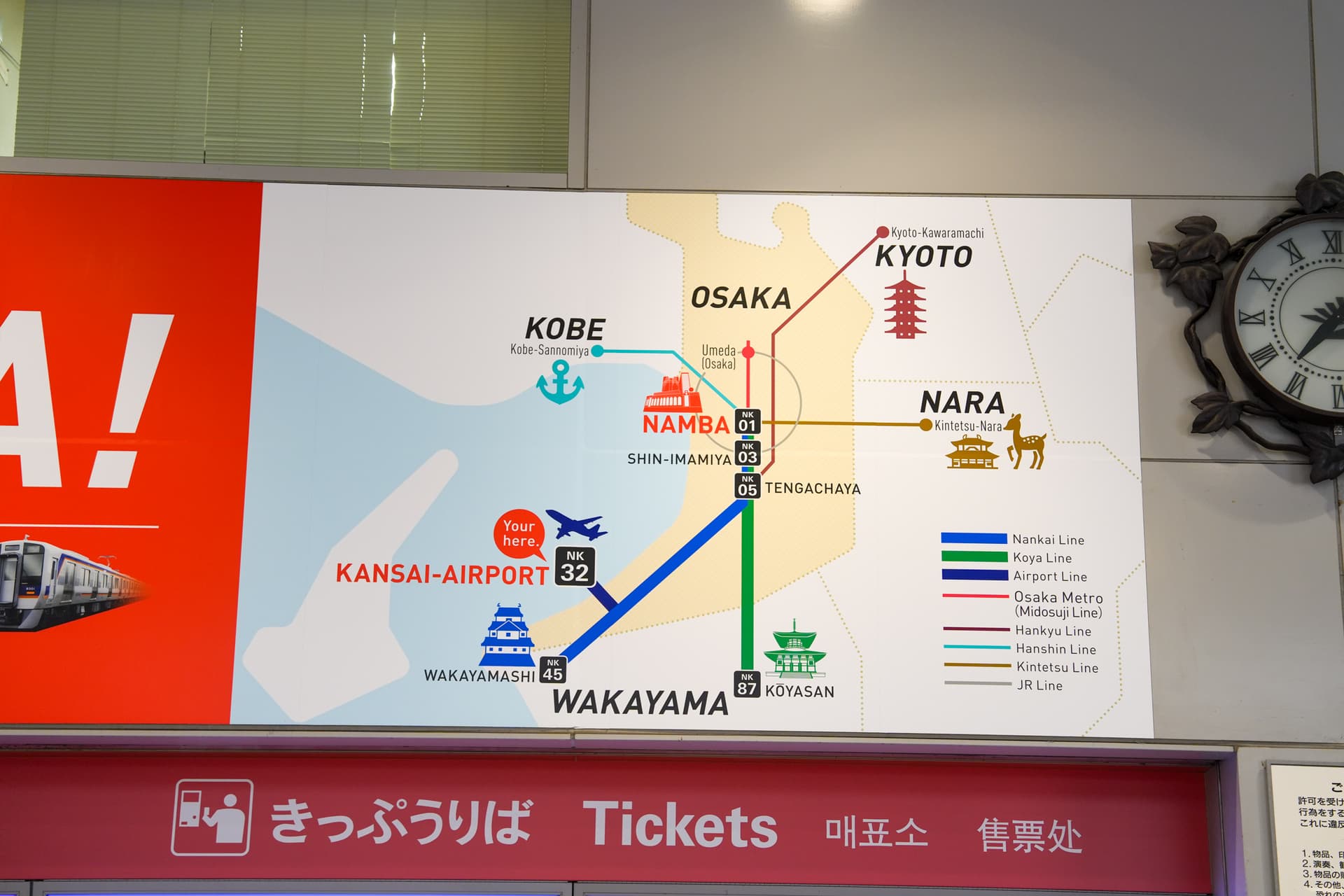
For the return leg, what I always tell people is to search "Nankai Namba" in Google Maps, not just "Namba". Different building, different entrance, and the wrong pin will drop you at a totally different concourse. Platform 9 is the Rapi:t platform inside Nankai Namba, and the QR-tap-in flow is exactly the same as at KIX.
When you exit at Nankai Namba, you spill straight into a wide underground shopping arcade, and most Namba-area hotels are walkable from there without ever coming back up to street level. So I'd suggest checking your hotel's Google Maps page in advance for the closest underground exit number, then just rolling your suitcase straight to it from the platform.
After five-plus round trips the conclusion is consistent: prepay on Klook the day before, save the QR (you'll scan it at both entry and exit), pick your seat after you land for the arrival leg and well in advance for the return. And remember that Nankai Namba is a different building from the regular Namba subway station — search the exact station name in Google Maps so you're not dragging a suitcase through the wrong concourse.
If your trip continues from Osaka, the USJ Express Pass guide and the Umeda Sky Building night-view guide cover the two highest-value paid stops in the city. For a Kyoto leg, the Haruka Express guide is the airport-train counterpart on the JR side. And the TripFlowy planner can drop the whole airport-to-hotel-to-spots flow onto a single day grid.
Book Rapi:t Tickets on Klook
via Klook
FAQ
How long does Rapi:t take from Kansai Airport to Namba?
Should I take Rapi:t or Haruka from Kansai Airport?
Can I just buy a Rapi:t ticket on the day at the station?
When should I lock in my seat for Rapi:t?
Where exactly do I board for the return Rapi:t?

Written by
Huiwon Kim (Check Kim)
Founder, TripFlowy · Travel Creator
Travel creator covering Asia since 2007. Known as Check Kim (책킴) in Korea, boarded 64 flights in 2025 alone. 20+ trips to Japan, with personally tested spots across 50+ cities in 15+ Asian countries. Writes about theme parks, airport transit, observation decks, and day-trip routes from major cities.
Plan a trip to this destination
Start Planning
Book Rapi:t Tickets on Klook
≈$8 / ¥1,300 one-way (KIX↔Namba, reserved, Klook discount)