
Haruka Express: Kansai Airport to Kyoto Tickets
 Huiwon Kim (Check Kim)2026-04-29Updated 2026-10-275 min read
Every photo in this post was taken on site by Check Kim.
Some links are affiliate links — we may earn a small commission at no extra cost to you.
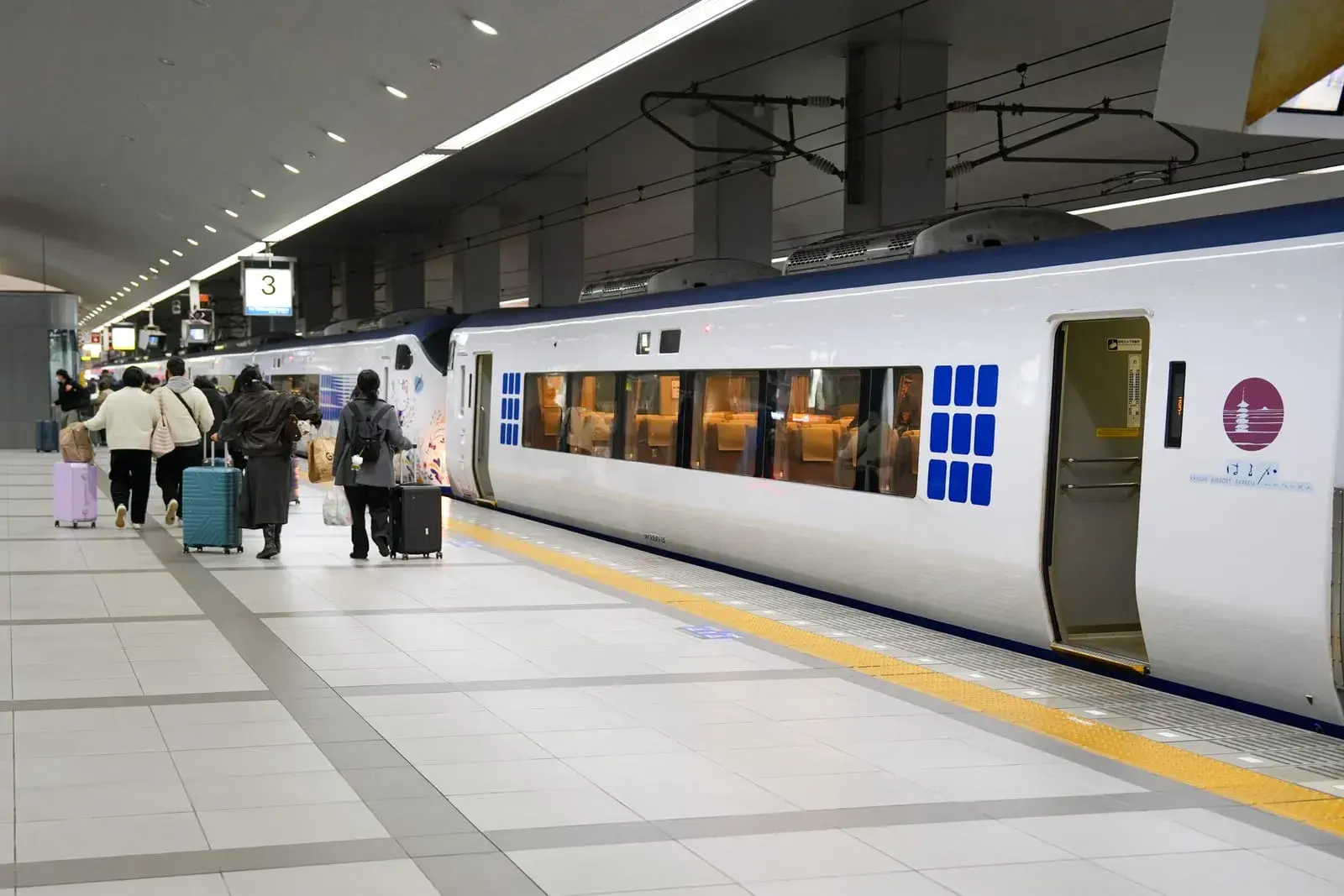
- Route
- Kansai Airport → Tennoji 35 min · Osaka 50 min · Kyoto 75 min
- Price
- About $12 one-way on Klook (October 2026) · round trip = two one-ways
- Hours
- First train 6:30 · last around 22:00 · every 30–40 min
- Ticket
- E-ticket (JR sign-up, QR) or paper ticket (passport scan)
Contents · 5
The JR Haruka runs from Kansai Airport to Kyoto in about 1 hr 15 min for about $12 on Klook. E-ticket vs paper ticket, and why to do Kyoto first.
To go straight from Kansai Airport to Kyoto, take the JR limited express Haruka and you'll reach Kyoto Station in about 1 hour 15 minutes with no transfers. In October 2026 it was about $12 one-way on Klook, and since there's no round-trip product, you buy two one-ways. If you're doing both Osaka and Kyoto, I recommend heading to Kyoto first straight from the airport.
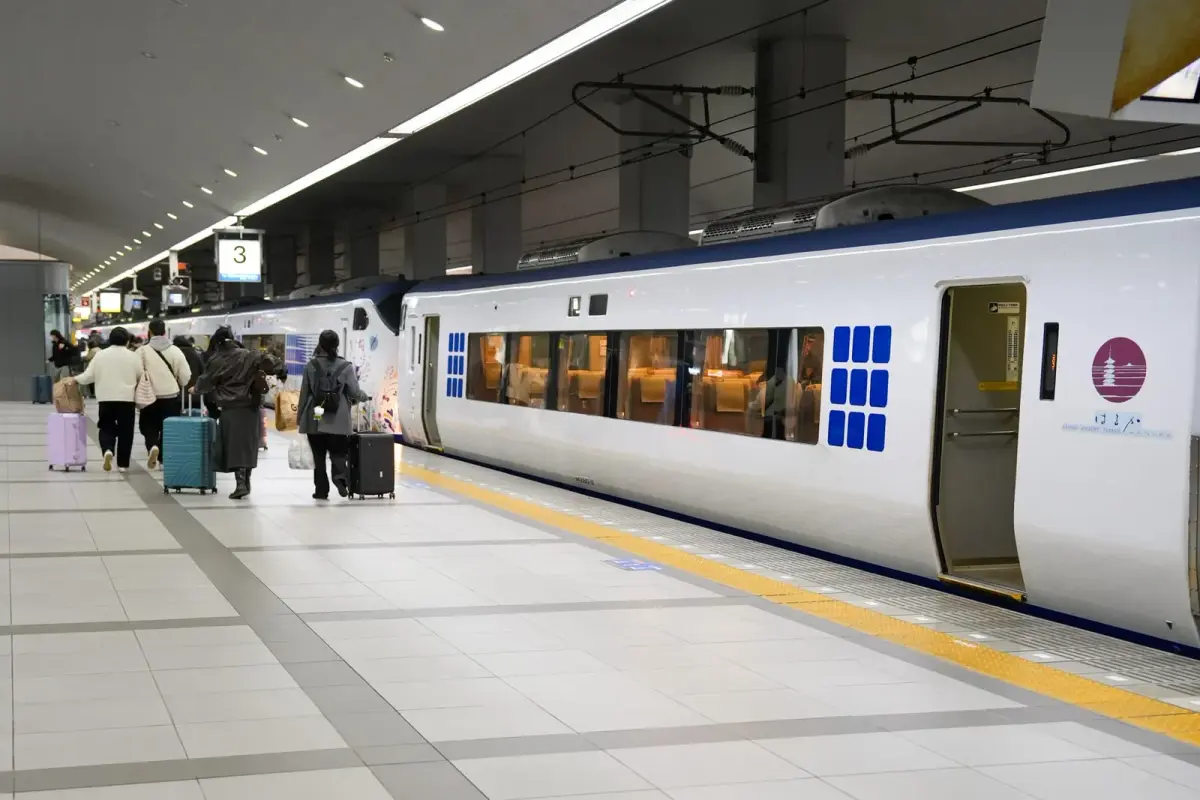
I take the Haruka every time I combine Osaka and Kyoto, so I've used it many times. I've tried both the e-ticket and the paper ticket, and ridden it from Kyoto back to the airport too. The Haruka is occasionally delayed by incidents, and I'd hate to miss a flight because of that on my last day, so these days I always do Kyoto first.
Haruka or Rapi:t?
From Kansai Airport into the city, the two express options are the Haruka and the Rapi:t. The Rapi:t ends at Namba in Osaka, so it can't take you to Kyoto.
Hotels in Kyoto, Umeda (Osaka Station) or Tennoji: JR Haruka
Hotels around Namba and Dotonbori: Nankai Rapi:t
The Haruka took 75 minutes to Kyoto Station, 35 minutes to Tennoji and 50 minutes to Osaka Station. Even if you're not going to Kyoto, it's easier than the Rapi:t if you're staying near Tennoji or Umeda. For Namba, see my Rapi:t booking guide.
Tickets: e-ticket vs paper ticket
Haruka tickets bought on Klook can be used as an e-ticket or exchanged for a paper ticket, and the price is the same. Having used both, here's the difference.
E-ticket: sign up on the JR site and register your voucher, then reserve your car and seat in advance and go straight through the gate with a QR code
Paper ticket: scan your voucher and passport at the JR counter at the airport to get a ticket, and pick a seat on the spot
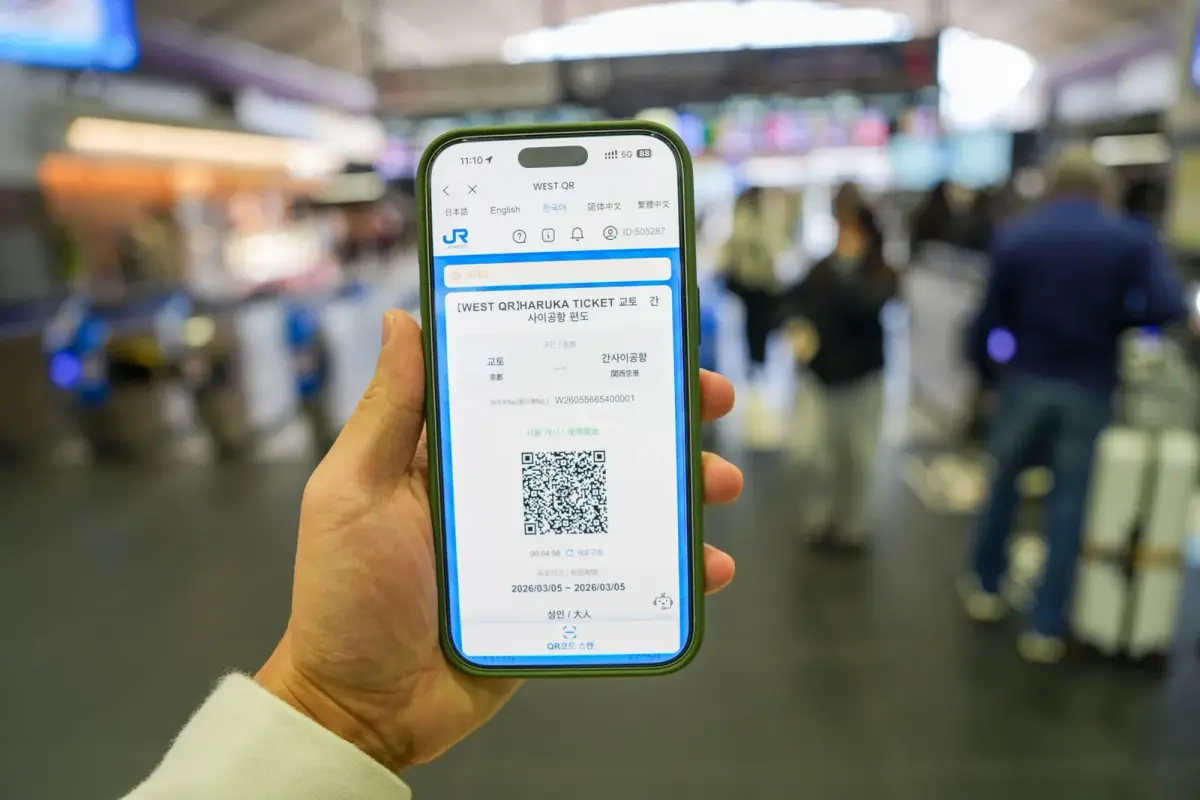
The e-ticket saves you a stop at the counter but requires a JR account. When going straight from the airport, picking up a paper ticket on the spot actually felt simpler. It's a discounted ticket for foreign visitors, so you scan your passport when you collect it.
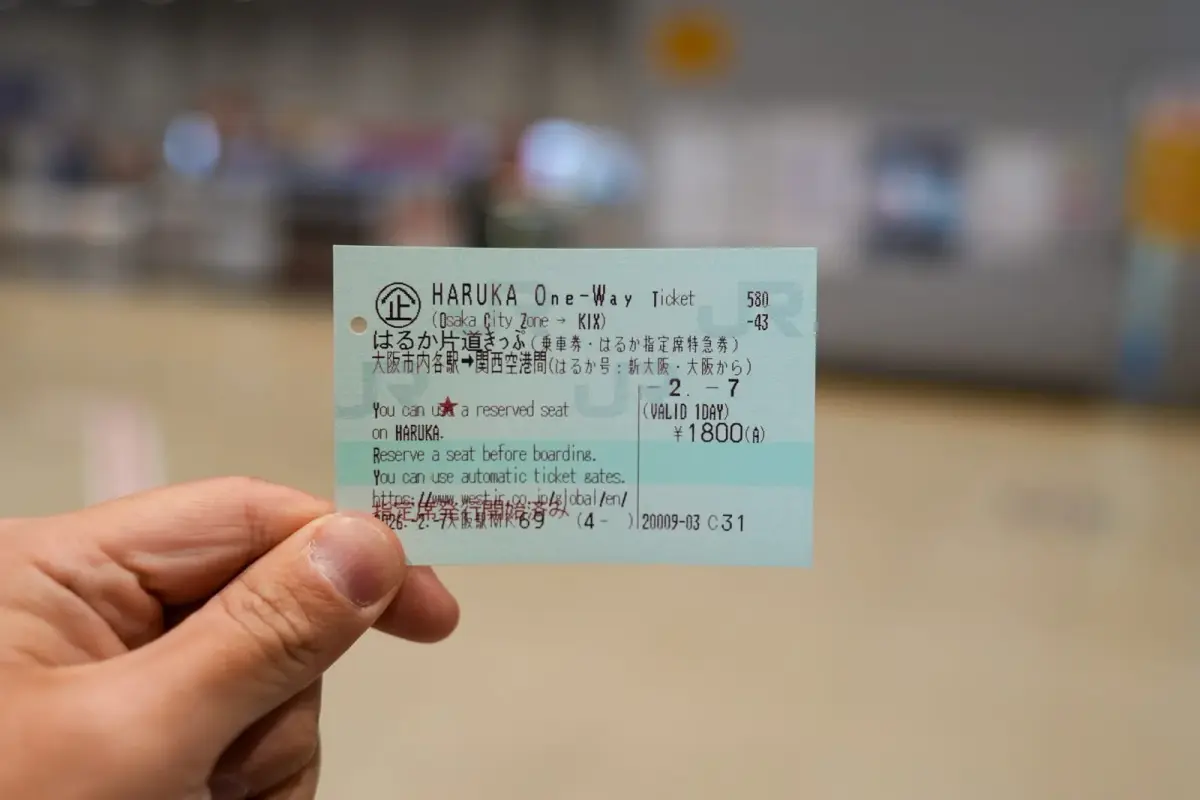
The paper ticket starts out as unreserved, but if you insert it into the machine again, the remaining seats show up as green circles and you pick one. Switching to a reserved seat costs nothing extra, so there's no reason not to. When you put the ticket through the gate it comes back out on the other side, and you'll need it again to exit at Kyoto Station, so hold on to it. Only the main ticket goes through the gate, not the seat reservation slip.
Seats were plentiful, so from the airport, rather than locking in a time in advance, it was easier to pick the next train after collecting my bags. Buy the ticket in advance and choose your seat at the airport.
Boarding at Kansai Airport
Trains leave from Terminal 1. If you land at Terminal 2, take the shuttle bus to Terminal 1. The train area is split between JR and Nankai; the Haruka is on the side marked JR in blue. With an e-ticket, use a gate with a QR scanner, and scan again when you exit at Kyoto Station.
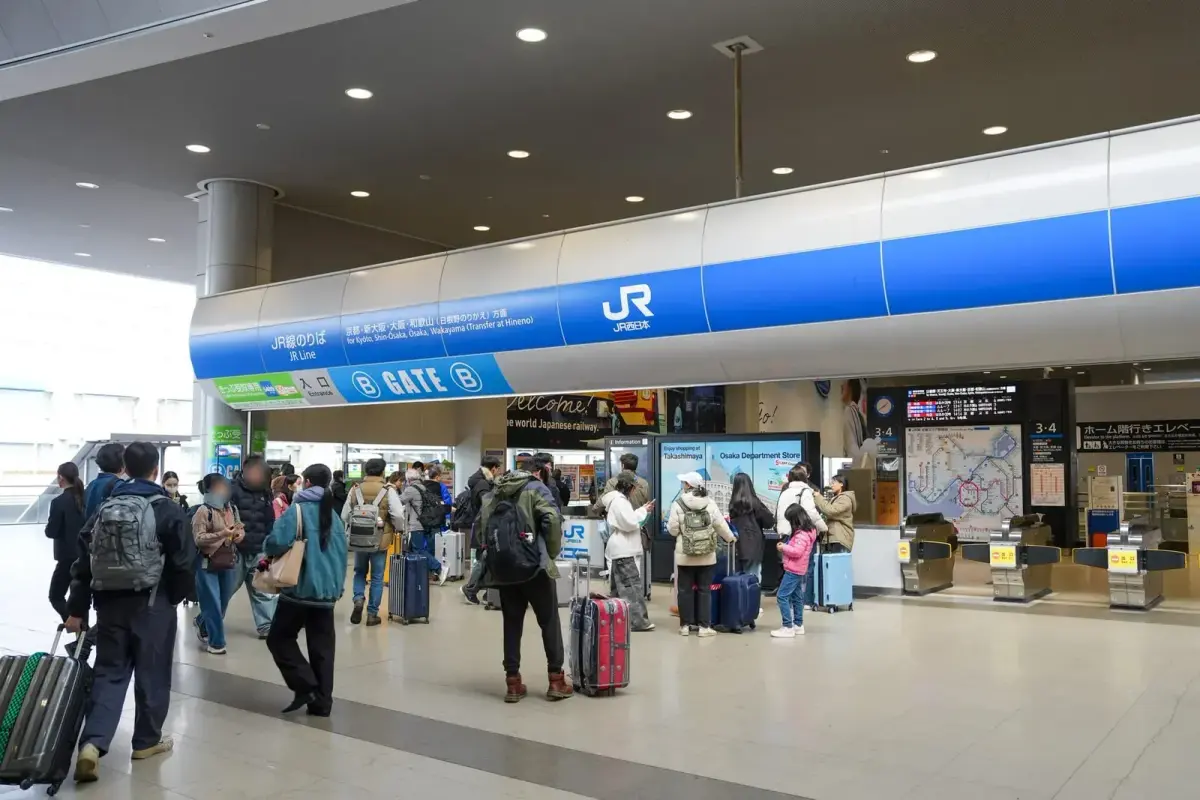
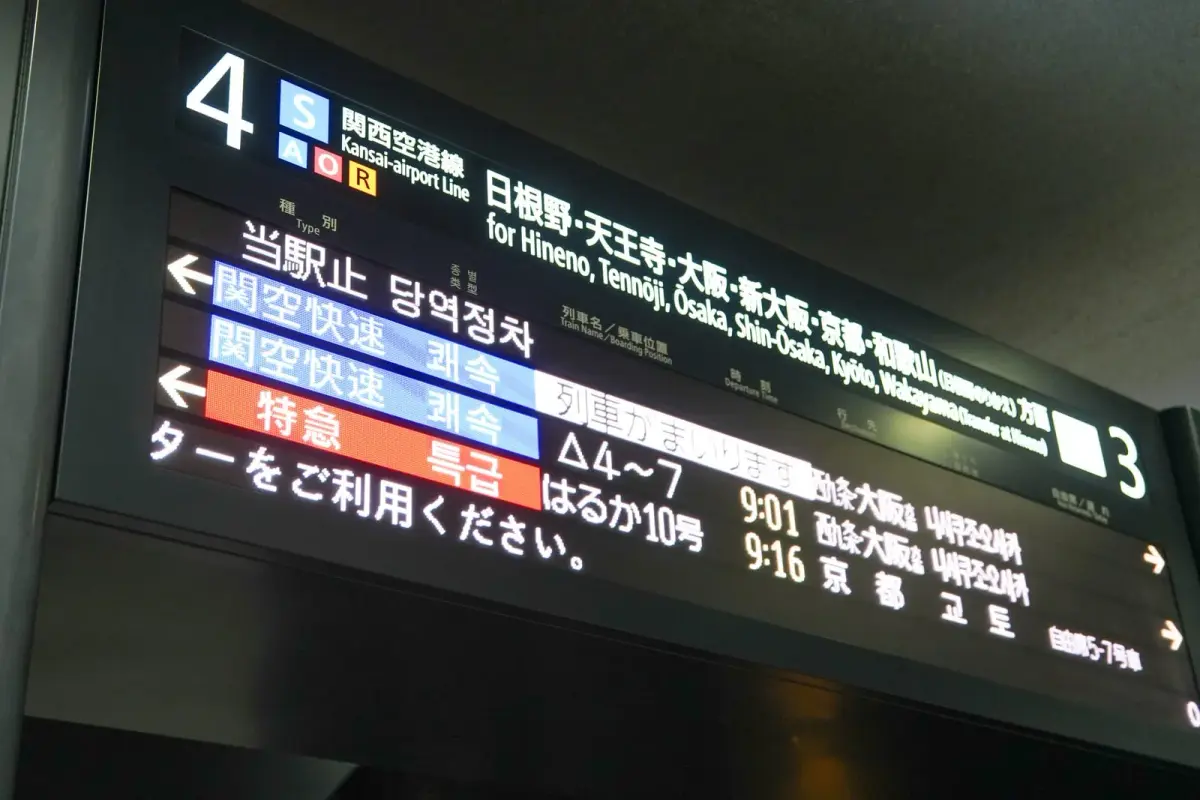
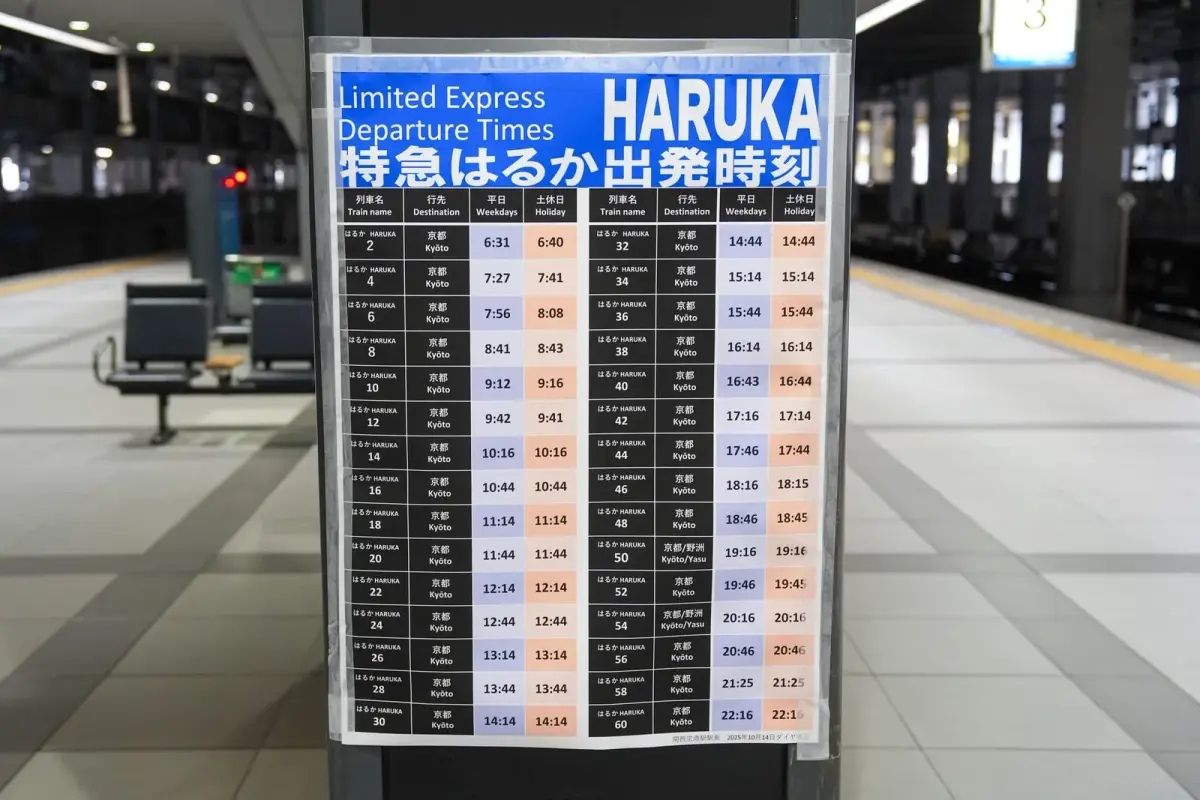
The Haruka runs every 30 to 40 minutes, with the first train at 6:30 a.m. and the last around 10 p.m. The platform departure boards show the limited express in red, and that's the Haruka. If delays scramble the timetable, go by the train number and car number rather than the time.
Seats and luggage: why reserved seats are easier
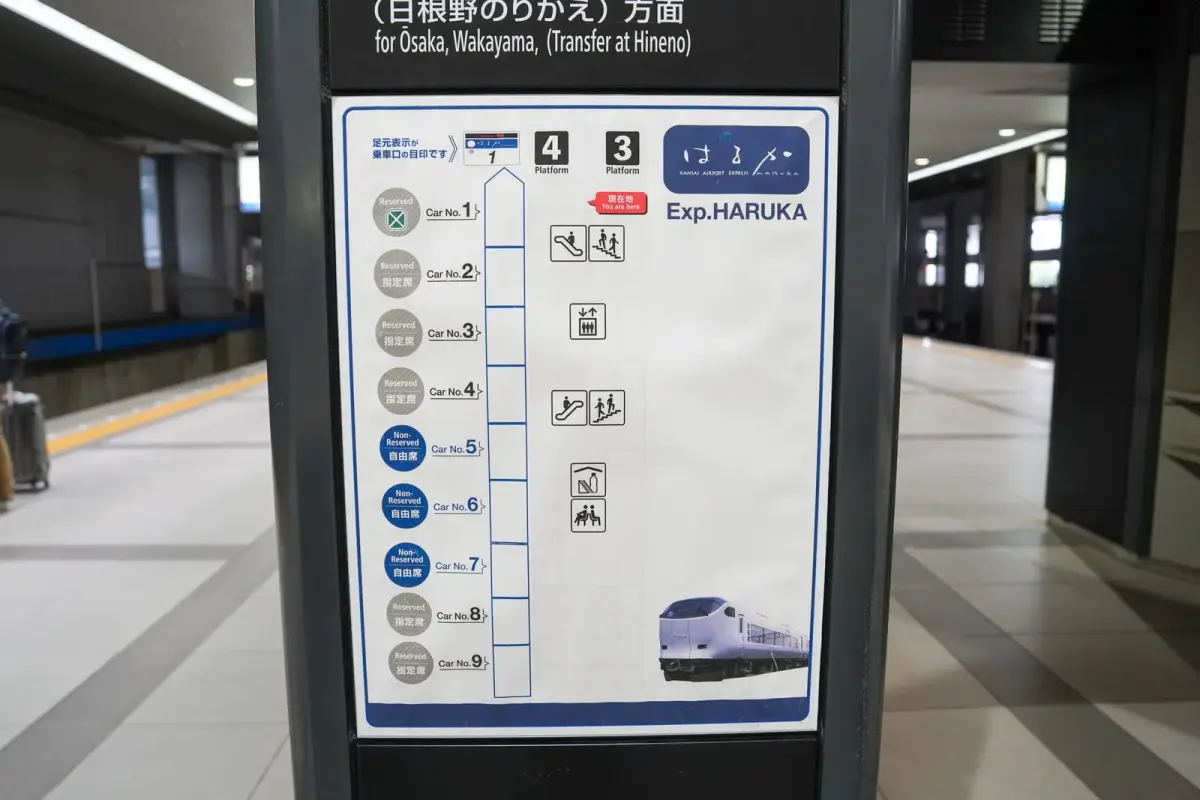
Cars 5, 6 and 7 are unreserved and tend to be crowded, and the reserved cars had more luggage space too. I always reserve, and rode comfortably with the seat next to me empty.
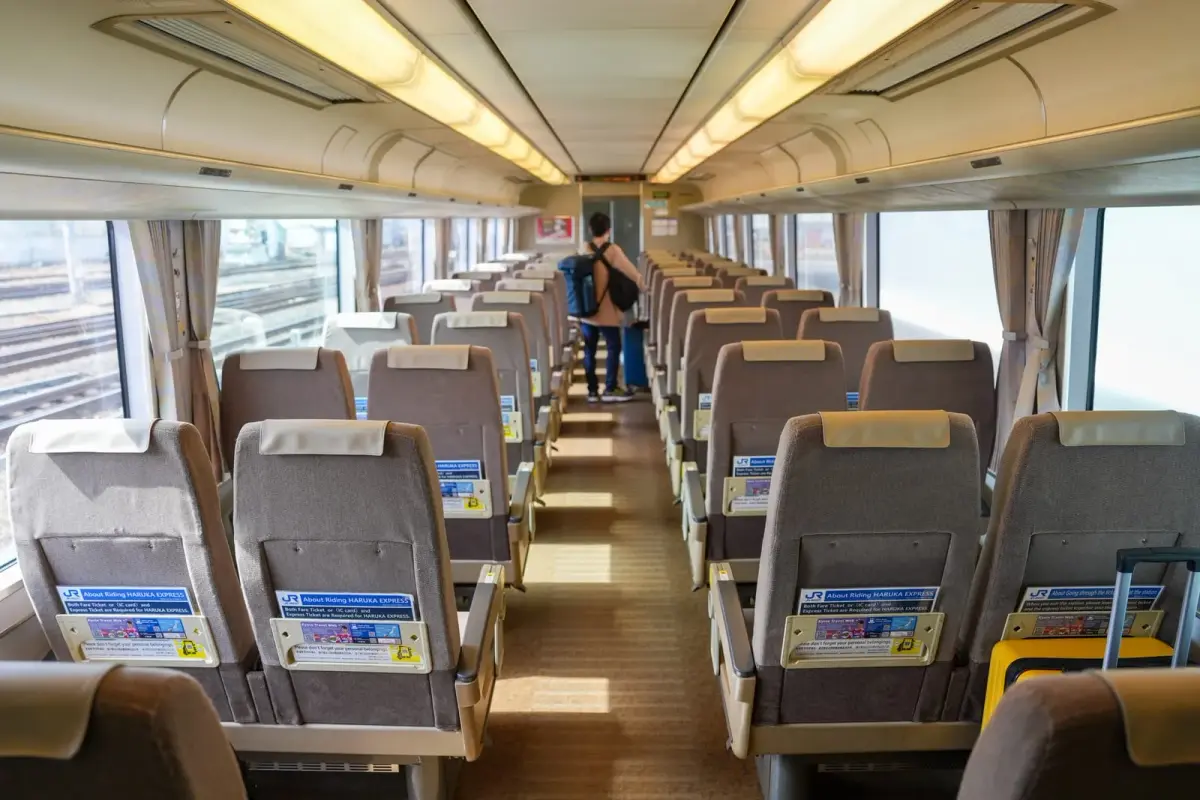
The train arrives about 10 minutes before departure. Some trains are wrapped in Hello Kitty designs, and inside it felt brighter and more modern than the Rapi:t. There's a small tray in front of each seat, and the seats rotate to face forward or backward. There's also a Green Car section with just three seats per row, which hardly anyone was using.
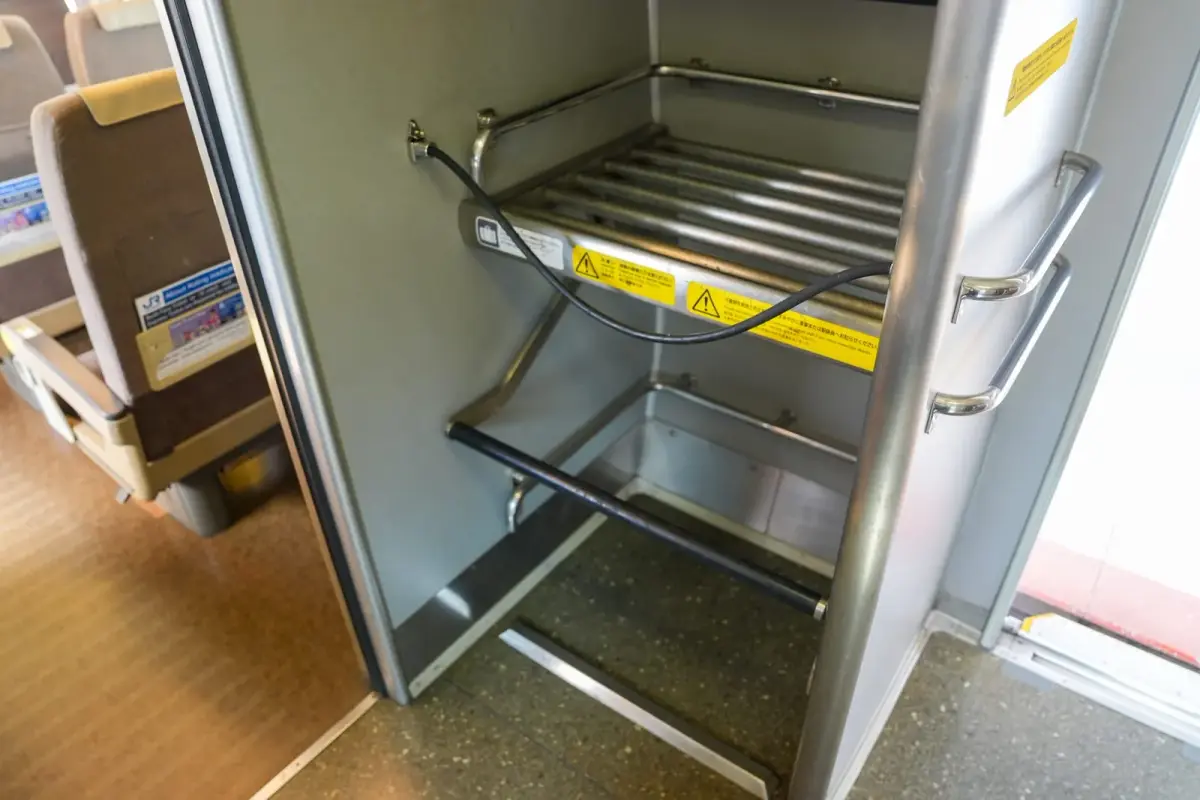
Suitcases go in the luggage area by the doors. There's no lock, but bag theft is rare in Japan, so I've always left mine there. If it's full, use the overhead rack.
Going back from Kyoto to the airport
At Kyoto Station, the Haruka leaves from platform 30. The station is big, but "Haruka" is clearly signed in English, so it wasn't hard to find. Kyoto is the first stop, so it's easy to load luggage at first, but once people boarded at Osaka Station, the luggage area was almost full. Grab a luggage spot first when you board in Kyoto. It took about 1 hour 20 minutes to the airport.
Kyoto deserves more than a single day, so if you can, stay two or three days. Going straight from the airport to Kyoto also saves your energy on day one. For getting around Kyoto, see my Kyoto day trip itinerary, and for Osaka, my 2-night, 3-day Osaka itinerary and Umeda Sky Building night view guide.
FAQ
How long does the Haruka take from Kansai Airport to Kyoto?
How much is the Haruka?
Is the Haruka e-ticket or paper ticket easier?
Do I have to pay extra to reserve a Haruka seat?
Should I visit Osaka or Kyoto first?

Written by
Huiwon Kim (Check Kim)Founder, TripFlowy · Travel Creator
Travel creator on the road since 2007. Known as Check Kim (책킴) in Korea, boarded 64 flights in 2025 alone. 20+ trips to Japan, with personally tested spots across 50+ cities in 20+ countries in Asia, Europe and the Americas. Writes about theme parks, airport transit, observation decks, and day-trip routes from major cities.
Comments