
Senso-ji, Asakusa: Free Entry, ¥100 Fortunes, Food
 Huiwon Kim (Check Kim)2026-11-154 min read
Every photo in this post was taken on site by Check Kim.
- Admission
- Free · grounds open 24 hours
- Main hall
- 6 a.m.–5 p.m., from 6:30 a.m. October to March
- Fortunes
- Omikuji ¥100 (about $0.70)
- Food
- Giant takoyaki at the stalls by the main hall, 6 for ¥700 (about $4.70)
Contents · 7
Senso-ji is free and open 24 hours; the main hall opens at 6 a.m. (6:30 in winter), so go early. Fortunes are ¥100, and the best food is at stalls.
Senso-ji in Asakusa is free to enter, and the temple grounds stay open 24 hours. The main hall opens from 6 a.m. to 5 p.m. (from 6:30 a.m. between October and March), and since this is one of the busiest spots in Tokyo, I'd go in the morning when it's quieter. A fortune slip cost ¥100, and for food, the stalls in front of the main hall beat the Nakamise-dori shops.
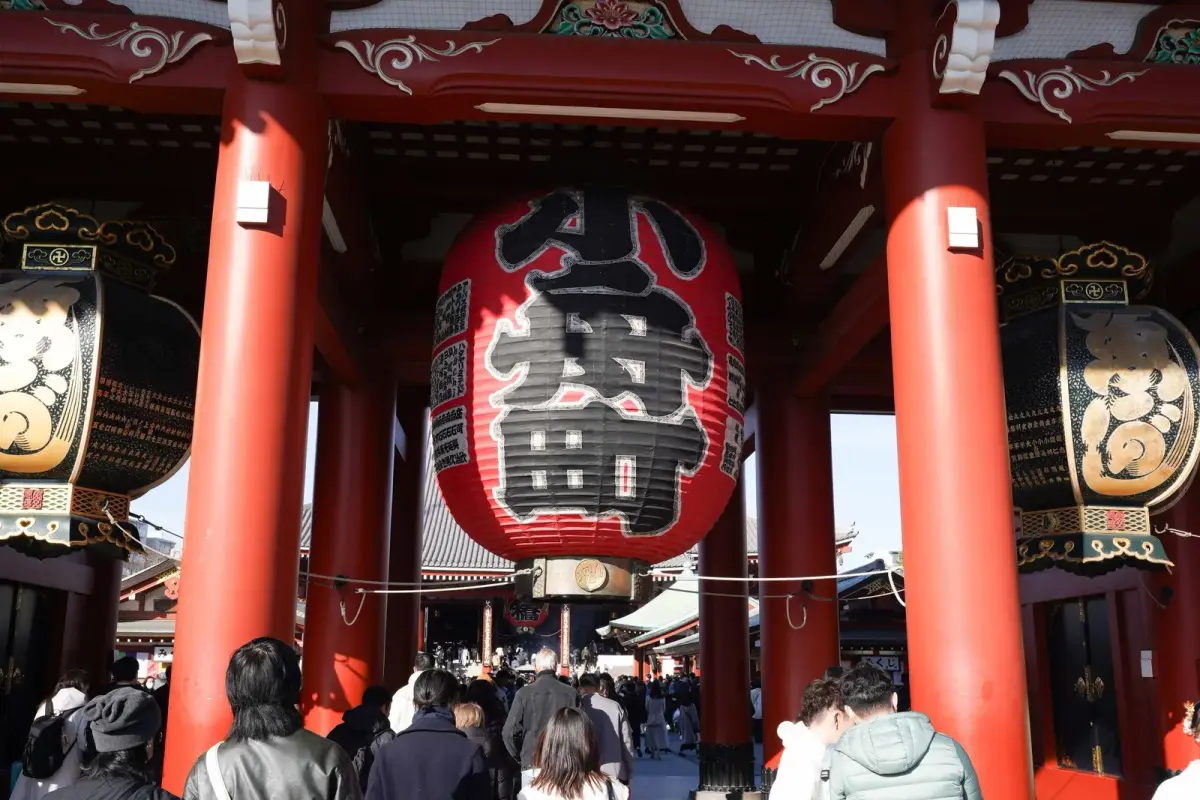
I first went in February 2024 on a trip to Tokyo and went back in August 2026. My first visit happened to fall during Setsubun, the festival held the day before the start of spring. I'd seen the temple in so many TV shows and anime that it felt familiar the moment I arrived.
Getting there and when to go
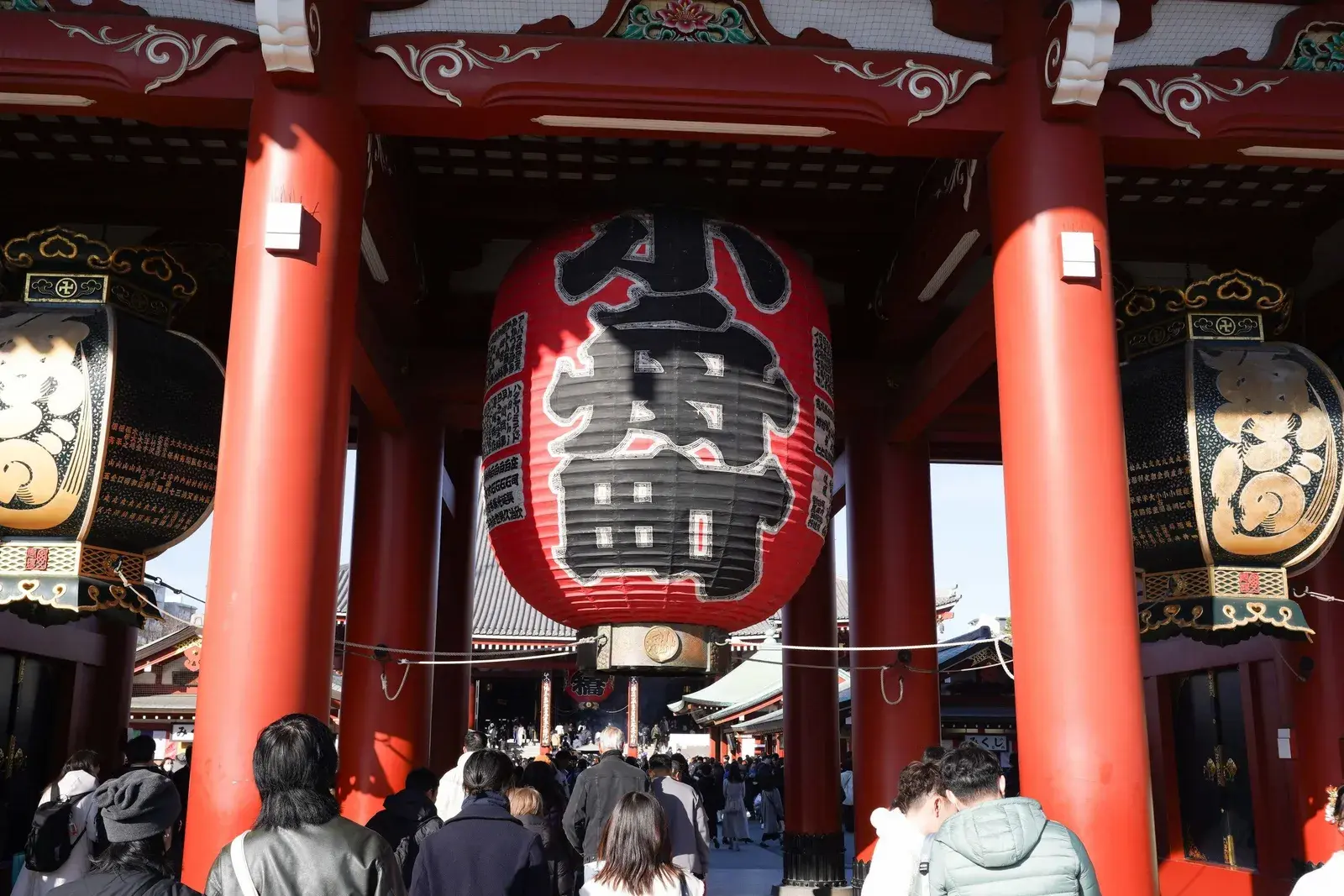
Senso-ji is a short walk from Asakusa Station. Come out of the station, pass under the gate with the giant red lantern, and stroll along the shopping street until you reach the main hall. Founded in 628, it's one of the largest temples in Japan. It was badly damaged in the 1945 air raids on Tokyo and rebuilt into what you see today.
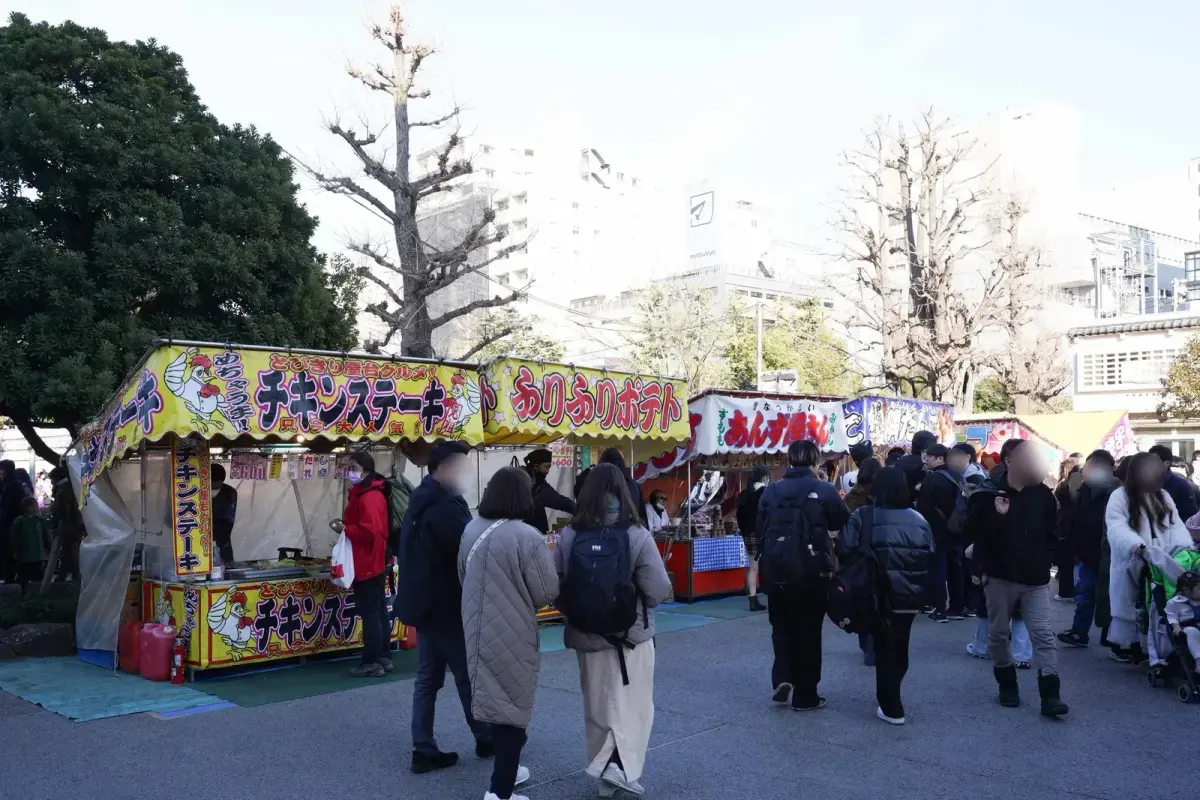
Of all the sights I've visited in Tokyo, Senso-ji was the most crowded and chaotic. During the day you get swept along with the crowd from the shopping street onward, so if you want to look around in comfort, go early in the morning when the main hall opens. The grounds are open 24 hours, so you can also drop by for a walk early in the day or in the evening.
Food: skip the shopping street, eat by the main hall
Nakamise-dori, the street running from Asakusa Station to the main hall, is lined with traditional shops, and there are well-known croquette shops on the left just before the hall. Instead of buying there, though, I'd recommend heading into the temple grounds and eating at the food stalls near the main hall.
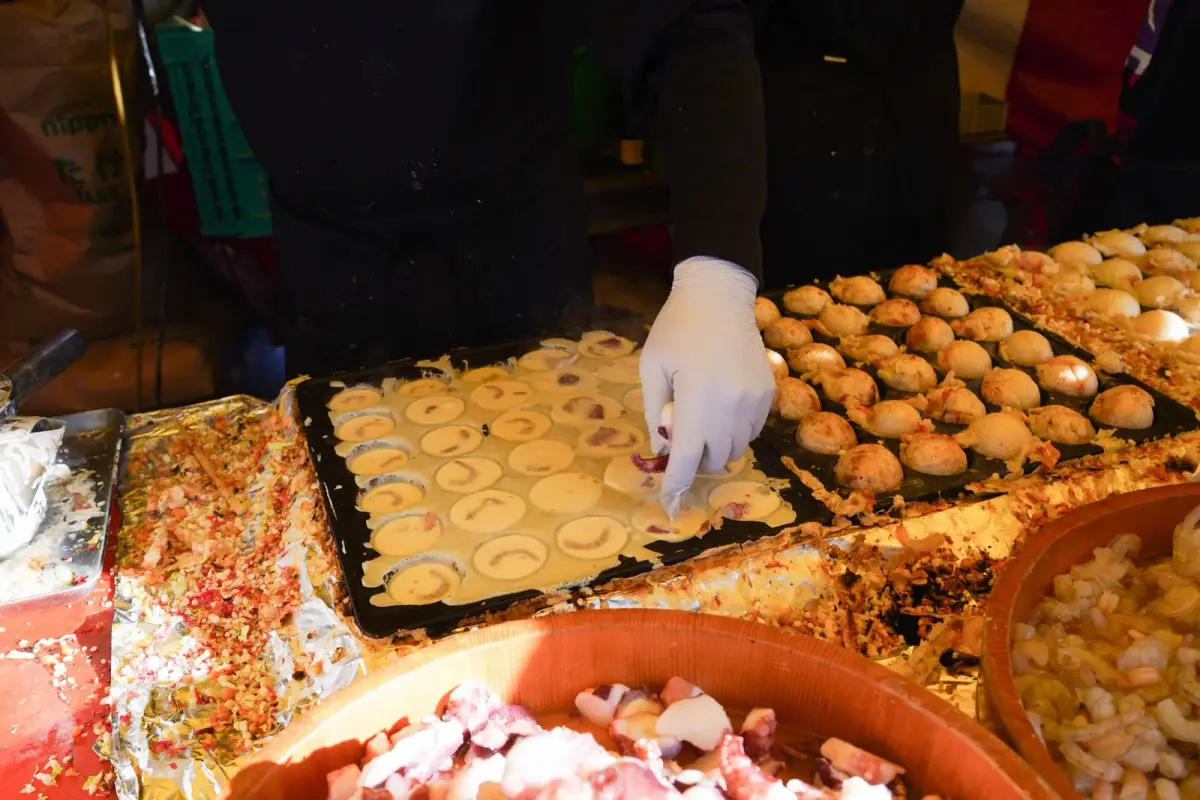
The longest line was for the giant takoyaki. I got six of these oversized balls for ¥700, which seemed pricey for street food, but there was so much of it that I was happy with it. It was Setsubun, so there may have been more stalls than usual.
Fortunes and temple customs
Seeing the statues and buildings is nice, but at Senso-ji you can also try Japanese customs yourself, like drawing a fortune or the purification ritual.
Omikuji (fortunes)
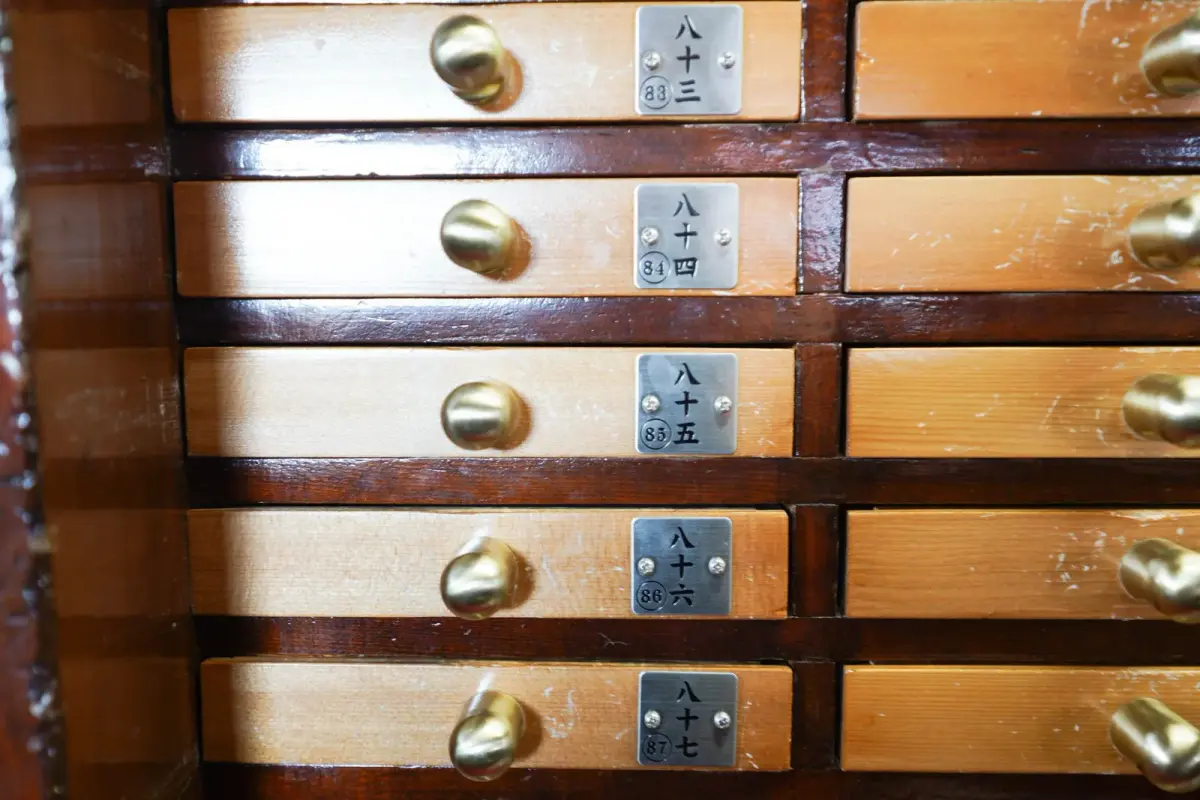
Pay ¥100, shake the omikuji canister until a stick slides out, and check the number written on it. Open the drawer with the same number and take out your fortune slip. If you get a good fortune, keep it as a souvenir. If it's bad, the custom is to tie it up at the spot set aside on the grounds and leave it there.
Chozuya (hand-washing ritual)
This is where you rinse your hands and mouth before praying, to cleanse body and mind. Here's the order:
Hold the ladle in your right hand and pour water over your left hand
Switch hands and pour water over your right hand
Switch back to your right hand, pour water into your left palm and rinse your mouth (spit it out, don't drink it)
Pour water over your left hand once more, then tilt the ladle upright so the water runs down and cleans the handle
The incense burner and Setsubun beans
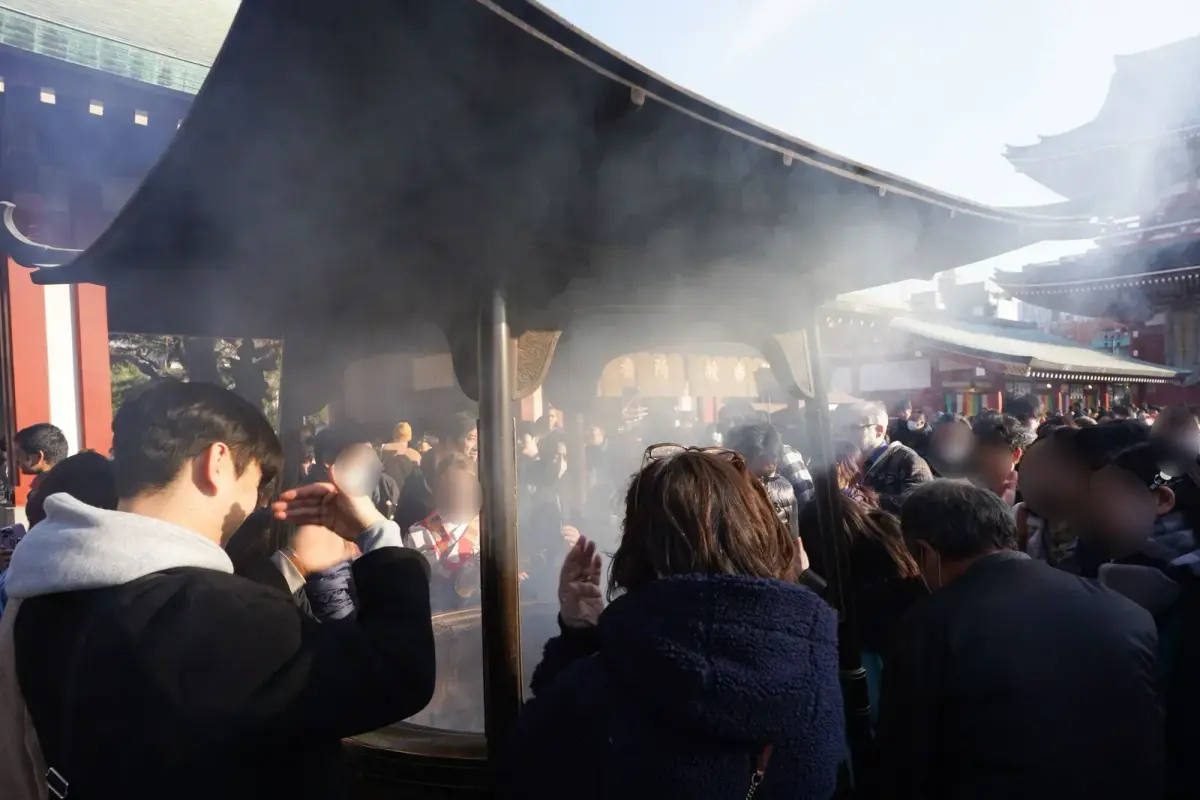
Wafting smoke from the big incense burner in front of the main hall onto yourself is said to bring good health and luck, so lots of people were lighting incense.
Setsubun is a February event where people throw beans to chase away evil spirits and invite good fortune. I assumed the beans were thrown at the temple, but it turns out you buy them and throw them from inside your house out the front door. So I carried mine all the way home and did the bean throwing there.
What to pair it with
Near Senso-ji you can ride a rickshaw, and plenty of people rent a kimono to walk around the grounds. The Asahi Sky Room nearby is worth a stop too. Tokyo Skytree isn't far from Asakusa, so seeing Senso-ji in the morning and heading to the observation deck in the afternoon or evening makes an easy route.
Senso-ji lets you take in a Japanese temple and its customs in one go without paying admission, so if it's your first trip to Tokyo, slot it into a morning. For your next stop, see my Tokyo Skytree observation deck guide.
FAQ
How much is Senso-ji and what are the hours?
How do you get a fortune at Senso-ji?
What should I eat in Asakusa?

Written by
Huiwon Kim (Check Kim)Founder, TripFlowy · Travel Creator
Travel creator on the road since 2007. Known as Check Kim (책킴) in Korea, boarded 64 flights in 2025 alone. 20+ trips to Japan, with personally tested spots across 50+ cities in 20+ countries in Asia, Europe and the Americas. Writes about theme parks, airport transit, observation decks, and day-trip routes from major cities.
Comments