
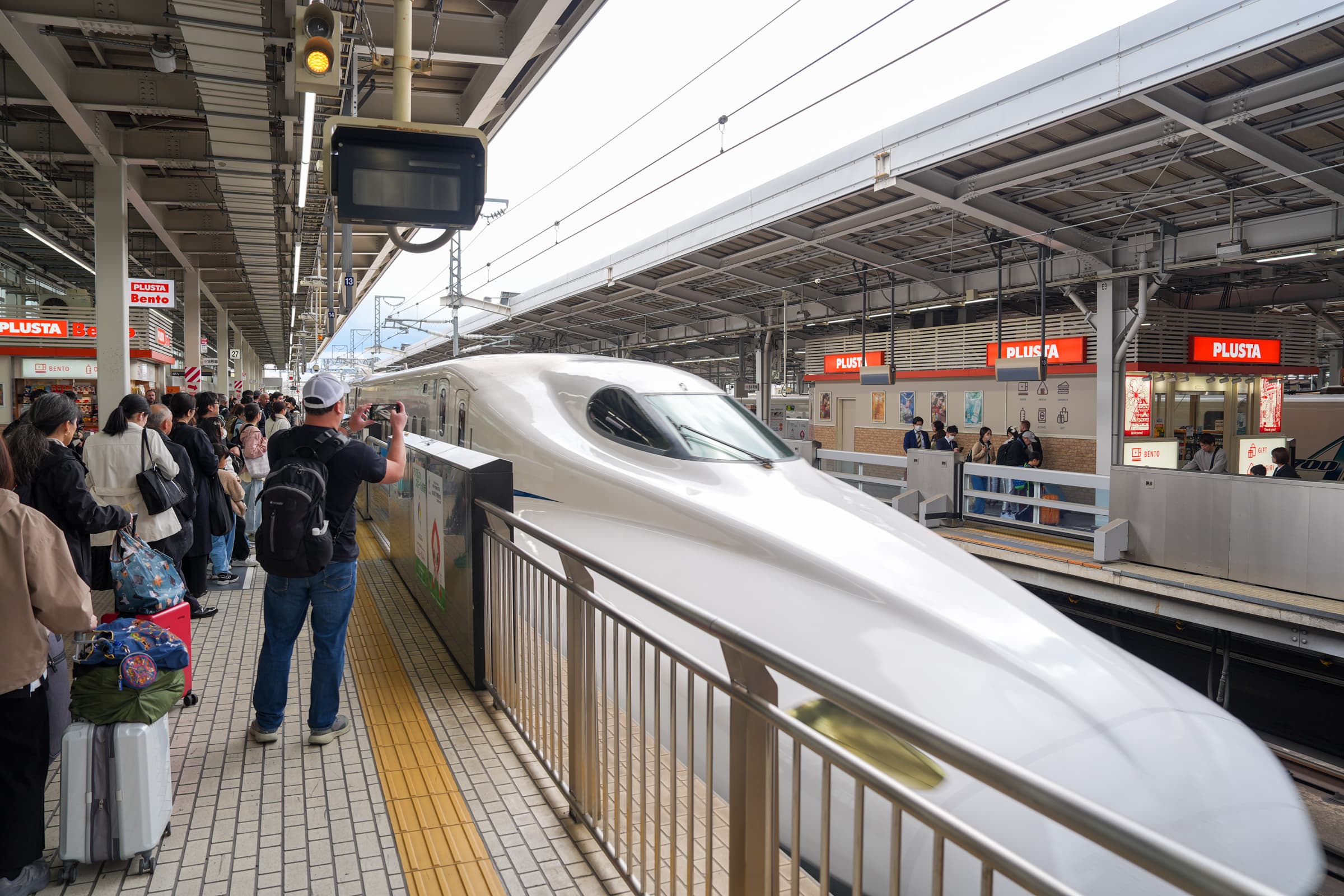
Shinkansen Osaka to Tokyo — Klook Booking, Mt. Fuji View Seats & Boarding Guide
Shin-Osaka to Tokyo Station on the Tokaido Shinkansen Nozomi takes about 2 hours 30 minutes, every 5–10 minutes, no transfers. Klook booking flow, the Mt. Fuji-side seat trick, Shin-Osaka vs. Osaka Station mixup, luggage tips and onboard notes — written from a personally ridden round-trip by Check Kim.
Shinkansen — Shin-Osaka to Tokyo in 2 Hours 30 Minutes
If you're combining Osaka and Tokyo on one trip, the Tokaido Shinkansen Nozomi between Shin-Osaka and Tokyo Station is pretty much the default move. The ride is about 2 hours 30 minutes, direct, with departures every 5–10 minutes and a guaranteed reserved seat. I personally rode it round-trip on this exact Osaka-in / Tokyo-out itinerary, prepaid on Klook, walked through the JR Shinkansen gate at Shin-Osaka with the QR on my phone, and stepped off at Tokyo right on schedule.
The headline thing this guide tries to fix is the same trap most first-timers fall into: Shin-Osaka Station and Osaka Station are not the same building. Osaka Station is next to Umeda; Shin-Osaka is one stop further north on the Midosuji subway line, and that's where every Shinkansen for Tokyo actually departs. Get that one detail right and the rest of the ride is shockingly low-friction.
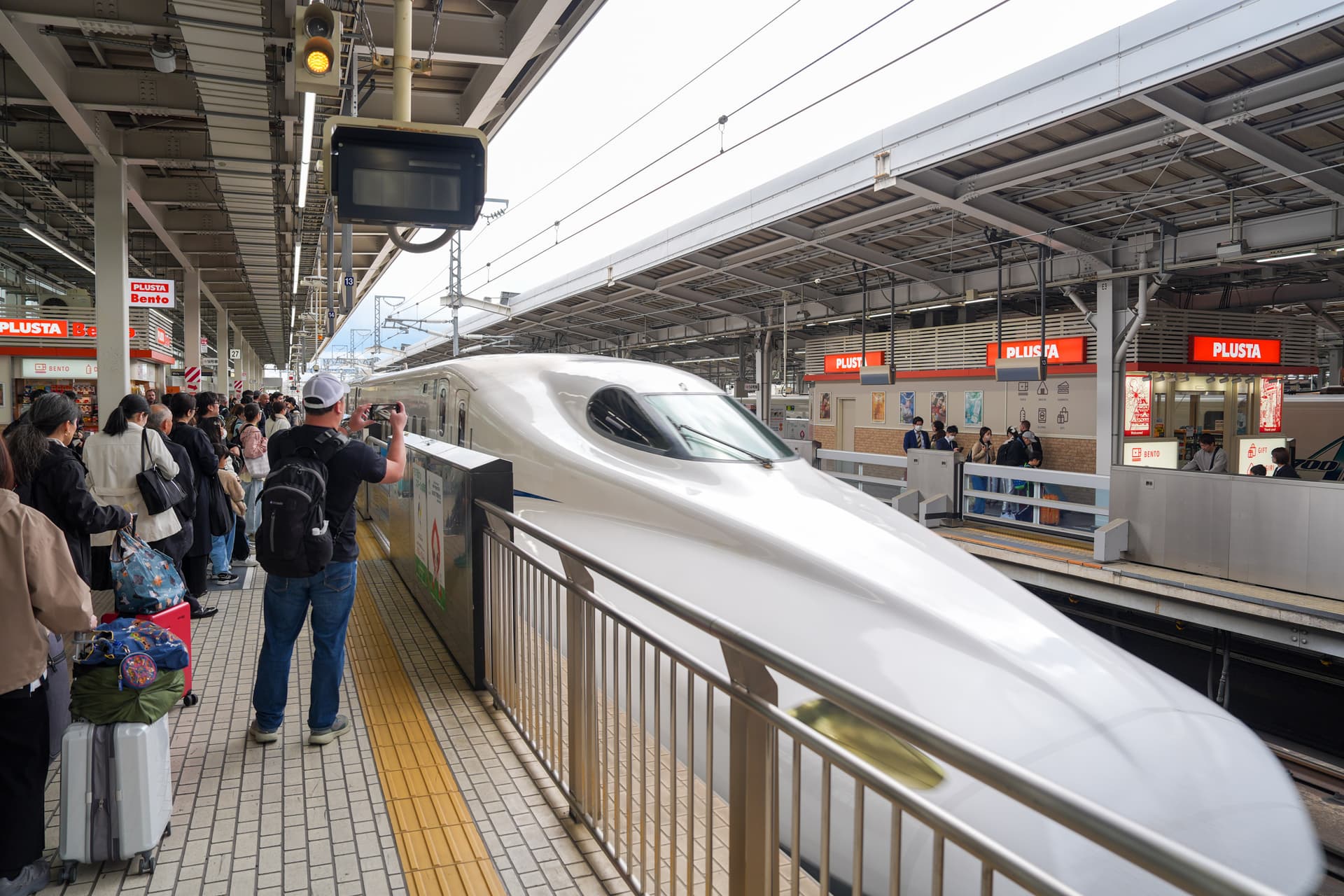
Quick Facts
- Route: Shin-Osaka ↔ Tokyo Station — Tokaido Shinkansen, JR Central, direct
- Travel time: about 2 hours 30 minutes on the Nozomi service
- Frequency: a train every 5–10 minutes through most of the day
- Price (reserved): ≈$95 (¥14,500) one-way
- Booking: Klook QR — gates accept the QR directly, no paper exchange required
- Seat options: window / aisle / Mt. Fuji-side preference selectable at booking
- Heads up: Shin-Osaka, NOT Osaka Station — different building, one stop apart
- Same network: Tokaido Shinkansen continues from Tokyo onward via Tohoku/Sanyo lines all the way to Fukuoka
Booking on Klook — How I Did It
I'd never booked a Shinkansen before this trip and I genuinely wasn't sure where to start, so I went with Klook because I already had several Japan transport and ticket purchases sitting in my account from earlier in the trip. The booking flow is short — pick the date, pick Shin-Osaka → Tokyo, choose your seat preference (window, aisle, or Mt. Fuji view), and you get a voucher with a QR code right away.
The standard one-way fare runs around ¥14,500 (≈$95). On Klook you can also see the Tokaido network as part of the broader Japan rail catalog, so it's straightforward to add Shinkansen segments further afield while you're there — Tokyo–Fukuoka, for instance, runs on this same network.
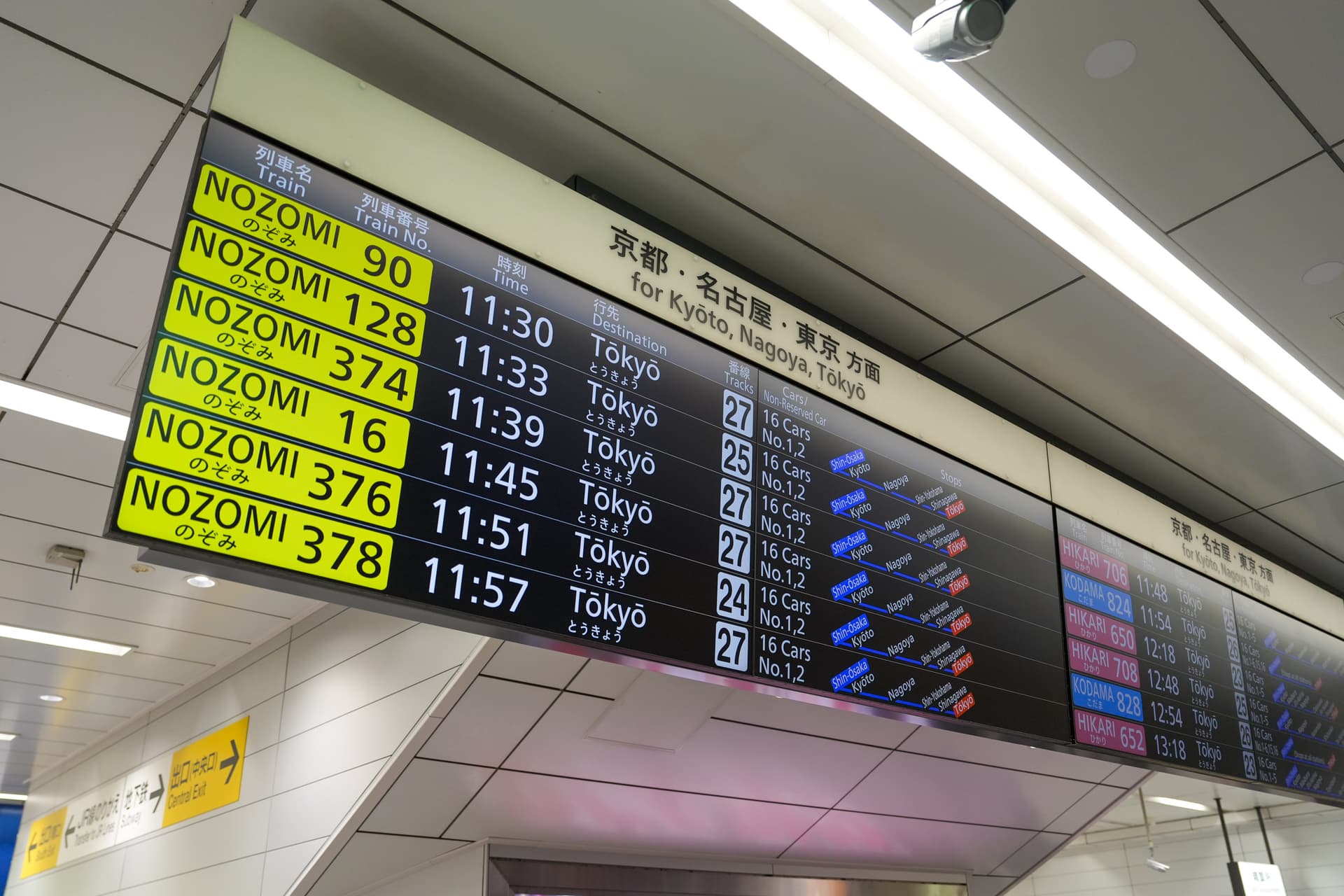
The detail that genuinely surprised me coming from KTX/SRT-style booking is the Mt. Fuji-side seat option. Klook lets you flag a Fuji-view preference at booking, and on the Shin-Osaka → Tokyo direction the Fuji side is the left side of the train — that's where they'll route you if you select it. (Going the other way, Tokyo → Shin-Osaka, Fuji is on the right.) Weather did me dirty on the day I rode and I didn't get a clean view, but the seat assignment itself worked exactly as advertised — left-side window, no negotiation at the station.
Book Shinkansen Tickets on KlookAt Shin-Osaka — Where to Catch It
This is the section I wish someone had drilled into me before the day of the ride: Shin-Osaka is not Osaka Station, and not Umeda. Osaka Station and Umeda are essentially the same downtown core; Shin-Osaka is one stop further north on the Midosuji subway line (red line), and the Shinkansen platforms only exist at Shin-Osaka. If you punch "Osaka Station" into Google Maps on the morning of your ride, you'll end up in the wrong building with a suitcase.
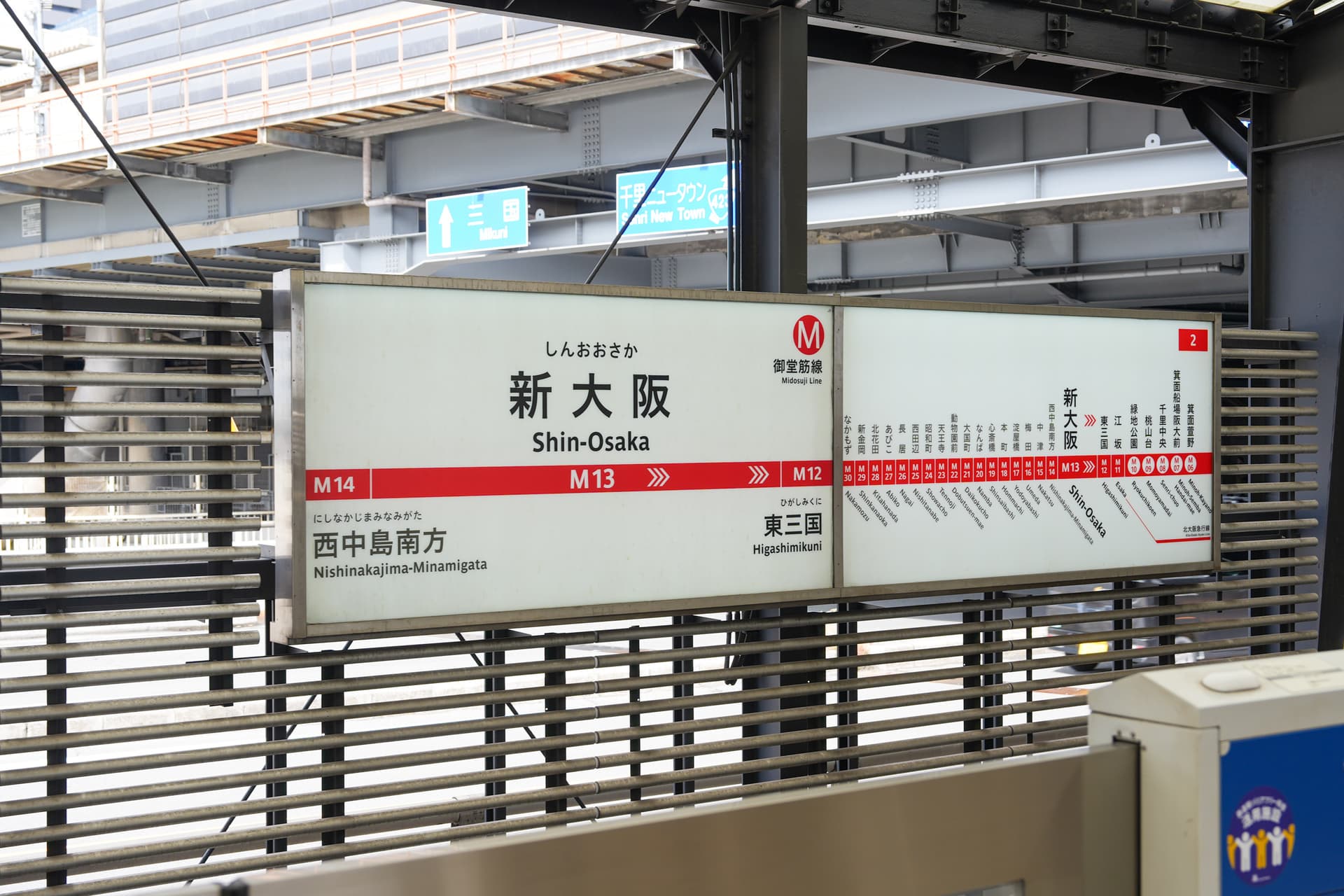
I deliberately got there an hour early on my first ride, which in hindsight was way too much margin — 15 minutes ahead of departure is enough, because the Shinkansen platforms sit basically right above the gate. There's a Tully's and a McDonald's inside the concourse if you do end up early, which is what I used to kill time.
Once you're inside, follow the Shinkansen Tracks signage (large white sign in Japanese and English) and you'll spot the bank of QR-reader gates next to the staffed ticket counters. The same QR sitting on your Klook voucher works directly at those gates — tap and walk through, no kiosk, no paper exchange.
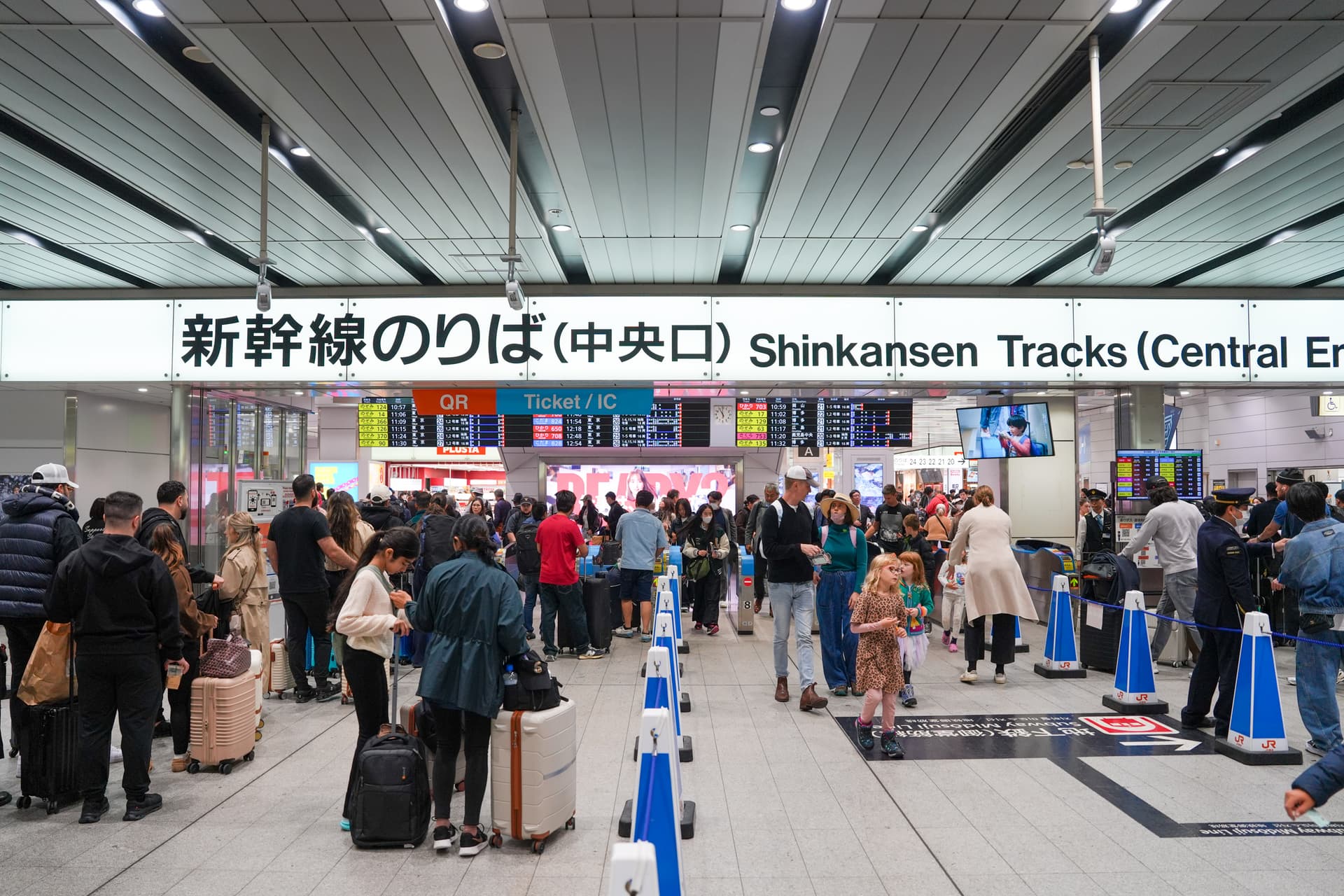
One small surprise the gate spits out a paper ticket as you tap through, even though you used a QR. I was filming on the way in and walked right past mine; another passenger actually turned around to hand it back to me. So if you tap and you see something pop out at hip level, grab the paper — it's part of the ticket and you may need it on the platform. Keep it tucked in your phone case until you've boarded.
Use the timetable boards above the gates to confirm your train number and platform — Nozomi services to Tokyo are listed in yellow with the train number (e.g., NOZOMI 374), departure time, and track number. The platforms are arranged so you only ride a short escalator down to the boarding floor, which is why you genuinely don't need a 30-minute buffer.
Onboard — Seats, Luggage, and the 2.5 Hours
The first detail that throws Korean and other international travelers is the 2-3 seat layout. Shinkansen ordinary cars are 3 seats on one side, 2 on the other — wider than KTX-style 2-2 trains. The Mt. Fuji-side preference parks you on the 2-seat side near the left window going Shin-Osaka → Tokyo, which is also the quieter side because fewer total seats means fewer people walking past you.
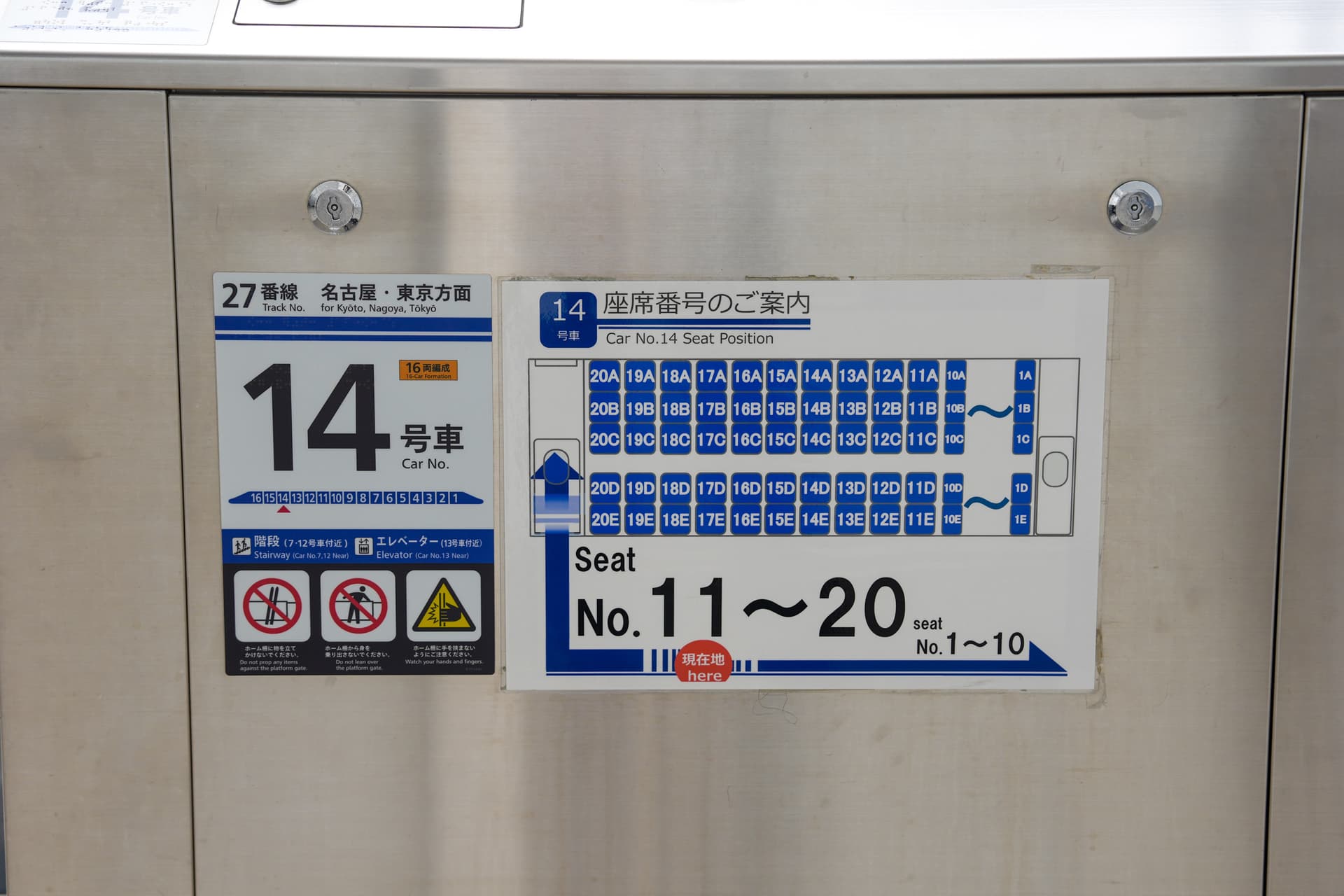
Each car has its own dedicated boarding zone marked on the platform, and there are numbered queue lines on the floor for each seat row — find your car number, line up, and you board straight into your section without a hallway shuffle. The carriage I rode was a 16-car set, which is the standard Tokaido configuration.
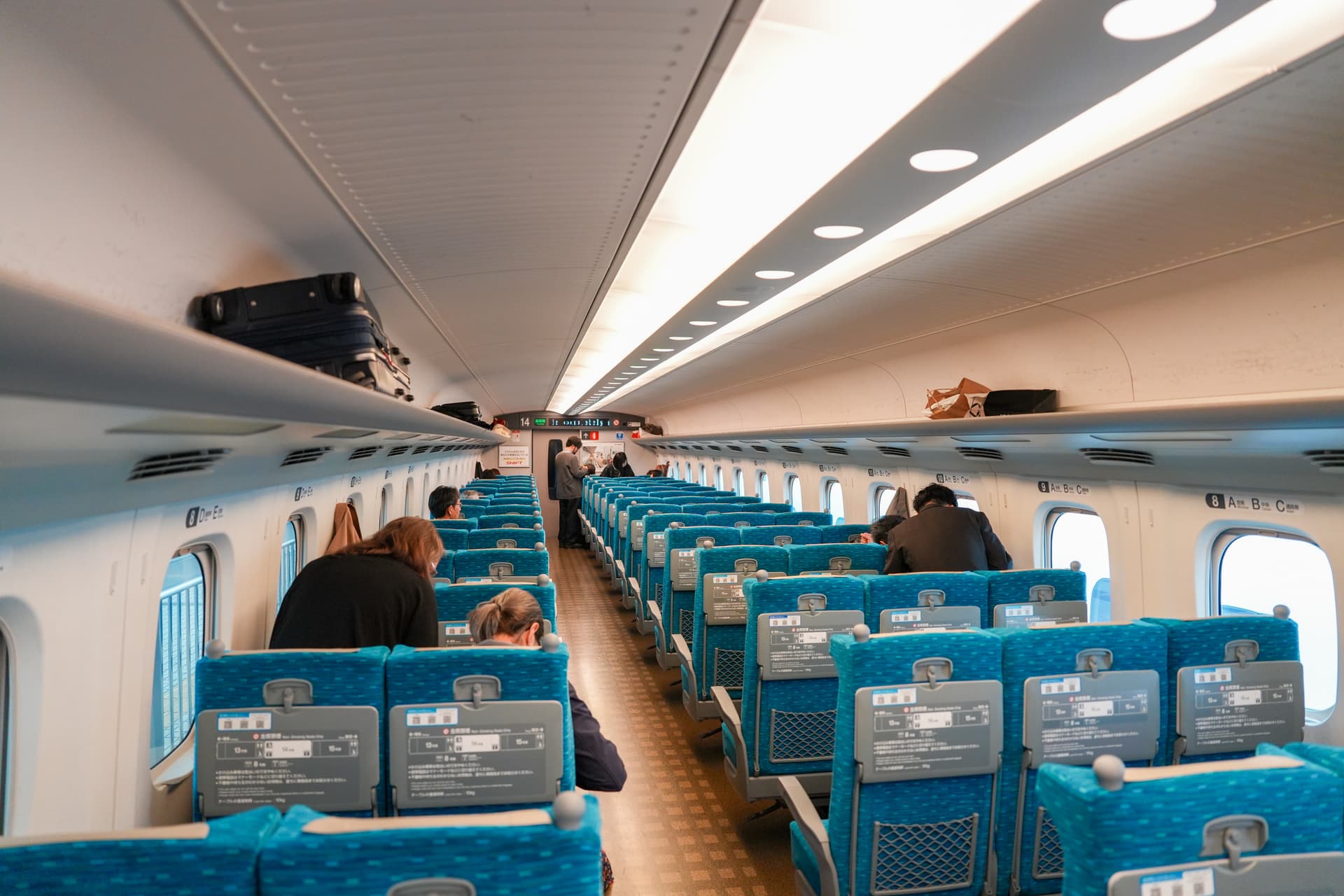
A few onboard things worth knowing before you step on:
- Seat pitch is noticeably generous — the seat felt wider and the legroom longer than most express trains I've used elsewhere
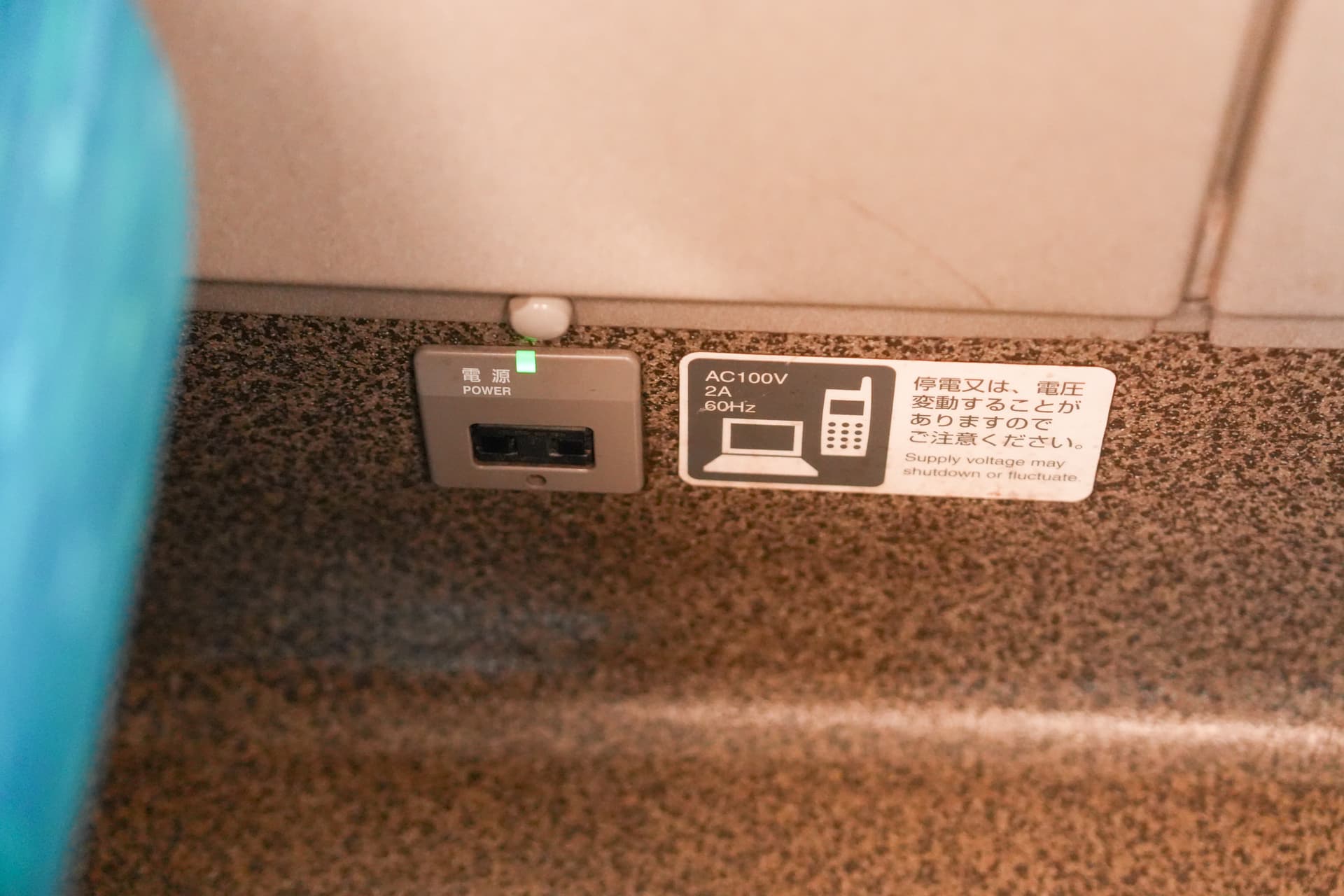
- AC 110V outlet at window seats — sits under the window frame near your knees, great for phone charging on a 2.5-hour ride
- Overhead rack fits a full carry-on, and most passengers stash suitcases up there
- A dedicated luggage rack between cars exists, but it requires an IC card tap to lock/unlock, which is more friction than it's worth for a single ride
- Avoid the gap behind the last row by the door — it's a common drop spot but you can't see it from your seat, so things have walked off there before
- Bathrooms are placed roughly every 2 cars; one quirk on the men's side is that the door panel above shoulder height is transparent, which catches you off guard the first time
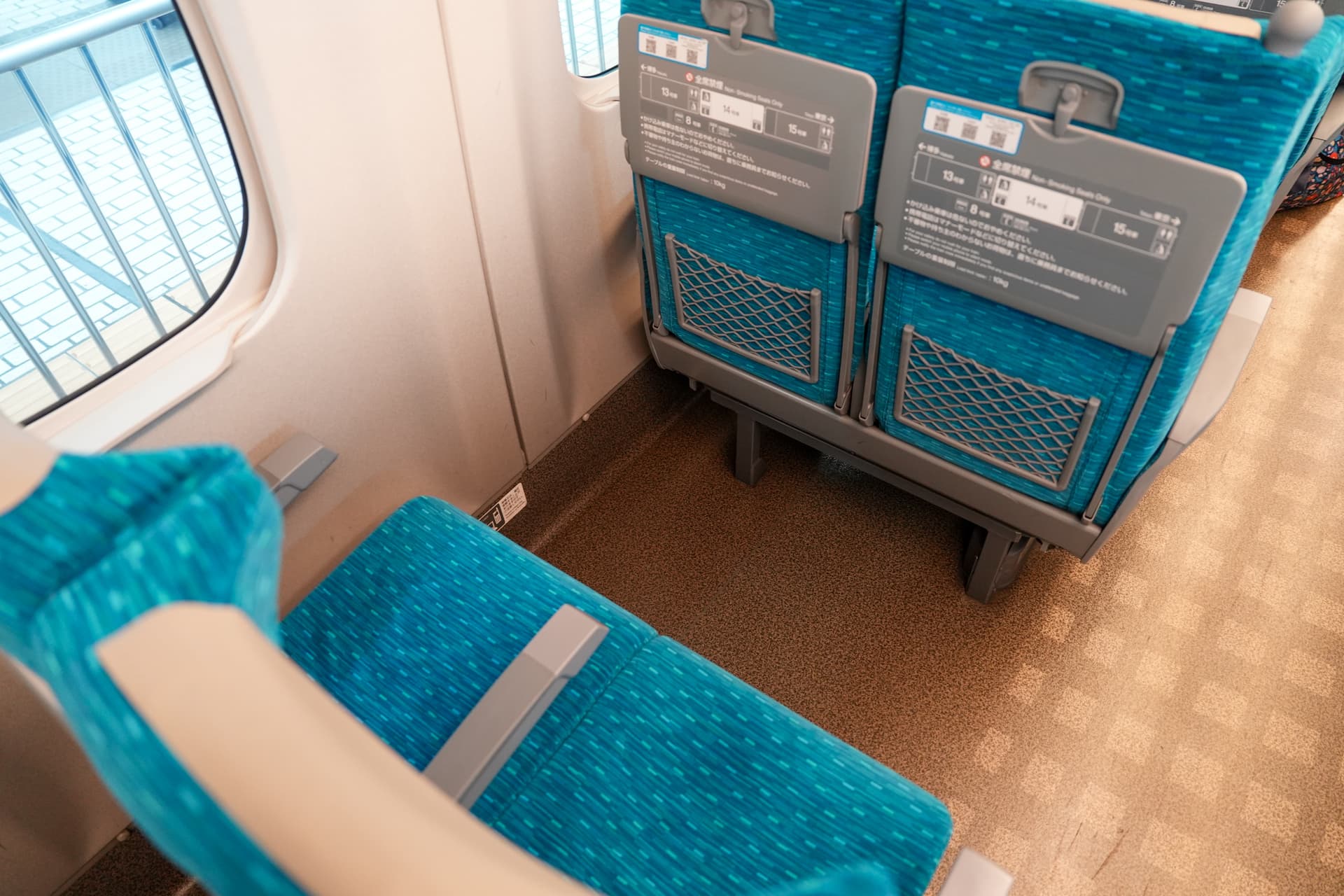
I rode with no neighbor in the second seat, which made the ride feel even more comfortable than the seat itself already is. The trip ran exactly on time, no delays, smooth ride start to finish. After 2.5 hours of Tokaido scenery (and yes, the Mt. Fuji window for the few minutes the train passes Shizuoka if the weather plays along), you pull into Tokyo Station and step straight out onto the JR Shinkansen platform.
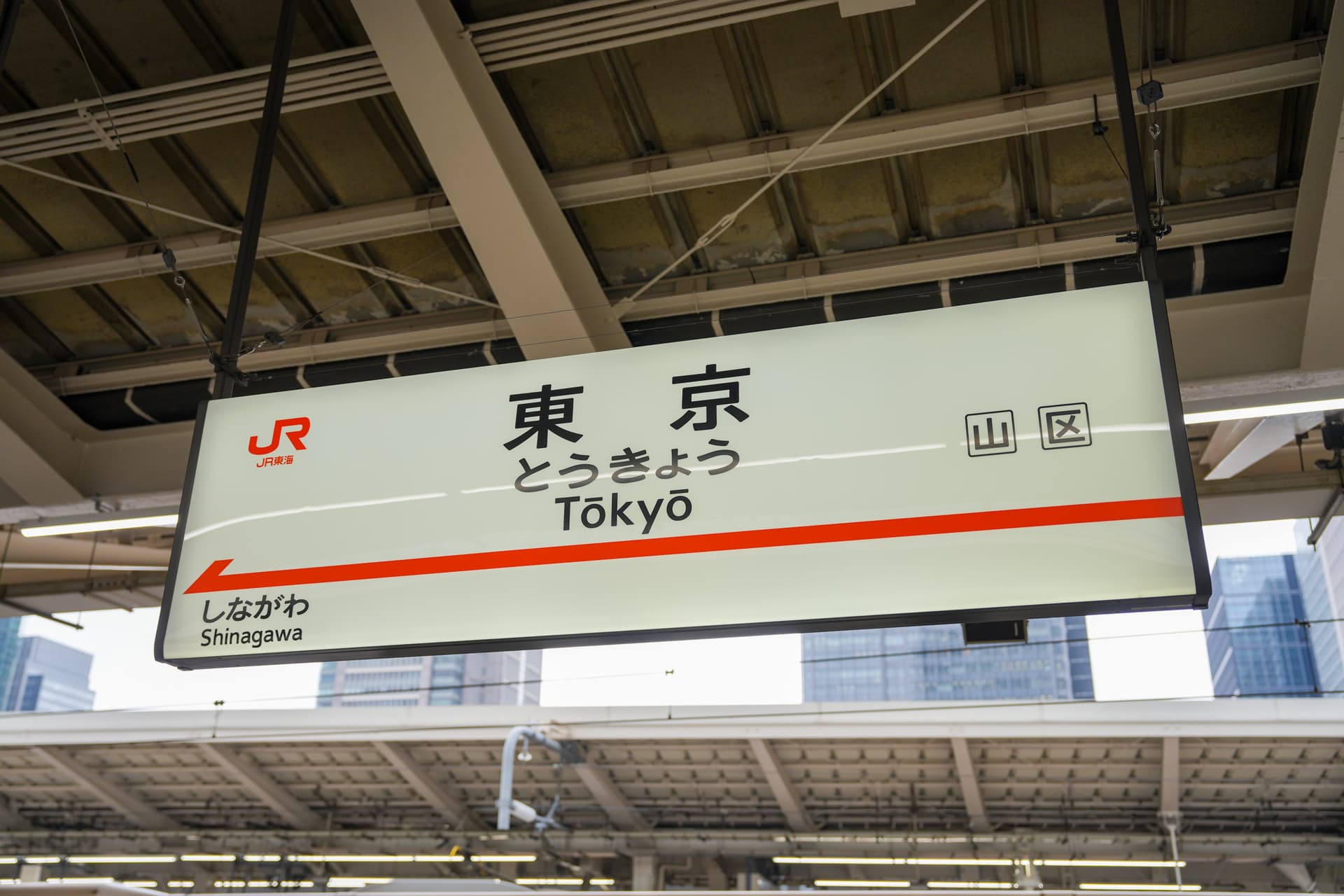
Arriving at Tokyo Station
Tokyo Station's Shinkansen platforms drop you right at the JR Tokyo signage — yellow JR logo, the kanji 東京, hiragana とうきょう, and the romaji "Tōkyō" all on the same overhead board. The exit gate scans the same QR you used at Shin-Osaka, so keep the voucher open until you're past the final gate.
From there you're in the JR Tokyo Station main concourse, and depending on where you're staying it's either a Yamanote line transfer (for hotels along the loop), a Marunouchi exit (for the Marunouchi/Otemachi business district), or a short taxi to wherever your luggage actually wants to land. After the round-trip the conclusion was consistent: prepay on Klook the day before, pick the Mt. Fuji-side preference if the weather forecast is clear, board at Shin-Osaka (not Osaka Station), grab the paper ticket the gate spits out, and don't bother arriving more than 15–20 minutes early.
If your trip continues in Osaka before you ride out, the Rapi:t airport guide covers the KIX → Namba leg, and the USJ Express Pass guide and Umeda Sky Building night-view guide are the two highest-value paid stops in the city. On the Tokyo side, the Shibuya Sky guide, Skytree Observatory guide, and Tokyo Subway pass guide cover the first 48 hours after you land at Tokyo Station. The TripFlowy planner can stitch the whole Osaka-then-Tokyo flow onto a single day grid so you can see how the Shinkansen segment slots into the broader itinerary.
Book Shinkansen Tickets on Klook
via Klook
FAQ
How long does the Shinkansen take from Osaka to Tokyo?
What's the cheapest way to book a Shinkansen from Shin-Osaka to Tokyo?
Which side of the Shinkansen is Mt. Fuji on?
Do I need to exchange my Klook QR for a paper ticket?
Where do I store my luggage on the Shinkansen?

Written by
Huiwon Kim (Check Kim)
Founder, TripFlowy · Travel Creator
Travel creator covering Asia since 2007. Known as Check Kim (책킴) in Korea, boarded 64 flights in 2025 alone. 20+ trips to Japan, with personally tested spots across 50+ cities in 15+ Asian countries. Writes about theme parks, airport transit, observation decks, and day-trip routes from major cities.
Plan a trip to this destination
Start Planning


Book Shinkansen Tickets on Klook
≈$95 / ¥14,500 one-way (Shin-Osaka ↔ Tokyo, reserved)