
Kyoto Day Bus Tour from Osaka: 4 Sights in One Day
 Huiwon Kim (Check Kim)2026-11-056 min read
Every photo in this post was taken on site by Check Kim.
Some links are affiliate links — we may earn a small commission at no extra cost to you.
- Pickup & return
- Meet in Namba, Osaka 7:40 → depart 8:00 → back around 18:00
- Route
- Fushimi Inari → Kiyomizu-dera → Kinkaku-ji → Arashiyama
- Admission
- Kiyomizu-dera and Kinkaku-ji ¥500 (~$3) each for adults, not included in the tour price
- Format
- Guided on the bus · free time at each stop
Contents · 6
Leave Namba at 8am, see Fushimi Inari, Kiyomizu-dera, Kinkaku-ji and Arashiyama, back by 6pm. Free time at each stop; temple fees paid separately.
If you want to see Kyoto's big sights in one day from Osaka, a bus tour is the most efficient way to do it. We left Namba at 8am, stopped at Fushimi Inari Shrine, Kiyomizu-dera, Kinkaku-ji and Arashiyama in that order, and were dropped back at the same spot around 6pm. The guide talked us through each place on the bus and left us free at every stop, so it felt a lot more like traveling on my own than the package tour I'd expected.
I've been to Kyoto more than three times now, and the sights worth seeing are scattered around the edges of the city, which makes it hard to cover them all in a day by public transit. On a short Osaka trip, setting aside one day for a bus tour was the easiest option.
Booking, meeting point and the day's schedule
I booked a one-day Kyoto bus tour with a guide on board through Klook, where it was a little cheaper than elsewhere.
You meet by 7:40am in front of Tsurutontan near Dotonbori in Namba. The guide checks everyone in and the bus leaves at 8:00. Several bus tours gather at the same spot, so it was already busy early in the morning. If you're planning a bus tour, staying in Namba rather than Umeda makes the morning much easier.
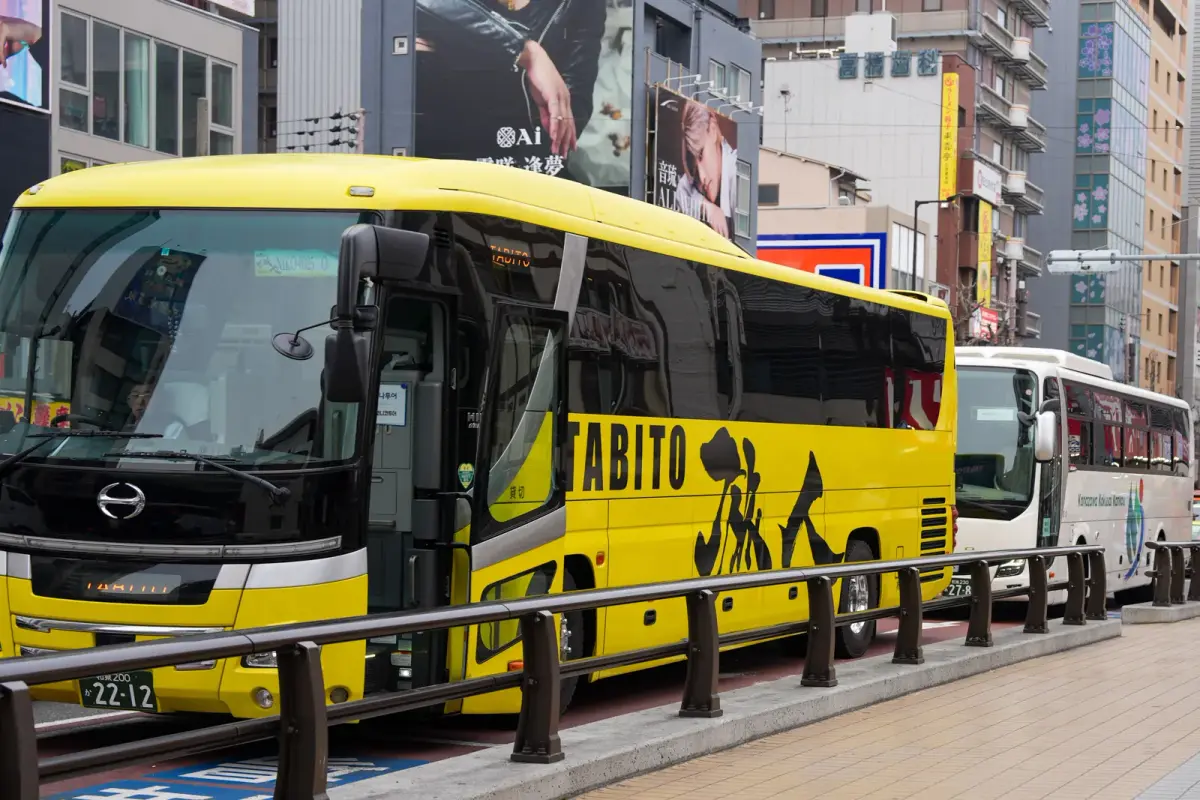
On another day I took the same company's Kobe and Nara tour, but the Kyoto tour was far more popular and the bus was nearly full. We got back around 6pm, so I had dinner in central Osaka.
The guide talks you through each sight on the bus, and once you get off, the time is yours. The guide walks you to the entrance and then everyone does their own thing until the meeting time. That saved time on site and let me focus on what I wanted to see. The guide also took photos for each group at every stop.
First stop, Fushimi Inari: take photos on the way down
The first stop was Fushimi Inari Shrine, known as the fox shrine and famous as a backdrop in *Memoirs of a Geisha*. By afternoon it's packed, but as the first stop of the day it was a bit quieter.
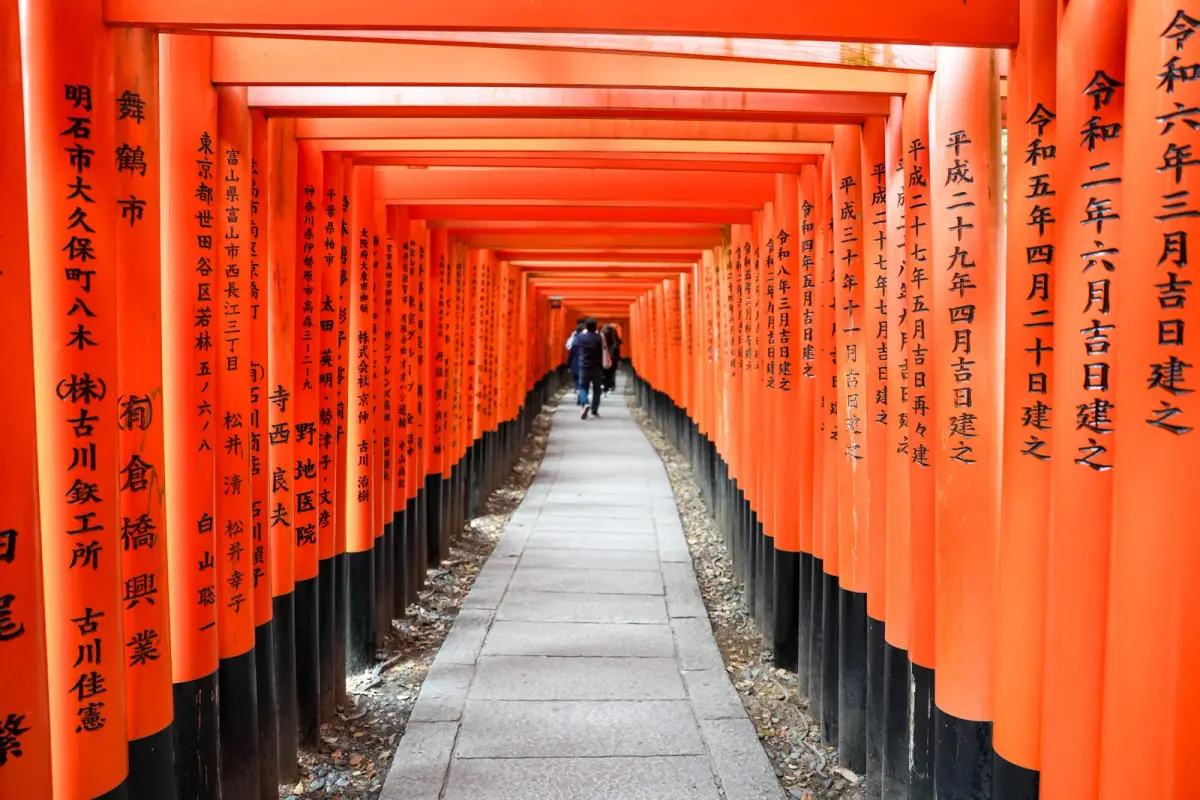
The thousands of red torii gates running up the mountain were donated by businesses and groups praying for success, so each pillar has a name painted on it. There wasn't time to reach the summit, so we turned around at the first lookout. I'd take photos on the way down rather than on the way up. From that direction you can see the writing on the gates, and there were far fewer people too.
Kiyomizu-dera and Ninenzaka/Sannenzaka: two hours including lunch
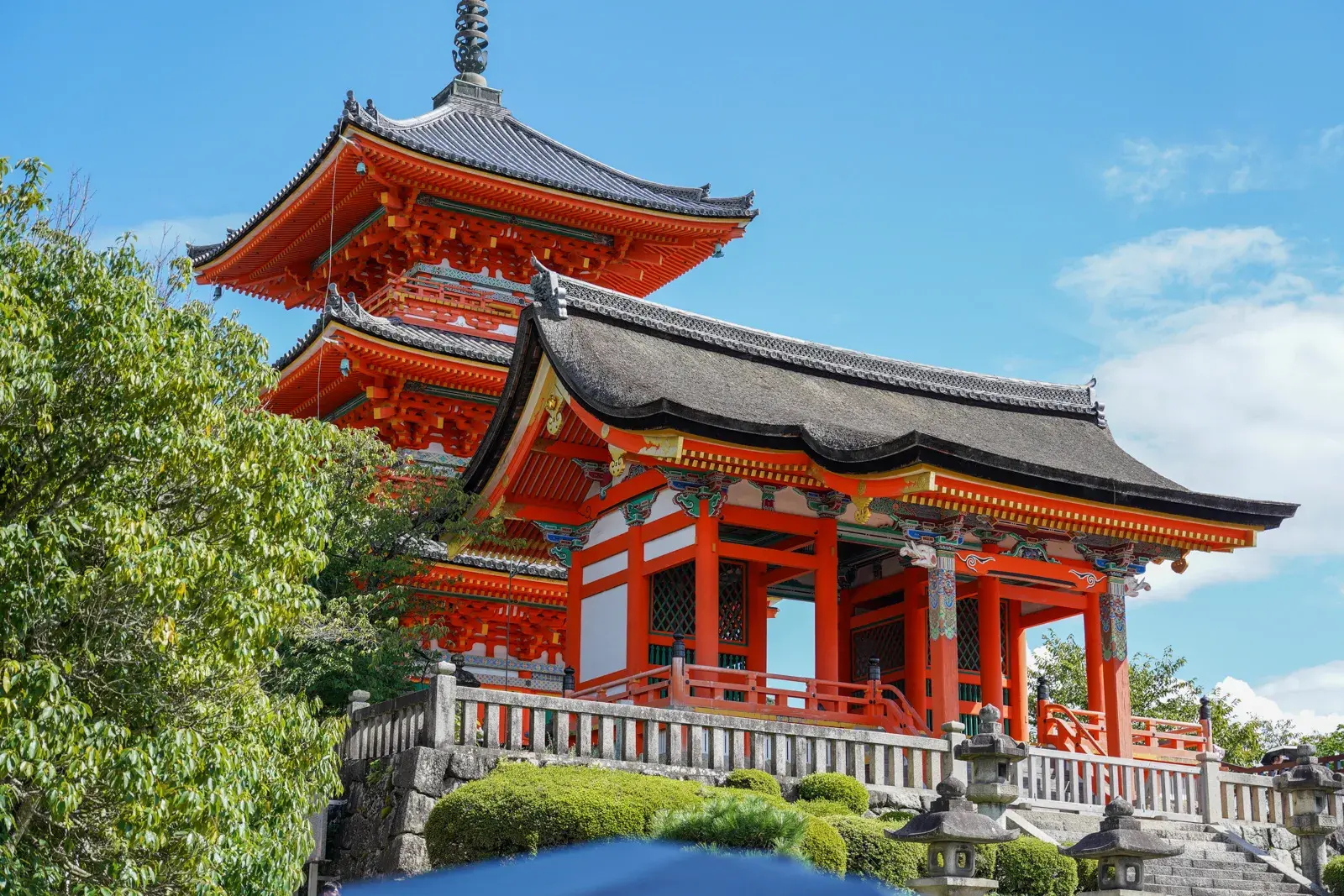
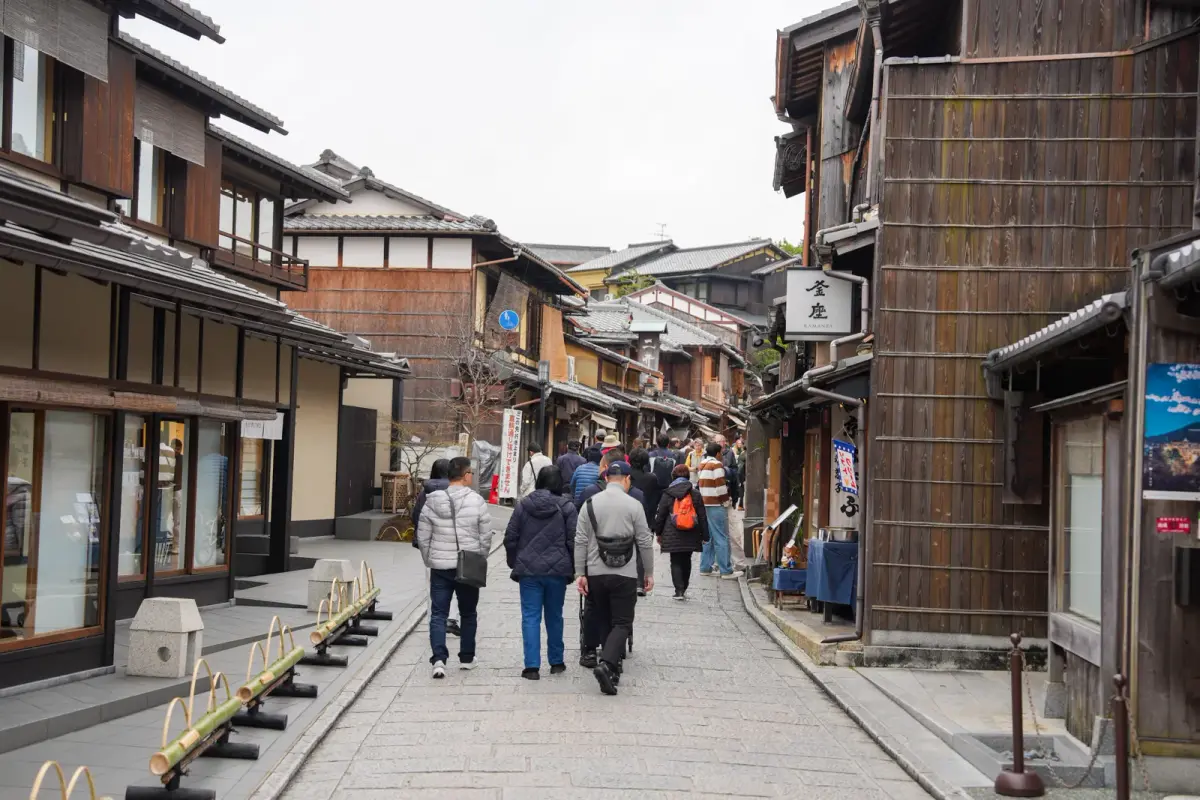
The second stop was Kiyomizu-dera, practically a symbol of Kyoto. From the bus you walk up through the Ninenzaka and Sannenzaka lanes, and honestly I liked those lanes more than the temple's main hall. They still look like old Japan, which is hard to find in Tokyo or Fukuoka.
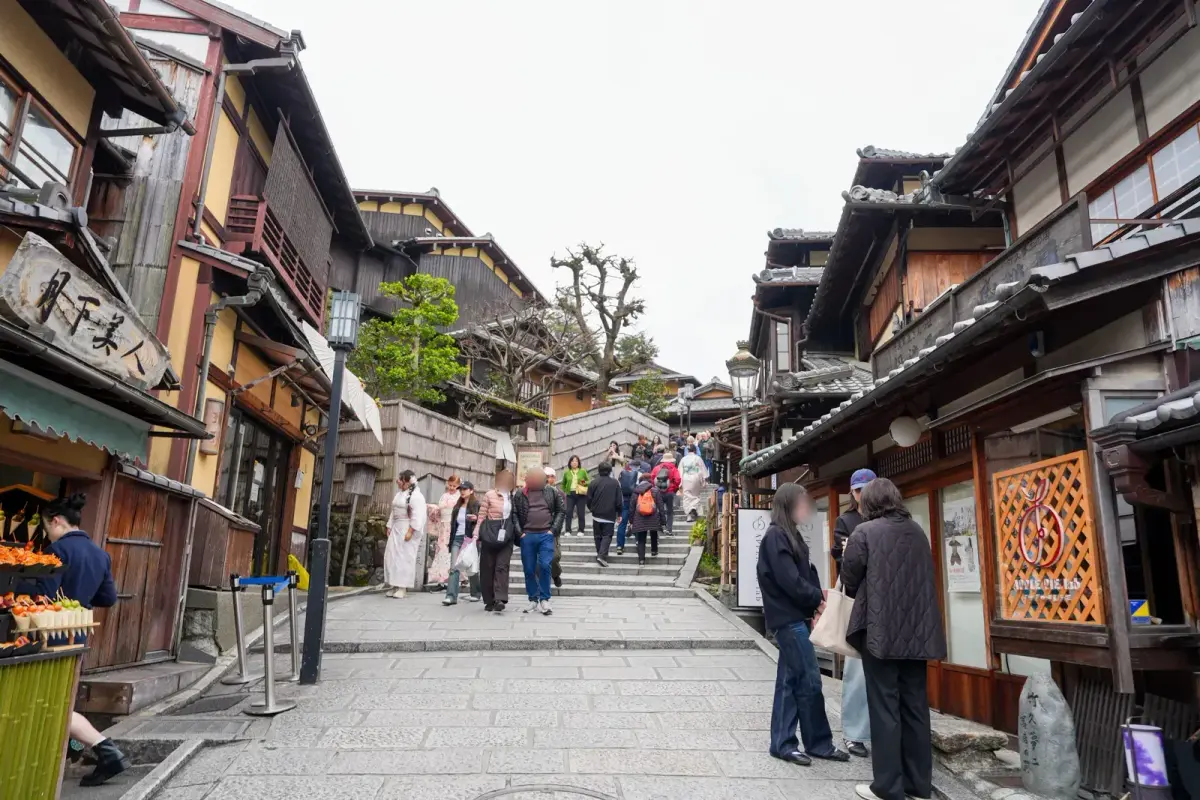
We had about two hours of free time here, lunch included. The guide sends a list of nearby restaurants, but I found a place on Google Maps and ate on the Ninenzaka side. Deciding where to eat ahead of time gives you a lot more breathing room.
Kiyomizu-dera and Kinkaku-ji charge their own admission. As of November 2026, Kiyomizu-dera is ¥500 for adults and ¥200 for elementary and junior high students, and Kinkaku-ji is ¥500 for adults and ¥300 for students. Many places didn't take cards when I went, but Kinkaku-ji has accepted cards since September 2026, so you only need a little cash.
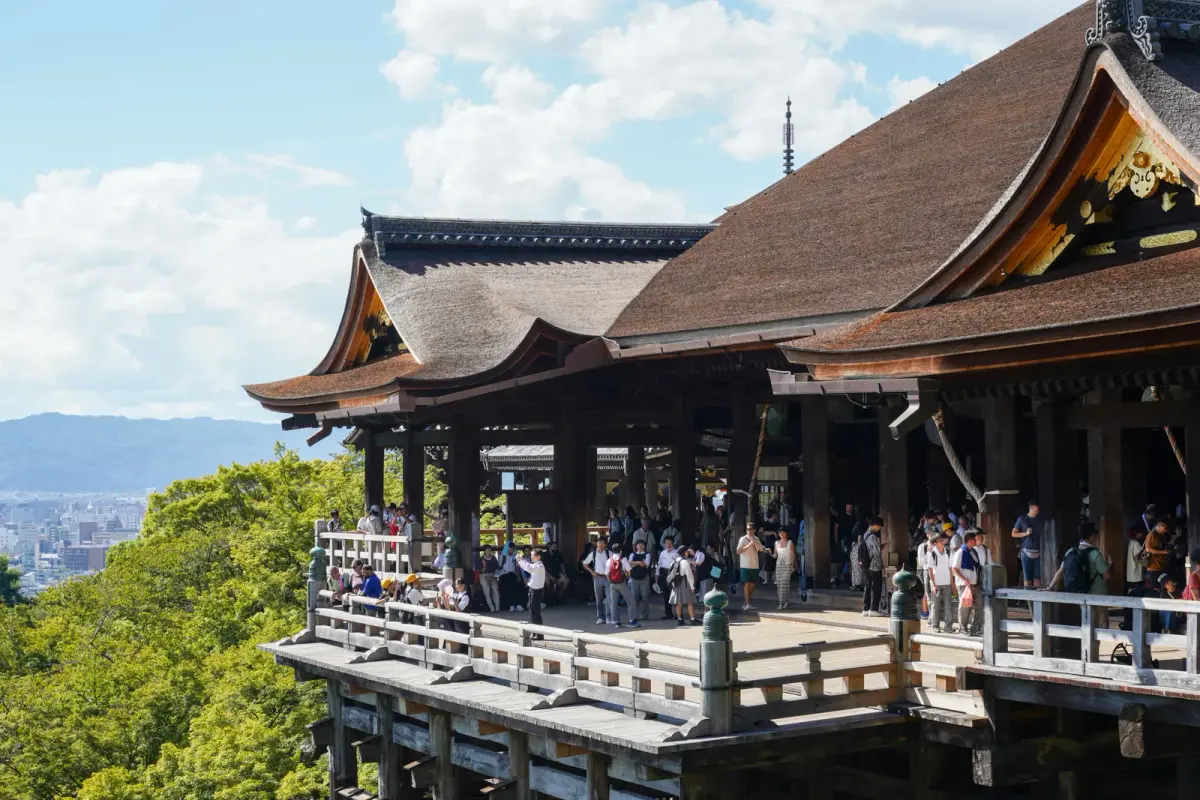
The main hall is famous for being built entirely of wood without a single nail. Cross to the other side and you get the classic photo spot with the whole hall in view. At Otowa Falls, three streams of water are said to bring health, success in study and luck in love, and the line to drink from them was long. There was a separate line for people trying to lift a heavy iron staff. Coming back after two years, Kiyomizu-dera was busier than before, and I hear it's even more crowded in cherry blossom and autumn leaf season.
Kinkaku-ji, reflected in the pond on a clear day
The third stop was Kinkaku-ji. It's famous for the golden pavilion mirrored in the pond on a sunny day, but the day I went was overcast with rain, so I missed that view. Still, it isn't just the pavilion. A walking path loops through the grounds, so I could take my time.
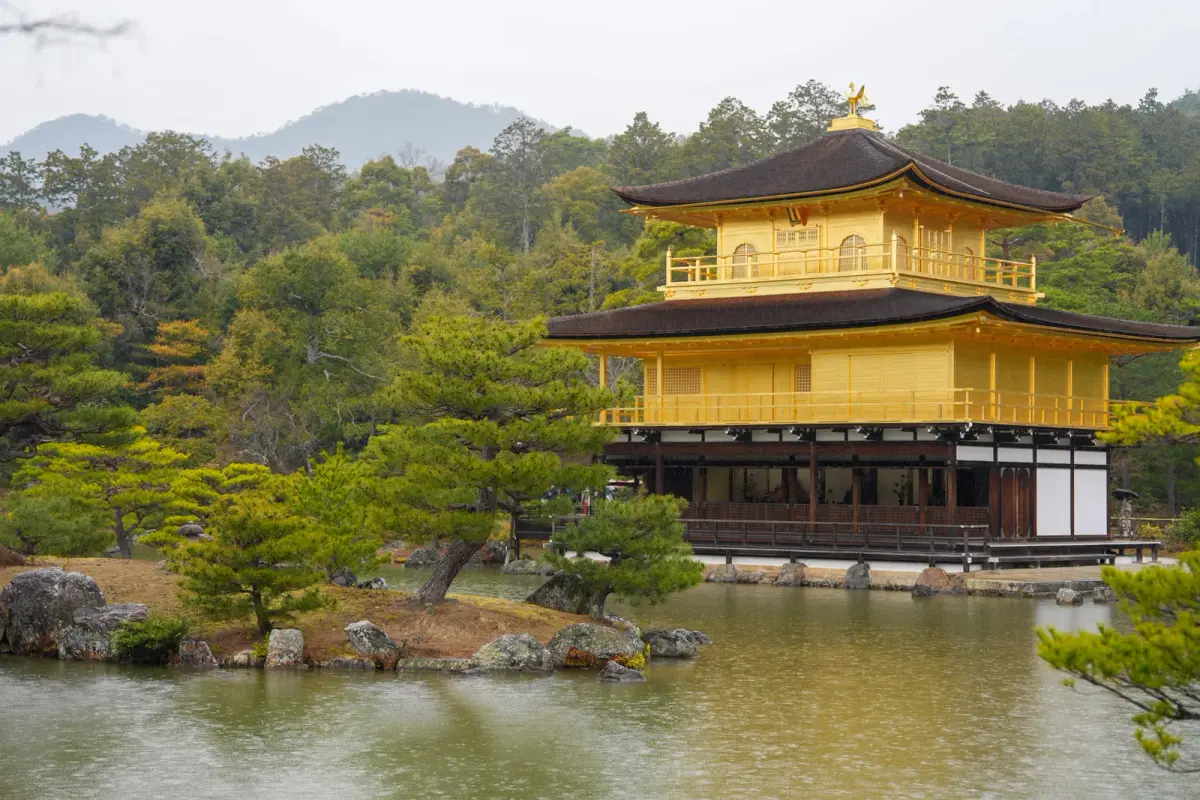
The paper admission ticket is said to double as a good-luck charm, and the ¥100 fortune slips now come in translated versions too. Keep a good fortune; tie a bad one up at the temple and leave it behind.
Arashiyama: walk all the way into the bamboo grove
The last stop was Arashiyama, known for the Chikurin bamboo grove and the gardens of Tenryu-ji. You can take a rickshaw from the side streets, and there's a % Arabica (the coffee shop with the % logo) where you can take a short break.
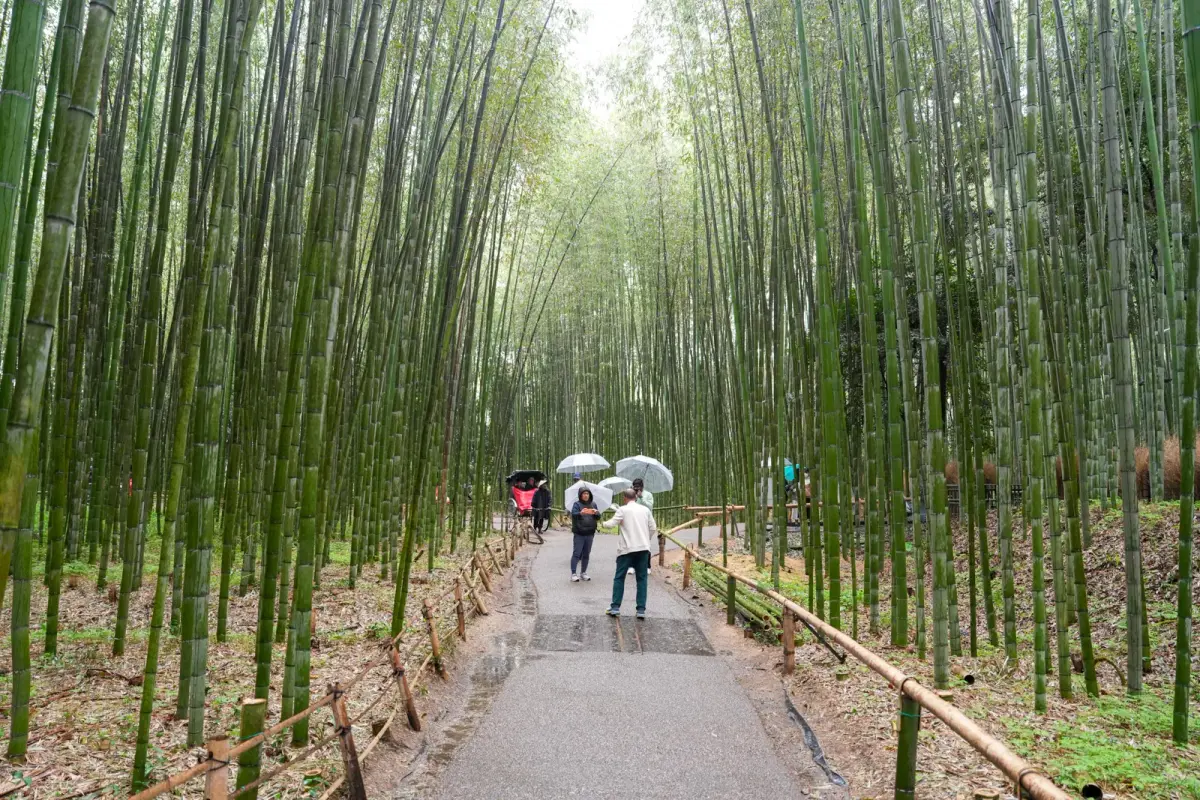
Two years ago I didn't realize the bamboo grove kept going, so I only saw the area near the entrance. This time I walked all the way in, and the inner section turned out to be the main event. It's wider and less crowded, so take your photos as far in as you can. Before heading back to the bus, I also stopped at Tenryu-ji, whose garden is a UNESCO World Heritage site.
If you want a different route
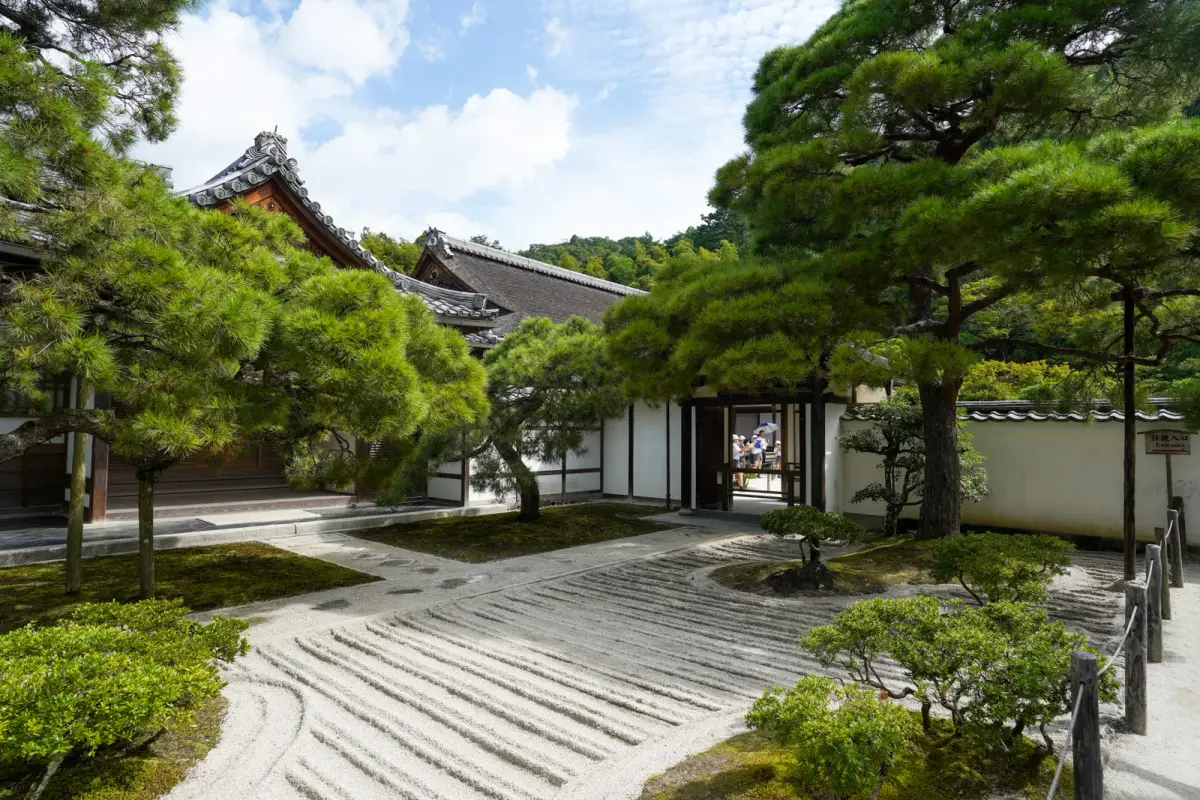
Routes vary a little by tour. One I took earlier swapped Kinkaku-ji for Ginkaku-ji. It left Dotonbori at 8:10am, covered Fushimi Inari, Arashiyama, Ginkaku-ji and Kiyomizu-dera, and got back around 7pm. If you'd rather walk a quiet garden and the Philosopher's Path than see the flashy Kinkaku-ji, pick a route like that. Tour routes change by season, so check the booking page.
If you'd rather see just two or three places at a relaxed pace, skip the tour and do it yourself with a Keihan one-day rail pass, linking Uji, Fushimi Inari and Nishiki Market. Take the bus tour when you want all four of Kyoto's headline sights in one day, and go independent when you'd rather slow down. If you're heading straight to Kyoto from Kansai Airport, see the Haruka Express guide, and if you're planning your whole Osaka trip, the Osaka 2-night, 3-day itinerary may help too.
FAQ
Does the guide stay with you the whole day on a Kyoto bus tour?
Are temple entry fees included in a Kyoto bus tour?
Where do Kyoto bus tours from Osaka meet?
Is a bus tour or independent travel better for Kyoto?

Written by
Huiwon Kim (Check Kim)Founder, TripFlowy · Travel Creator
Travel creator on the road since 2007. Known as Check Kim (책킴) in Korea, boarded 64 flights in 2025 alone. 20+ trips to Japan, with personally tested spots across 50+ cities in 20+ countries in Asia, Europe and the Americas. Writes about theme parks, airport transit, observation decks, and day-trip routes from major cities.
Comments